
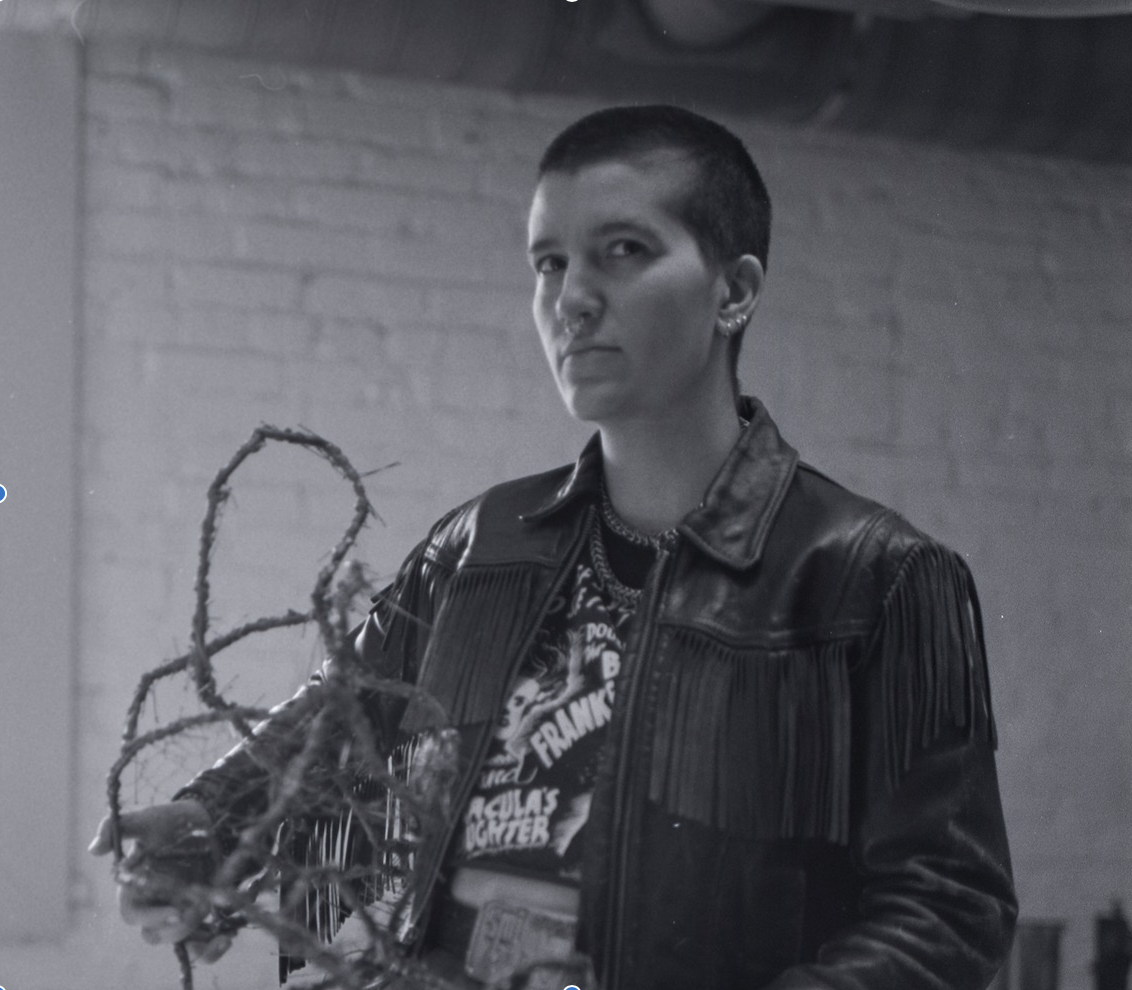
Annabela Cockrell
She/They/Any
Louisville, KY, US
Annabela Cockrell is a fiber and metal artist based in Louisville, Ky. They recently earned their MFA from the University of Louisville where they focused in fiber and metal craft. They also hold a BFA in sculpture from Western Carolina University.
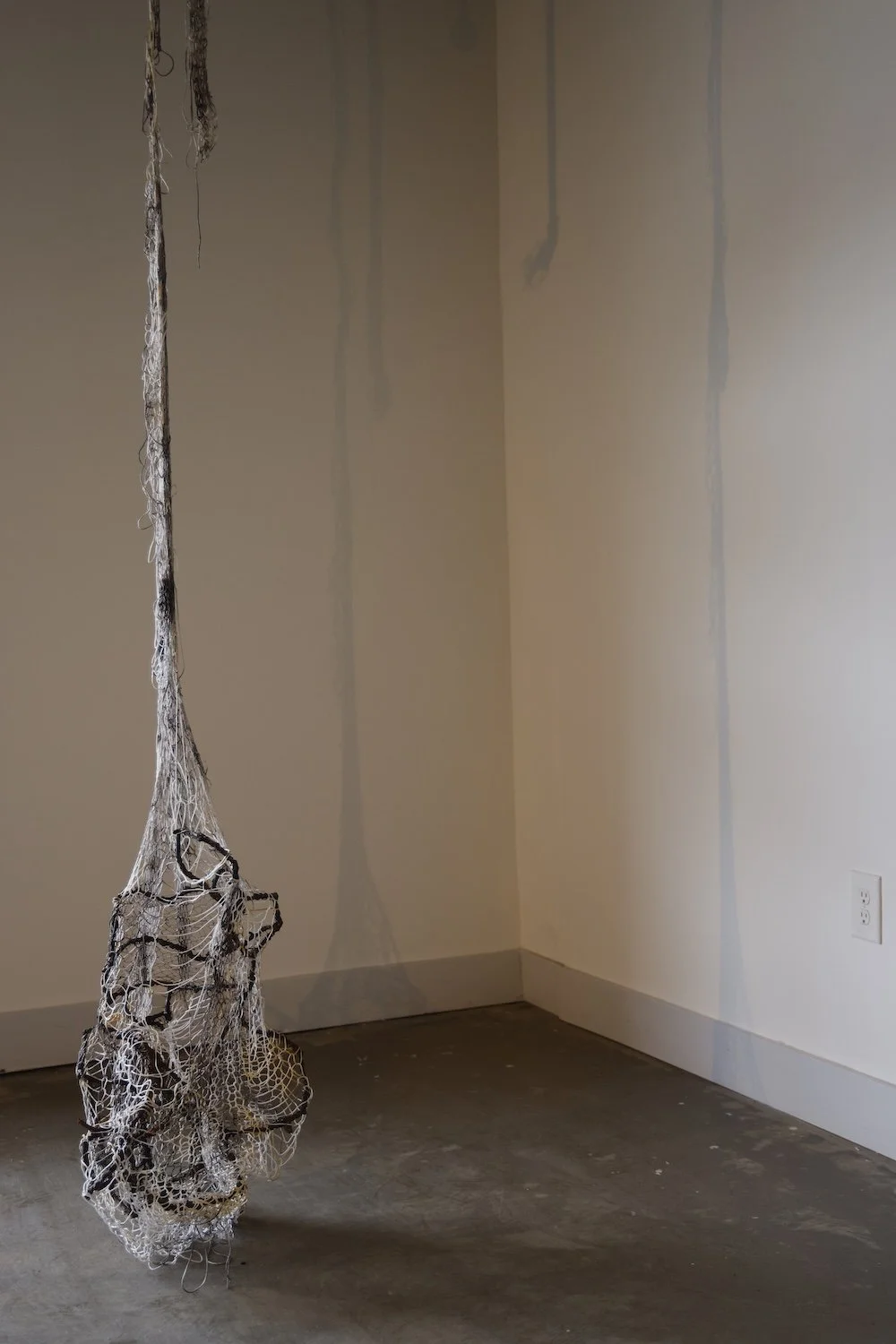
“‘The Work’ is an idealization of the same piece, it deals with an abstraction of queerness and craft traditions, warping and altering itself by knowing that there is contradiction and switchbacks. This chaos is countered with a strange precision, a fragmentation within an ever growing rhizomic and haptic thing. Within this complex precision, this layered depth of form there is this use of simple materials, overworked to the point of collapse.”
How does your work relate to the theme of flourish(ing)?
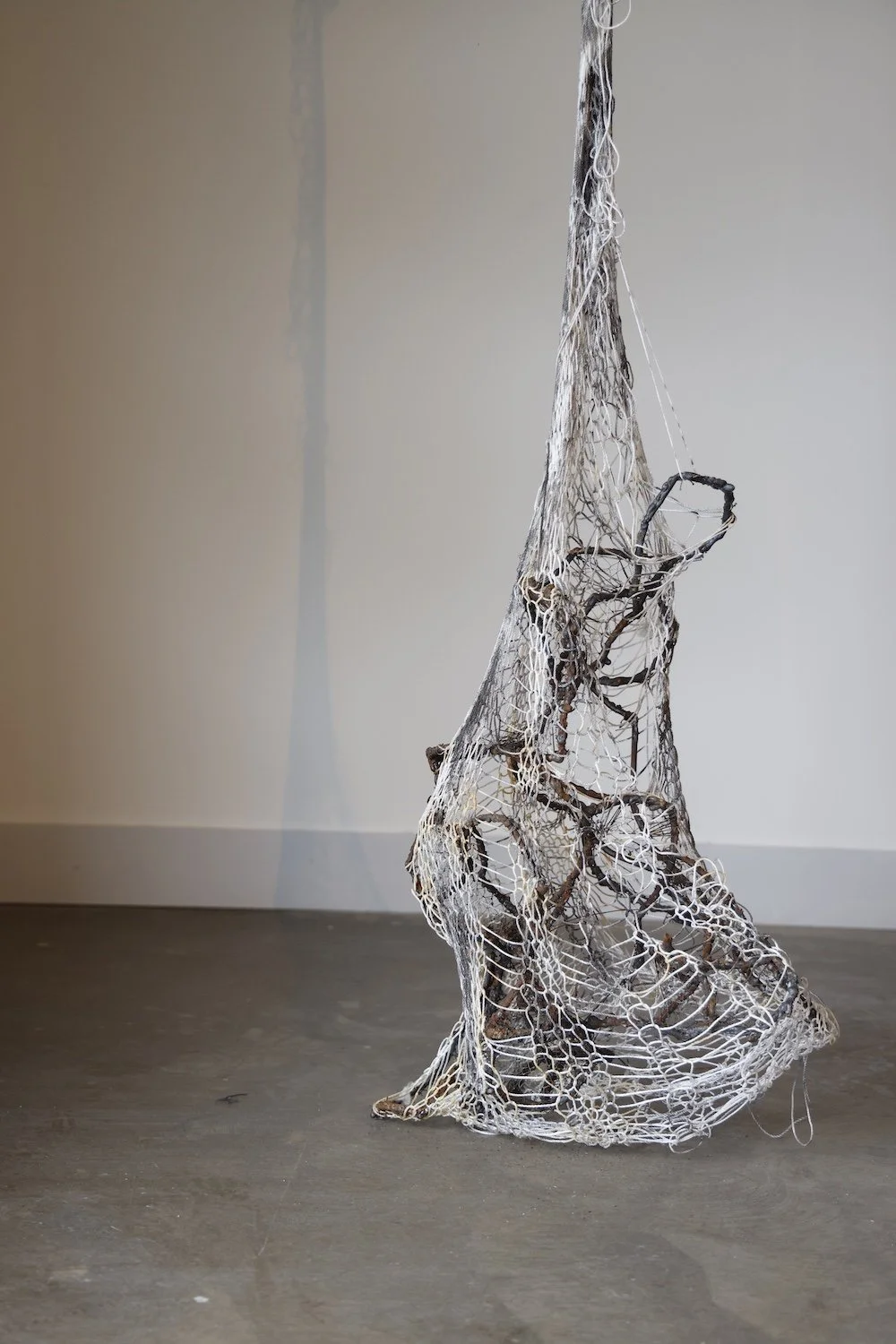
“This Work is a part of a greater series of Untitled: Studies, each study being an iteration or evolution of the one previous, often times containing literal parts of other studies. This to relates to flourishing as it changes and evolves with time. The metal will continue to rust and degrade as it is exposed to elements and environments, it will further stain the knitted nylon, leaving the evidence of where it has been, what it once was. Perhaps The Work will be fully realized in the future, once the metal has disintegrated, leaving behind only the evidence of what once was. Or, it might have already been, when the metal was not disintegrating and the knitting was clean.
The Work also leaves its marks on the body as it is being made, burning, scratching, scaring. These marks the body should not be viewed as flaws, but instead as a way of becoming one with the work. The Work hugs and holds ones body as it is carried, it comforts one through the pain. The Work’s spikes/ tines/ hairs acting as a defense against the world. As The Work exists in the world it will slowly loose its hairs/ tines/ spikes, thus softening it, not for the world, but for itself. The knitted nylon could be read as nylon stockings or skin. It is a way to contain the metal, but to also adorn it. It helps it grow into what is meant to be.”
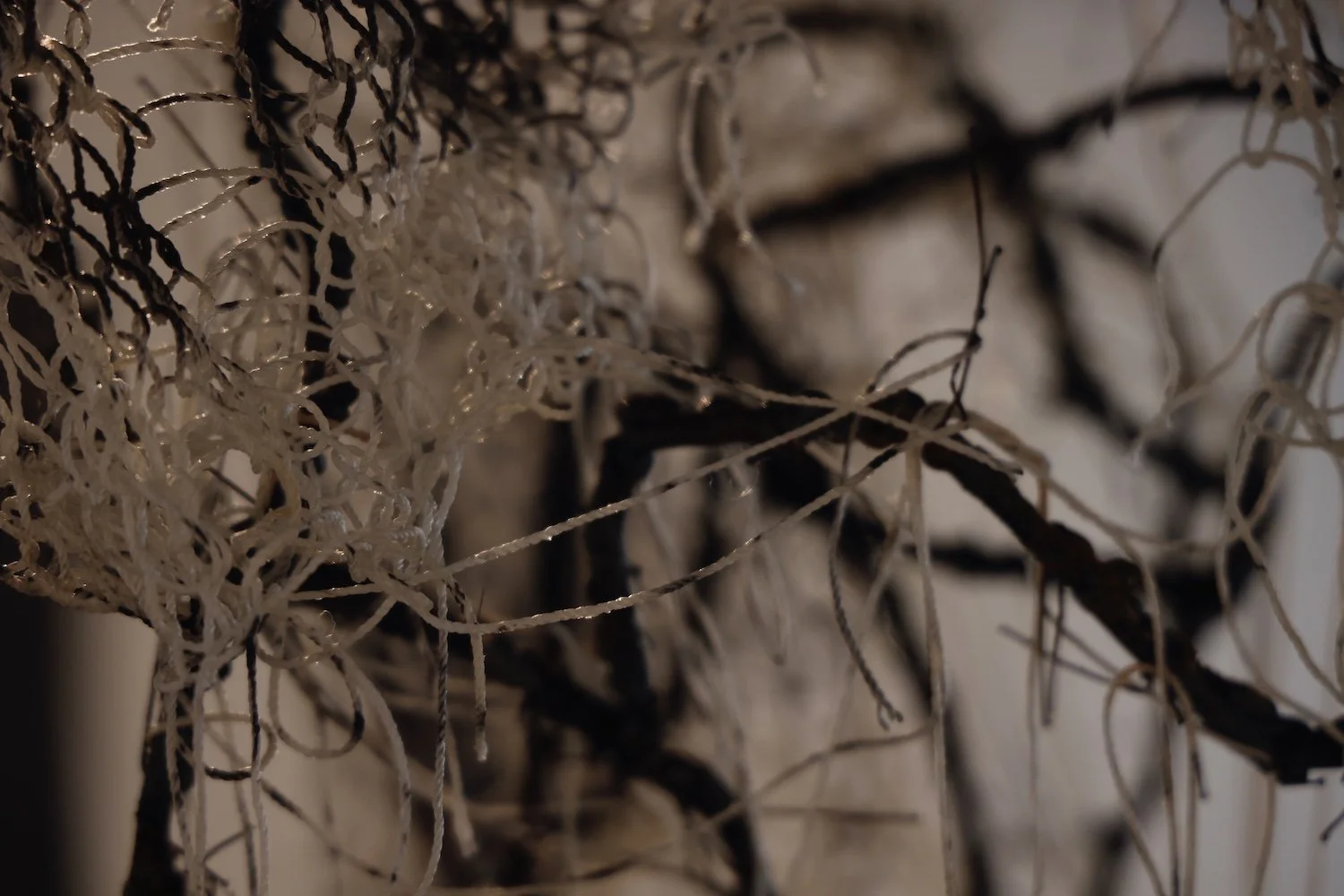
“Untitled: Weld and Nylon Study", Cold rolled steel, masonry nylon, rust, line chalk, 24" x 18" x 18", 2025
“My creative practice allows me to tune into my truest self, there is a satisfaction in the physicality of the process. It is meticulous and ruminative, though it is more of a frustration than a meditation. Like a scab needing to be picked at, it leaves its mark on the body, both physically and mentally. My practice is in this constant state of being incomplete, The Work is part of this cycle of constant repair and alteration,. In doing this I utilize an over-welding technique that breaks down the metal as it is being cobbled together. It shrinks and grows, melding with other works, over and over. I also capture the welding spaces and drippings to create other works, the whole process, it is dependent on this constant breaking down of material, repurposing and reworking the same materials over and over again. This way of working can create a loop wherein I force myself to hide works from myself to keep from working on them, allowing them periods of rest where they can flourish.”
How does your creative practice allow you to flourish (grow, thrive, blossom)?
Photographs Courtesy of the Artist
As a queer+ artist, what would you like to see and/or what do you need in order to flourish during this time?
“I think all queer people and artists need safe places to work, make, and exist. I am currently altering my studio practice to reflect changes in my life. I currently have less space to make work and am therefor having change how I make work making work, all while not stopping making work. It is important for us to keep making and making our voices heard and known, whatever that looks like to the individual.”
Anything else you would like to share about this work? This can be an important part of the process, sourcing materials, or research.
“The Work is queer, not simply because I am queer, but because it the work itself is. It is odd and unsettling, and it seems out of place, or off kilter. The Work as a whole speaks more than I do, it exists in a space alongside the one we occupy as opposed to the one we are in currently. Within The Work here is also this conversation with the history of material, thinking here specifically about the ancient nature of fiber and metal. Historically speaking fiber does not last long, natural fiber disintegrates easily, and often all that is left behind is the evidence/ clues that is was once there. This work is an attempt to change that, fiber being nylon will outlast the metal and as the metal slowly degrades we are only left with the evidence for what once was as stains on the fiber.”