
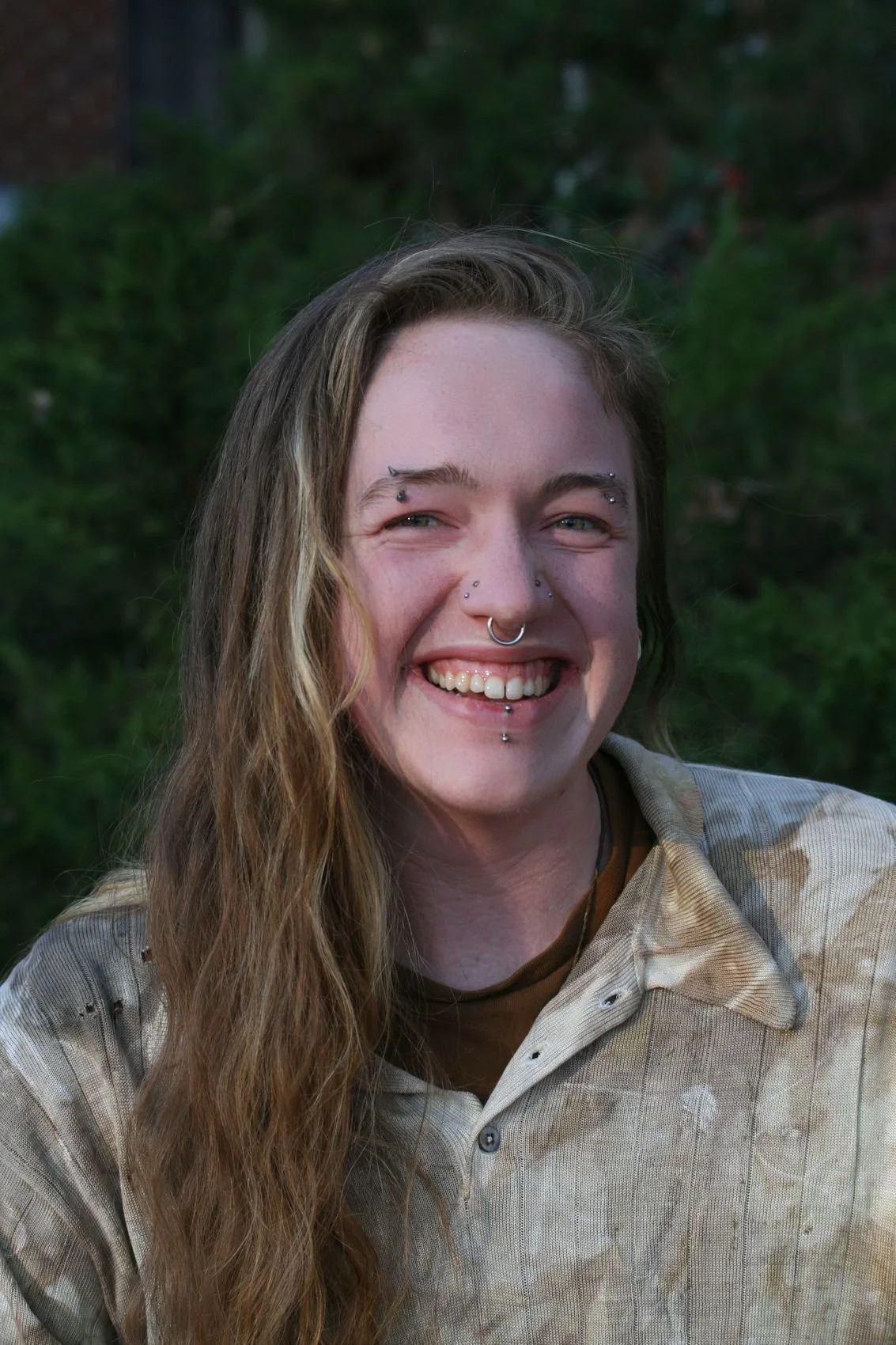
Jay Reddish
He/They
Atlanta, GA, US
Jay Reddish is a metalsmith, educator, and environmental artist based in Atlanta, Georgia. Through their business, Forest Troll Art, founded in 2017, Jay creates jewelry and functional sculpture from recycled and reclaimed materials, blending medieval motifs, folklore, and natural forms with contemporary techniques such as CAD, 3D printing, and sandcasting. Their work encourages connection to the environment and sparks conversations about stewardship and sustainability. Jay has exhibited nationally, including at NY Jewelry Week (2023), and their 2024 series TouchPoint is on permanent display at the Lamar Dodd College of Art and Thomas Street Art Complex at the University of Georgia. As an instructor, Jay has taught metalsmithing, repair, and craft at Spruill Center for the Arts, the Metal Arts Guild of Georgia, and the School of the Greenwood, among others.
“I create functional sculpture and jewelry from recycled materials, inspired by medieval motifs, standing stones, and fantasy. My work explores how everyday objects can spark reflection on stewardship, transformation and the greater systems that power modern life.“
payhip.com/ForestTrollArt
How does your work relate to the theme of flourish(ing)?
“Quercus Spilth aligns with [queerphoria]’s vision by transforming what is discarded into something vital, beautiful, and alive. Cast from reclaimed electrical cable, aluminum cans, and strung on reclaimed brass wire, the necklace’s sandcast bronze forms echo the voids and weathered hollows of live oak trees—spaces of absence reimagined as sites of strength and flourishing.
The suspended rings shift with the body’s movement, grounding the wearer in the spiraling growth of the oak and reminding us of resilience through change. True to its name—Quercus (oak) and spilth (filth, rubbish)—the piece reclaims waste as renewal, filth as fertile ground.
In this way, Quercus Spilth embodies queer survival and joy: raw yet refined, fragile yet enduring, a reclamation of space and material that mirrors queer flourishing in the face of erasure.”
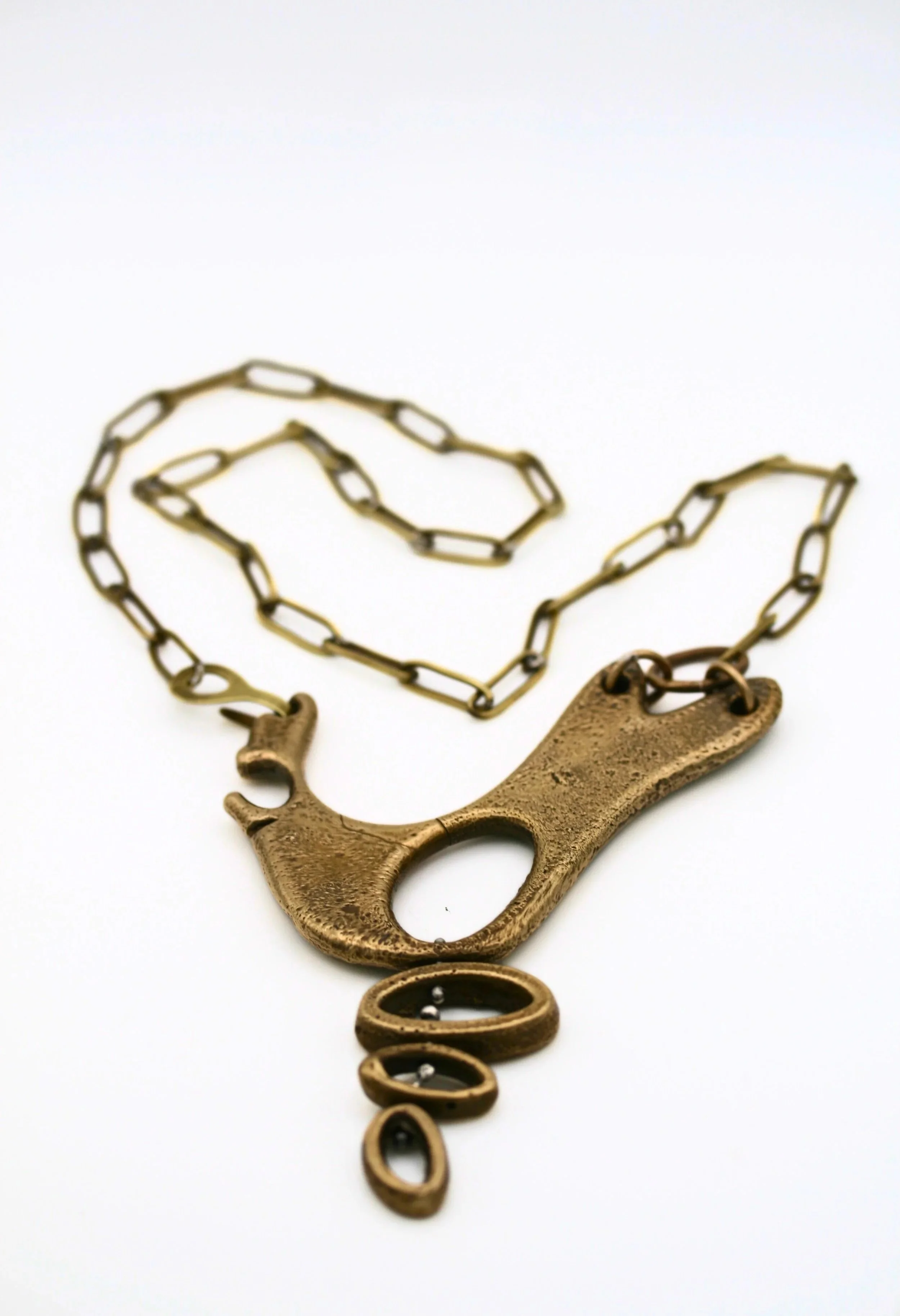
"Quercus Spilth", Sandcast aluminum, bronze, sterling silver and brass, 2025How does your creative practice allow you to flourish (grow, thrive, blossom)?
“My creative practice allows me to flourish by rooting me in cycles of transformation and connection. Working with reclaimed and upcycled materials, I take what is broken, overlooked, or discarded and reimagine it into jewelry and sculpture that carry stories of resilience. In this process, I see a reflection of queer existence itself: the act of creating beauty, meaning, and community from the margins.
Teaching and communal making are essential to this flourishing. Whether leading children in sandcasting or crafting props for immersive storytelling, I thrive in spaces where creativity builds collective wonder. These collaborations remind me that flourishing is not a solitary act but one nurtured through shared play, stewardship, and imagination.
Through my work, I blossom by bridging the mythic and the everyday. Each piece I make is both personal expression and invitation—an opening for others to see themselves connected to nature, to each other, and to futures shaped by care and possibility.”
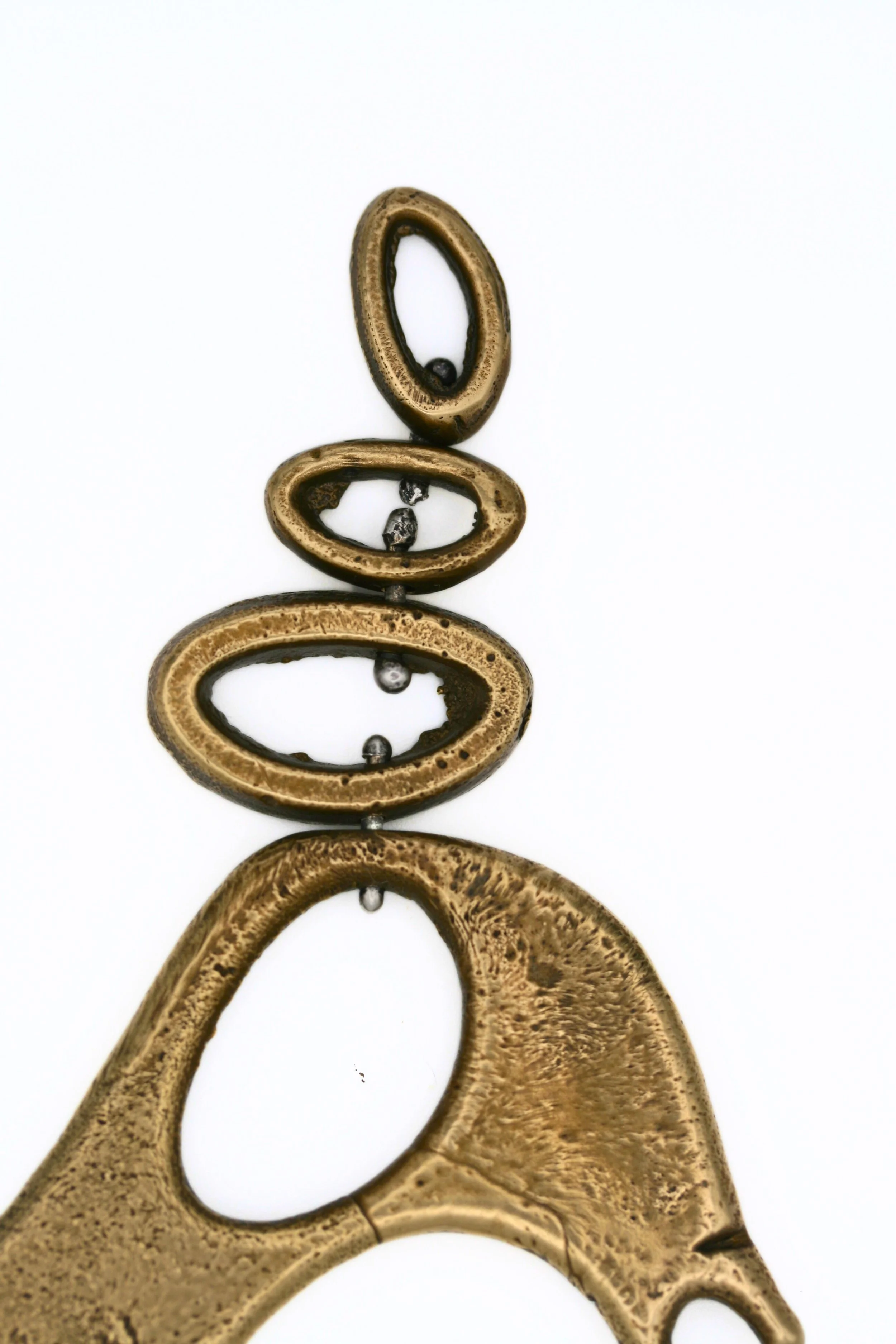
Photographs Courtesy of the Artist
As a queer+ artist, what would you like to see and/or what do you need in order to flourish during this time?
“As a queer artist, I flourish when there is space to be fully seen—in my complexity, fragility, and strength. I need opportunities where queer makers are not treated as exceptions or tokenized voices, but as vital contributors to contemporary culture. Exhibitions like [queerphoria] matter deeply because they create platforms of visibility, dialogue, and affirmation that help sustain us in the face of erasure.
I need access to resources—funding, teaching opportunities, residencies, and material support—that allow my practice to grow without compromising my values. So often, queer artists navigate scarcity and precarity while being asked to give endlessly of ourselves. To thrive, we need systems that prioritize sustainability, care, and reciprocity rather than extraction.
I also long for community—intergenerational, interdisciplinary, and geographically diverse. Flourishing means having circles of exchange where we can share skills, challenge one another, and celebrate without fear. In times of increasing violence, climate collapse, and political backlash, community becomes both shield and fertile soil.
Ultimately, what I need is space to keep imagining. Queer flourishing is a radical act because it insists on possibility amid collapse. To blossom, I need environments that honor experimentation, value craft, and nurture the transformative role of art in shaping how we see ourselves and the world.”
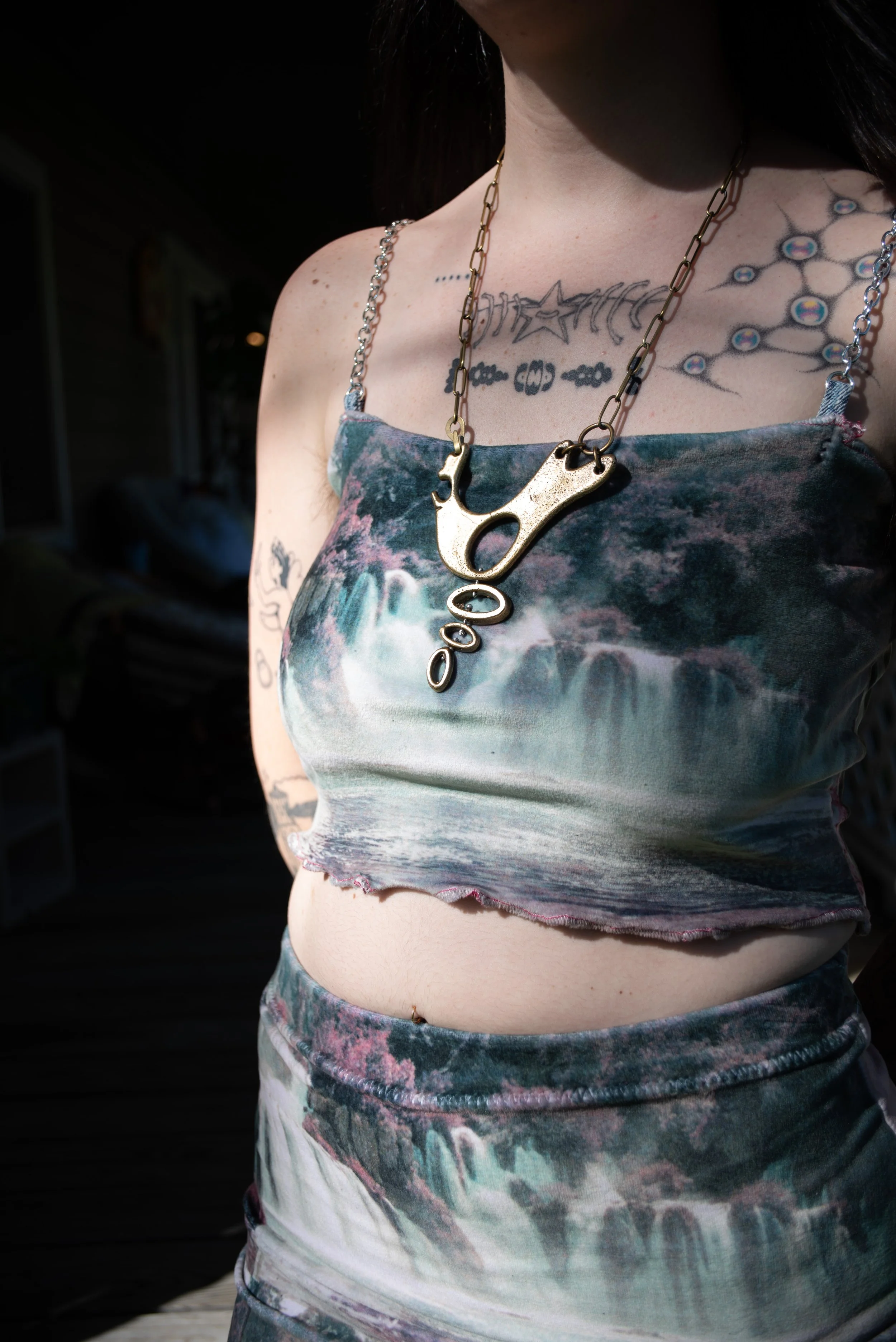
Photograph by Savannah Gibson @momentarylapsestudio
Anything else you would like to share about this work? This can be an important part of the process, sourcing materials, or research.
“The making of Quercus Spilth is inseparable from its materials. Every element was scavenged, gifted, or reclaimed—electrical cable from my friend who's a forklift mechanic, aluminum cans collected from my community embued with the joy of parties and camping trips, brass gallery wire salvaged from a frame shop. This slow process of gathering is part of the work: it transforms what is overlooked or cast aside into something that carries beauty, weight, and care.
The sandcasting process itself resists perfection. Each pour produces textures, voids, and flaws that I welcome as reminders of nature’s own irregularity and decay. These marks of chance ground the piece in the cycle of growth and decomposition that inspired it.
For me, sourcing and casting are acts of stewardship. The necklace is not just adornment but also a record of the land, labor, and systems that produced its raw materials. It asks: how might waste become a site of resilience, and how do we flourish within impermanence?” nature, to each other, and to futures shaped by care and possibility.”