
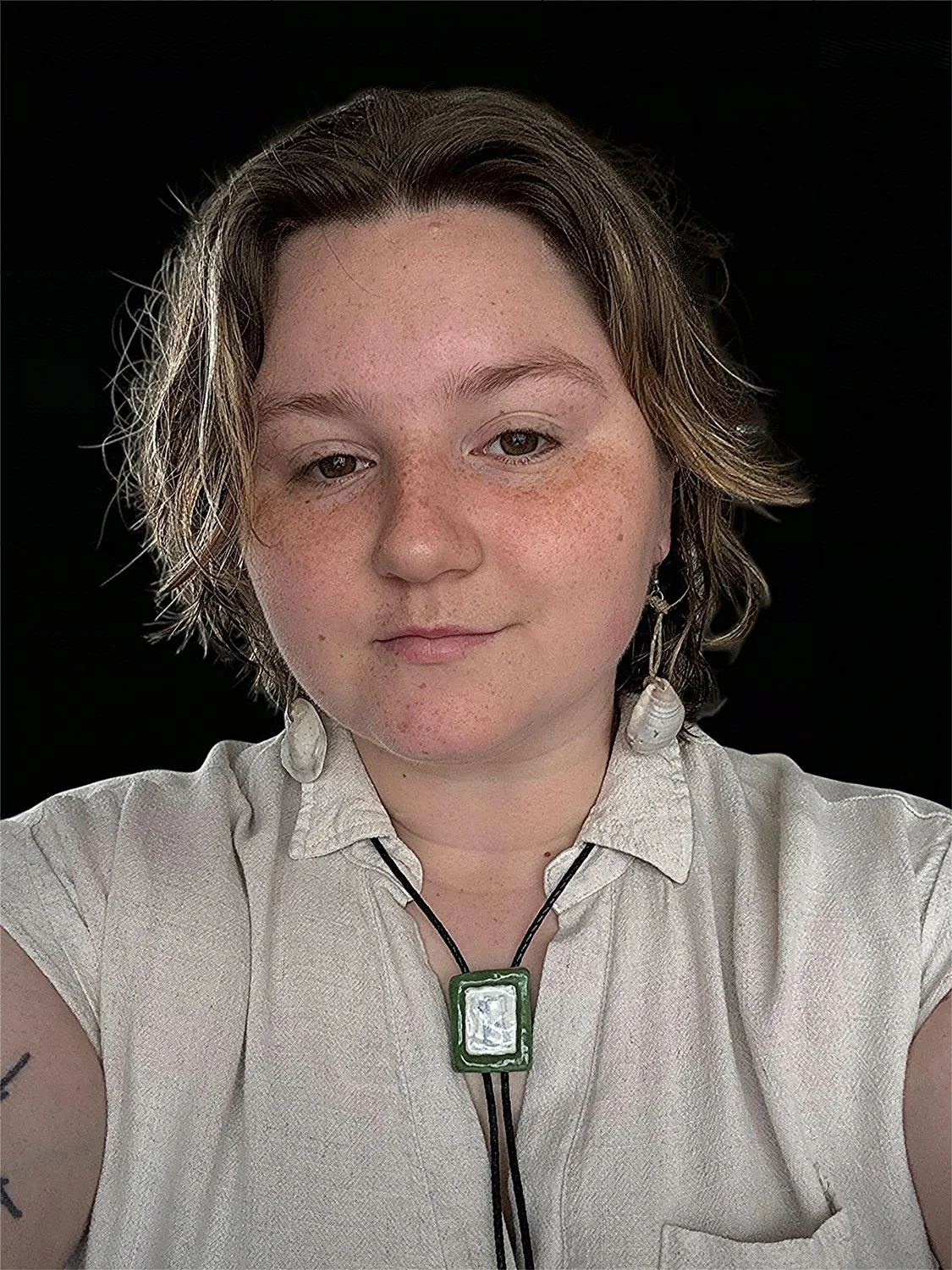
Thorne Rose Dobbs
They/He/She
Washington, D.C., US
Thorne Dobbs is an artist based in the DC area working as a freelance metal and craft artist and arts management. Thorne’s work is based around LGBTQ+ community issues and how anti-queer legislation affects queer American identity, particularly around trans people's fight for bodily autonomy. Outside of their BFA from Appalachian State University, Thorne studied at numerous craft schools throughout the Southeast including: Arrowmont School of Crafts, Pocosin Arts, Penland School of Crafts, John C. Campbell Folk School, and Baltimore Jewelry Center. Working within the craft school system allowed Thorne to grow their knowledge in metalworking, but also exposed them to unique crafts such as broom making and meshwork, mediums that are incorporated into their artwork today.
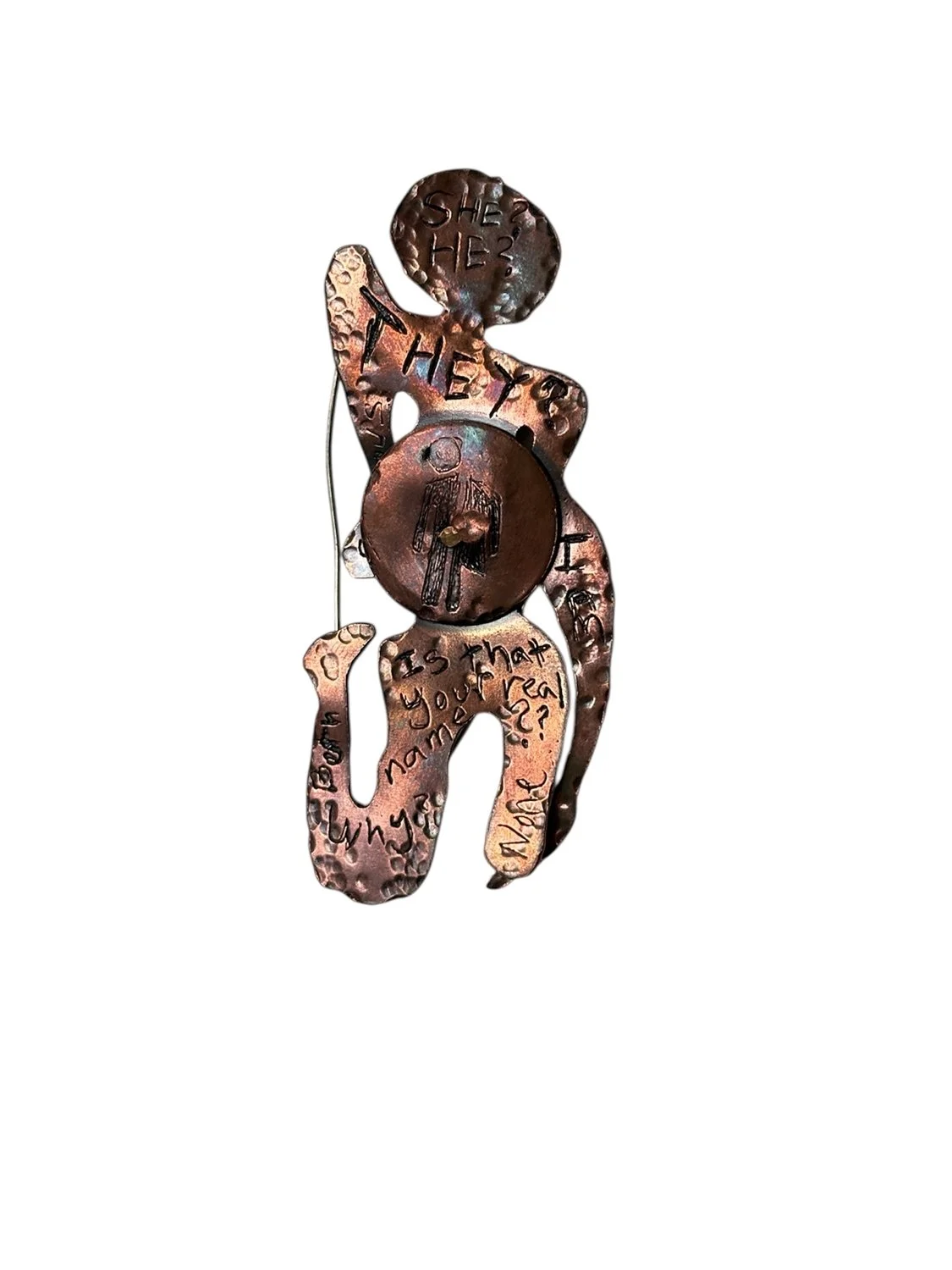
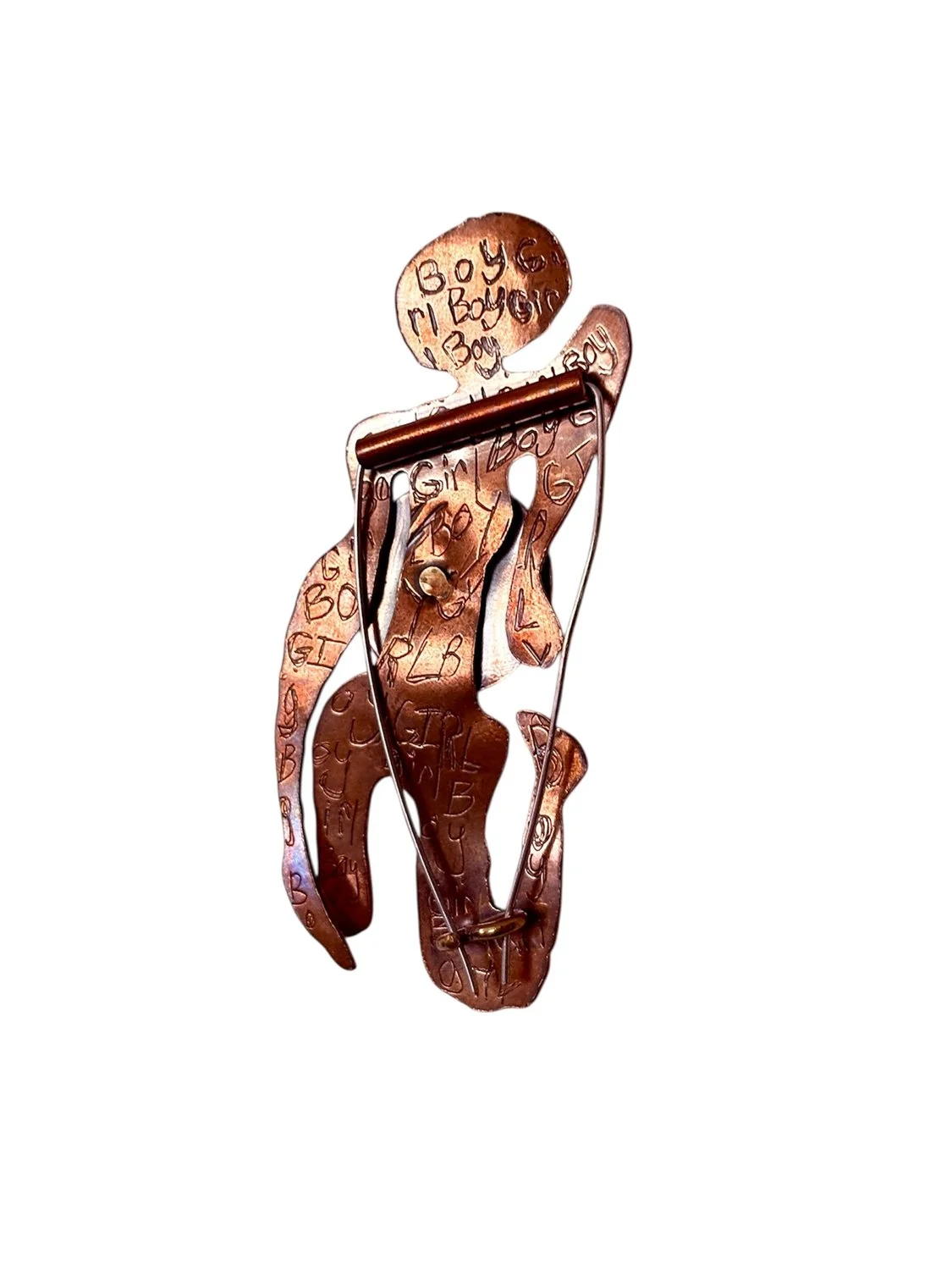
“As a maker, I enjoy exploring traditional craft processes and using them to express my experiences as a queer individual. There’s something deeply rewarding about being able to take a raw material such as metal, and create jewelry adornment that I can feel empowered and affirmed by when wearing. Most of my work is around my experiences as a dancer, and the liberating and restricting aspects dancing plays on my genderfluid identity and body image. I like experimenting with adjustable wearables that contain illustrative elements to reclaim negative experiences and create pieces that represent queer bodies as sacred.“
@idobbsart
How does your work relate to the theme of flourish(ing)?
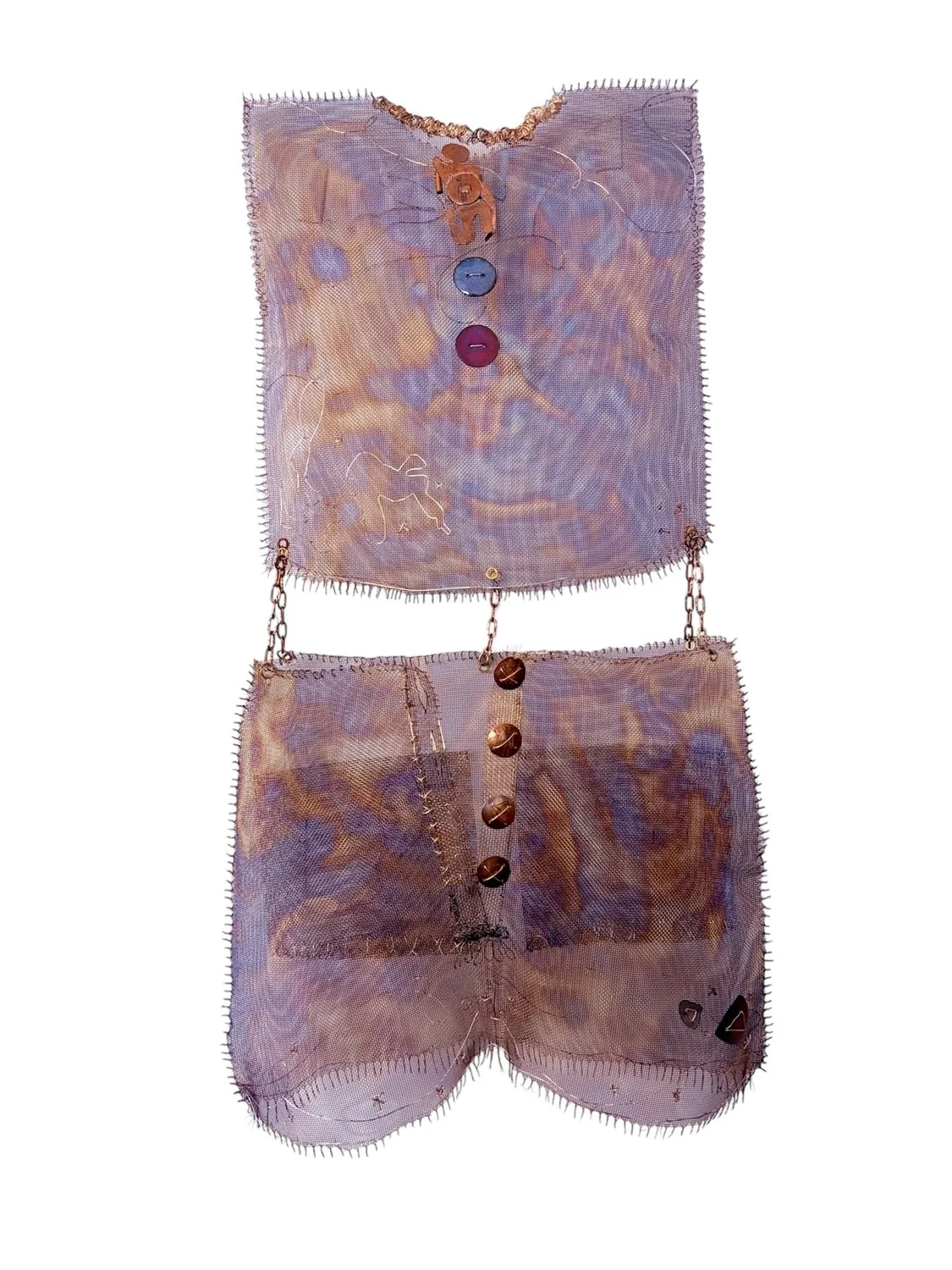
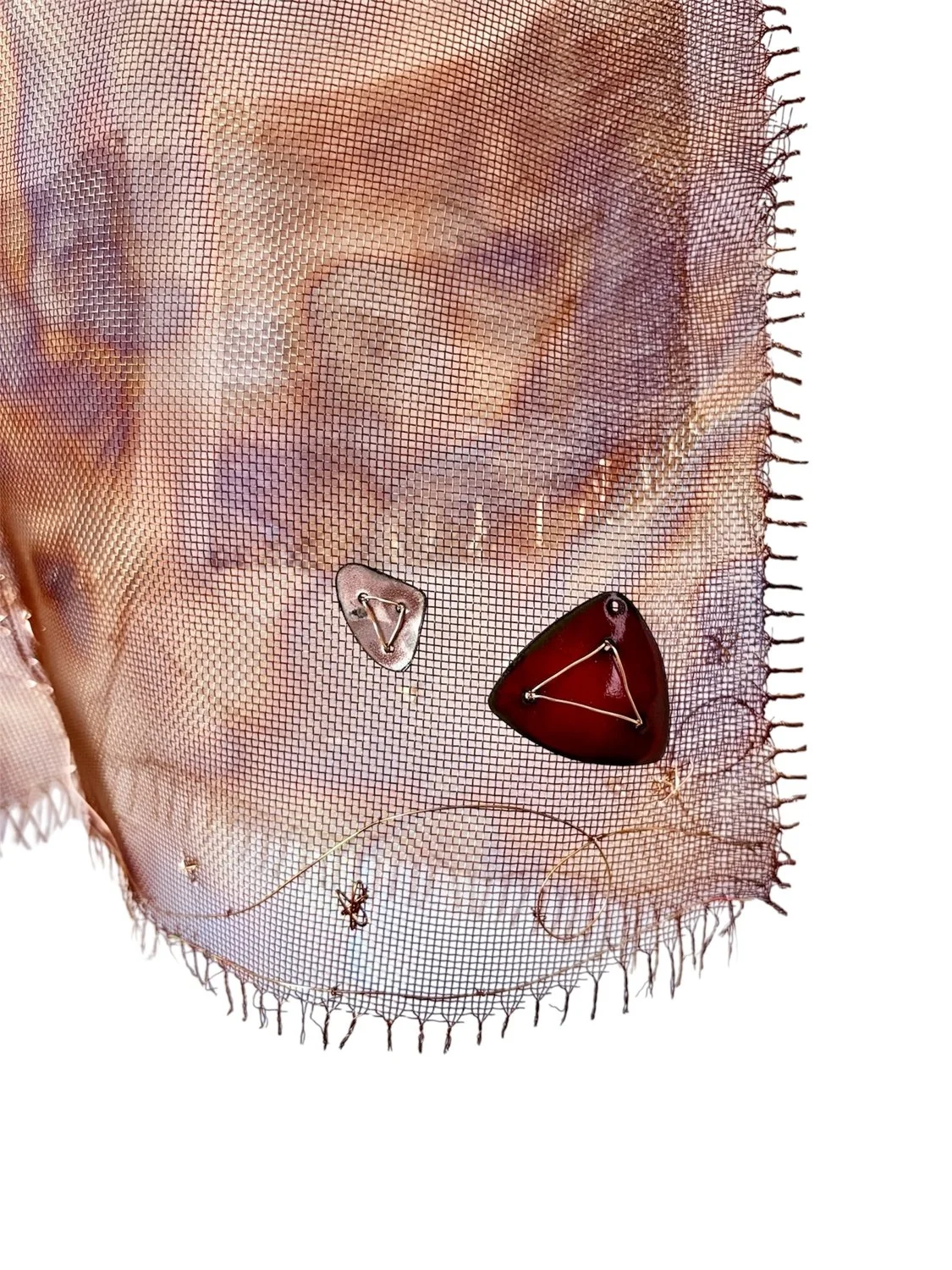
“Dress Code is a mesh sculpture with mixed media components bonded together to represent my first conscious experience of bodily shame along with my genderqueer experience that I later identified and embraced. This sculpture is a replica of a pajama set I owned as a child, and it was the first piece of clothing I remember being dress coded in. I specifically remember loving this set of PJs because it made my body look like a box and it lacked flowers or lace like so many other pairs of ‘girls’ pajamas that I owned. At the time, I didn’t realize that those pajamas made me feel affirmed in an identity I didn’t have words for, and that feeling was an early part of my genderqueer discovery. When I was dress-coded, I couldn’t understand why other kids with similar style clothing weren’t apprehended, thus developing a new sense of self consciousness. I made this piece not just for myself, but for the many kids, specifically trans youth who are harassed in their daily life.
Although Dress Code is a nod to a bad experience, I processed that experience as an out, genderqueer individual for activism in a time where trans existence is being scrutinized. Despite the backlash that trans people face daily on how we present ourselves, we still choose to wear the things that affirm our identity regardless of what's expected to pass in the binary or otherwise. With national distain and new legislation that’s actively harming both adult and youth trans people, I’ve seen, experienced, and witnessed trans people flourish in the midst of adversity.“
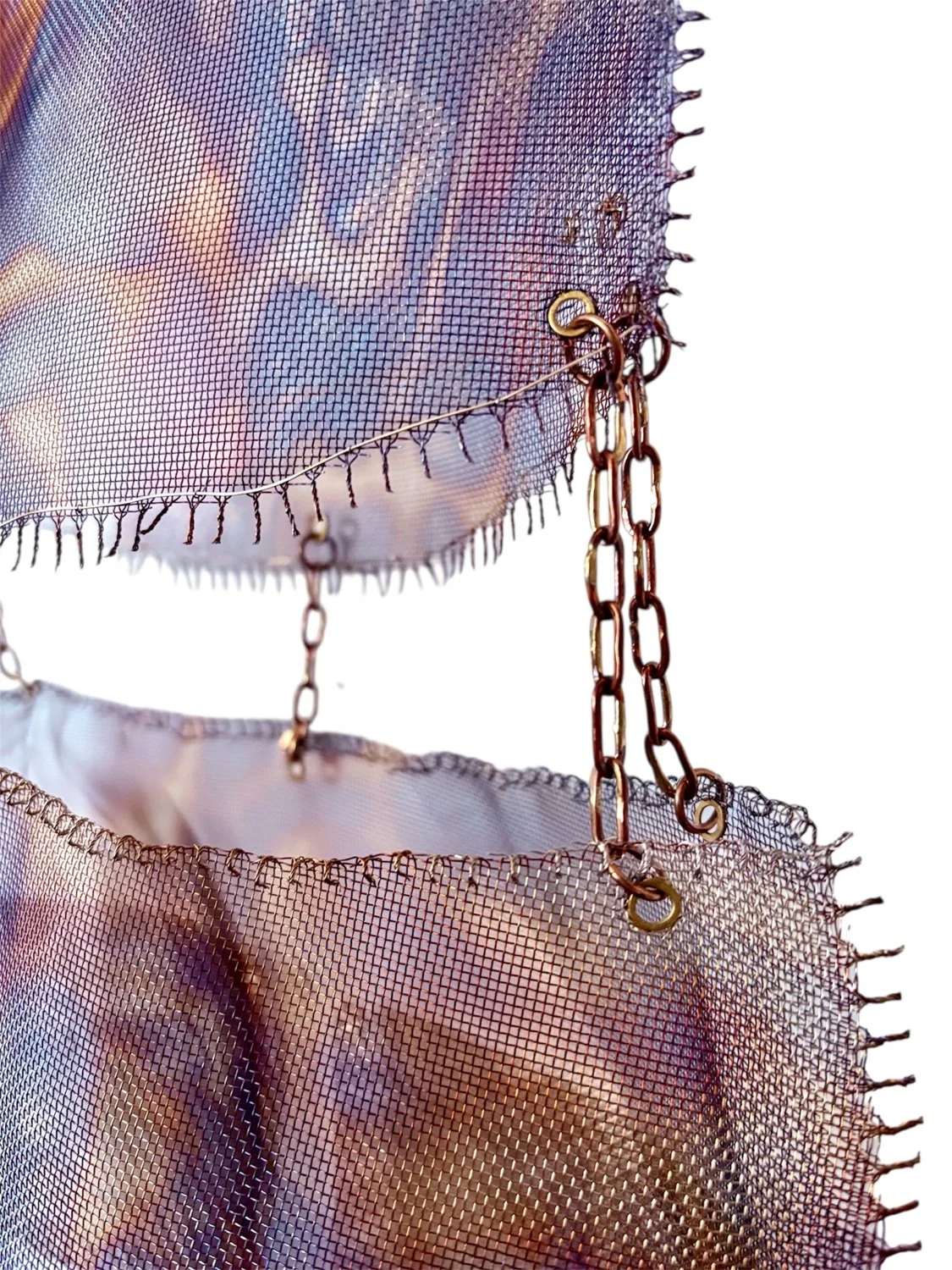
"Dress Code", Mesh window screening, mixed metal wire, copper, enamel, 23" x 10" x 4", 2025How does your creative practice allow you to flourish (grow, thrive, blossom)?
“Recently moving from a rural part of Appalachia to the DC area was a huge culture shock, but was a necessary step to find a plethora of queer resources I desired. D.C itself has a smaller art scene than other major American cities, but I’ve found that smallness allows for less isolation and a welcoming community. Since moving to the area in late July, I’ve already immersed myself within the local vending scene and quickly connected with a queer jeweler that's very generous with their space, allowing me to have a consistent practice in economically challenging times. While much of my daily life involves working to stay ahead of my bills, my art practice has become much more community based since moving here. Carving out time to join local creatives clubs and share my own knowledge is shifting my work in a stronger direction than anticipated after graduating earlier this year. The kindness that people have welcomed me with has encouraged me to keep pushing to make work, despite difficult times. I’m very grateful to those around me who celebrate my work and identity. “
As a queer+ artist, what would you like to see and/or what do you need in order to flourish during this time?
“As a queer artist living and working in the DC area, I’d like to see more receptiveness from gallery spaces (both small and large) to have a desire in sharing queer stories, especially the works of trans Americans. Having organizations show queer artwork and do what is right rather than living on neutral ground will help spread truth over the harmful rhetoric that's being thrown around by law makers to label queer individuals. After Trump took office for his second term, I’ve felt a sense of betrayal from brands and institutions that wiped their support for LGBTQ+ rights and quickly folded to a cowardice and fascist agenda. In these times, I cling close to my queer community and we find ways to crowd fund each other's needs, as we are truly the only stable support we have right now. With just our communities, we are simply surviving, not flourishing. Institutions need to recognize that queerness shouldn’t be seen as a trend, but rather a common part of the human experience that's worth celebrating and making visible. Only then can we comfortably flourish.”
Anything else you would like to share about this work? This can be an important part of the process, sourcing materials, or research.
“Dress Code is made from recycled window mesh screens and the binding technique was something I learned from a class taught by Sculptor and artist Lanny Bergner. I chose to combine multiple processes such as enameling and etching to construct details onto the form, and tell a story that's stuck in my memory. The wire stitching are individually binded wire outlines of images from my sketchbook of the human body, specifically depicting my genderqueer self. I chose to combine all these processes to capture my first conscious memory of being dress coded, and make something that speaks to the absurdity of policing what clothing is acceptable on different people's bodies, particularly trans youth.”
Photographs Courtesy of the Artist