
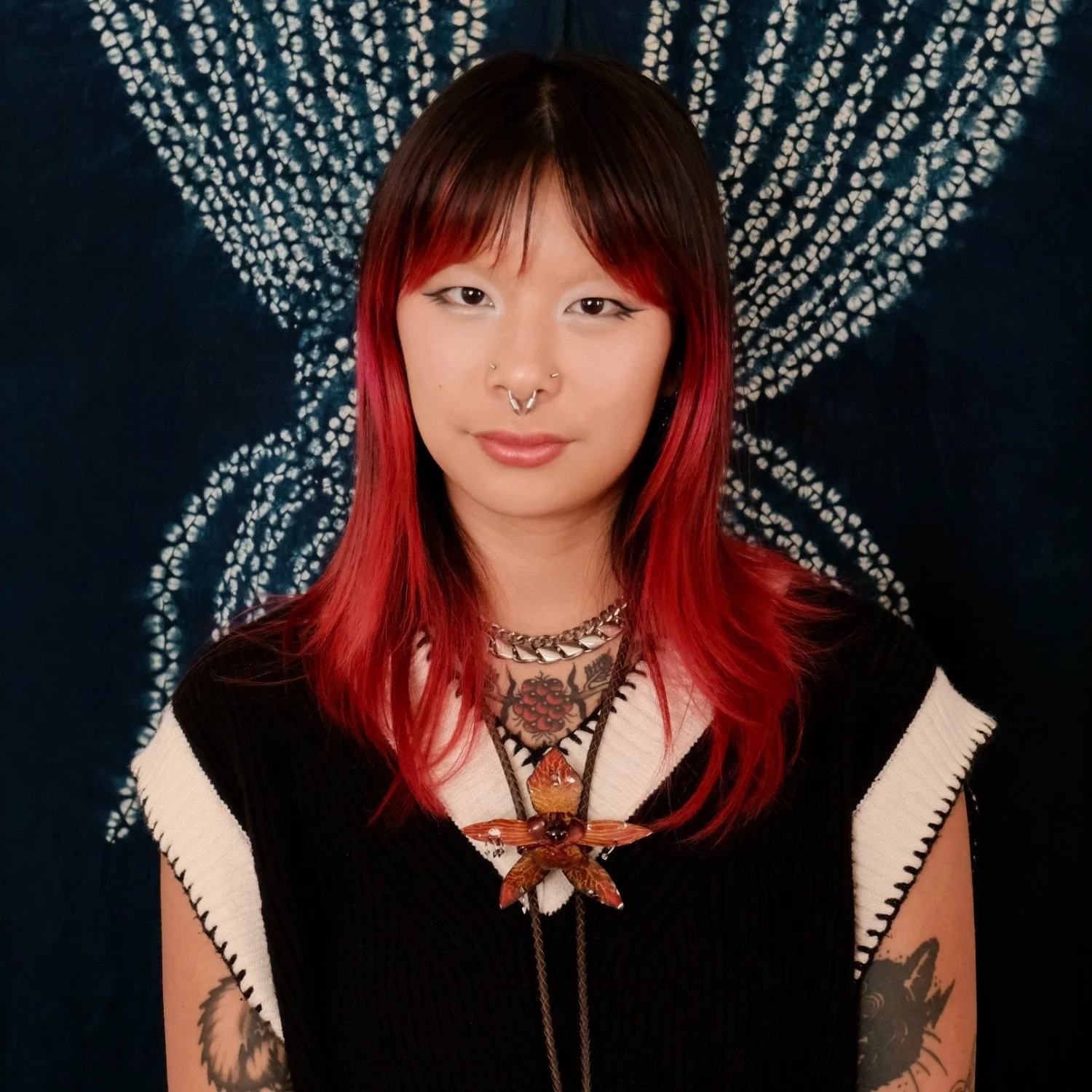
Lily Marylander
She/Her
San Francisco, CA, USA
Born in Wuhan, China, and adopted at 13 months old by her Chinese mother and Jewish father, Lily grew up in Oakland, California, surrounded by diverse perspectives and cultures. She is currently in her final semester at California College of the Arts, where she is pursuing a double major in Sculpture and Jewelry as well as a minor in Ecological Practices. When not locked in her studio, Lily enjoys hanging out with her pet ball python, Cheesecake, and going dancing.
“As a queer, adopted, Chinese, and Jewish woman, I often struggle to find complete belonging in one community. My work contemplates internal and external struggles to connect and find empowerment, and validity. I invite viewers to contemplate their relationships with identity and how it is negotiated within societal expectations and personal truths. I work with traditional metal media including steel, aluminum, silver, copper, and brass as well as found objects. As I continue to move forward in life, I am committed to both honing my technical skills and self-discovery.”
www.lilymarylander.com
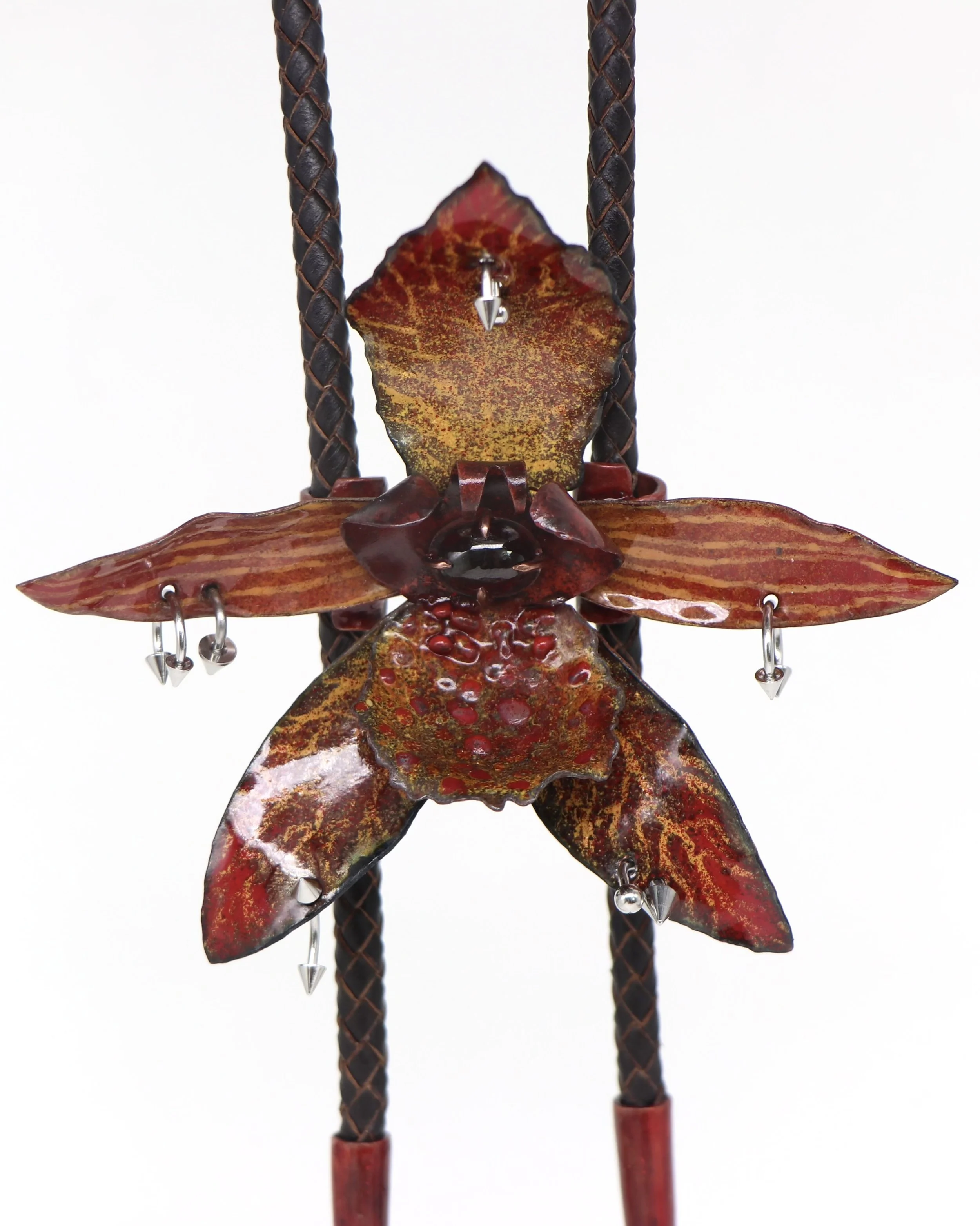
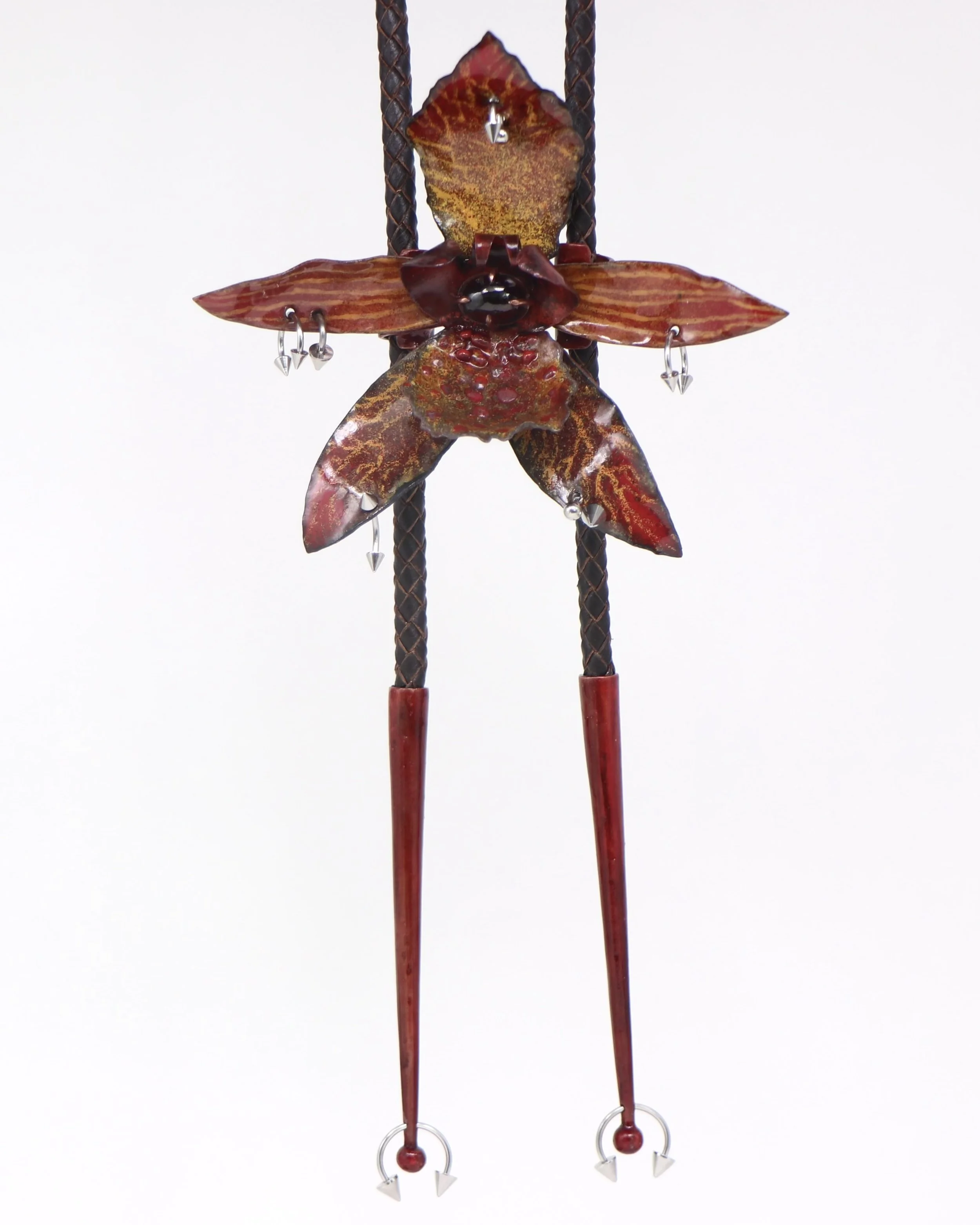
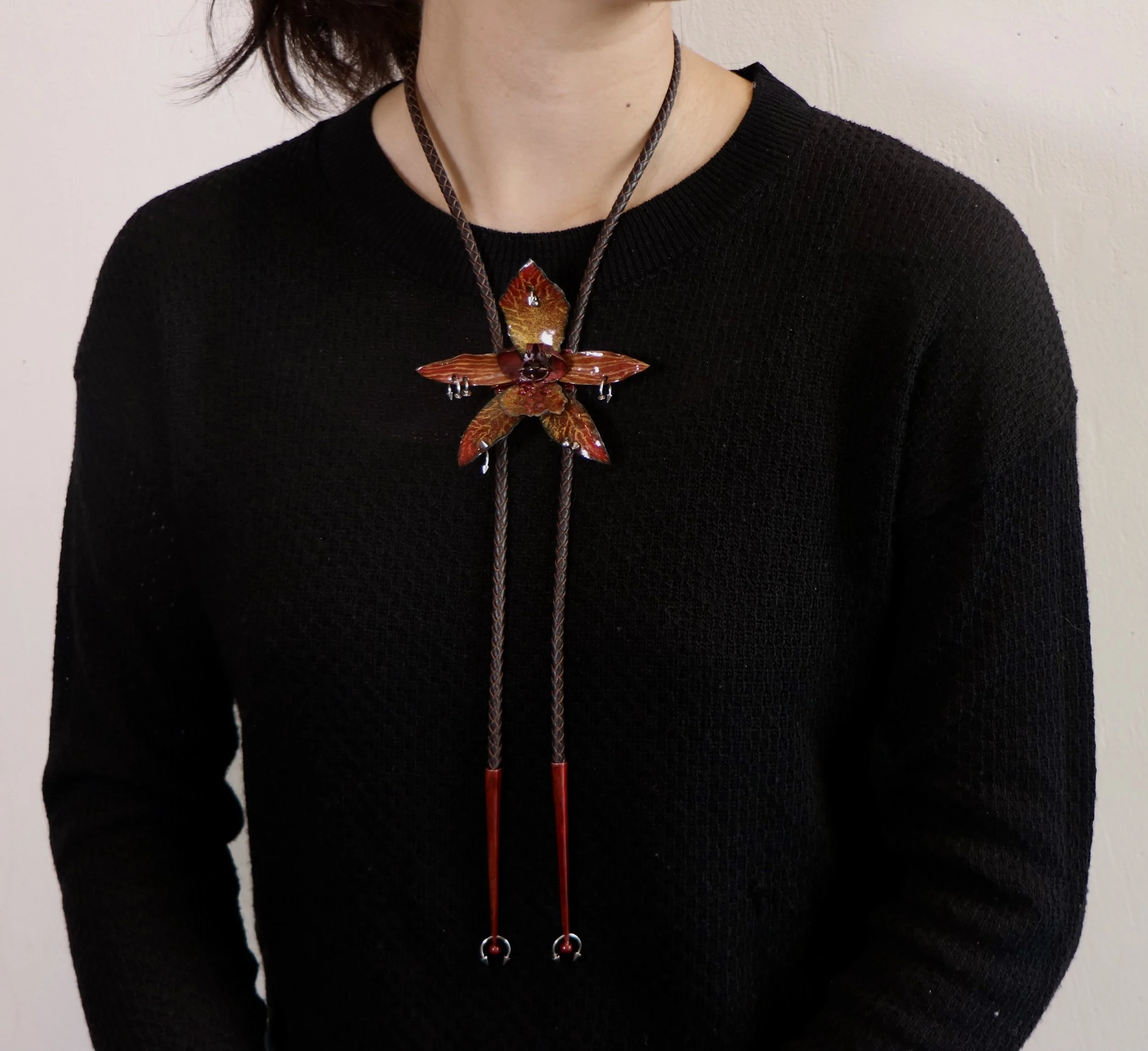
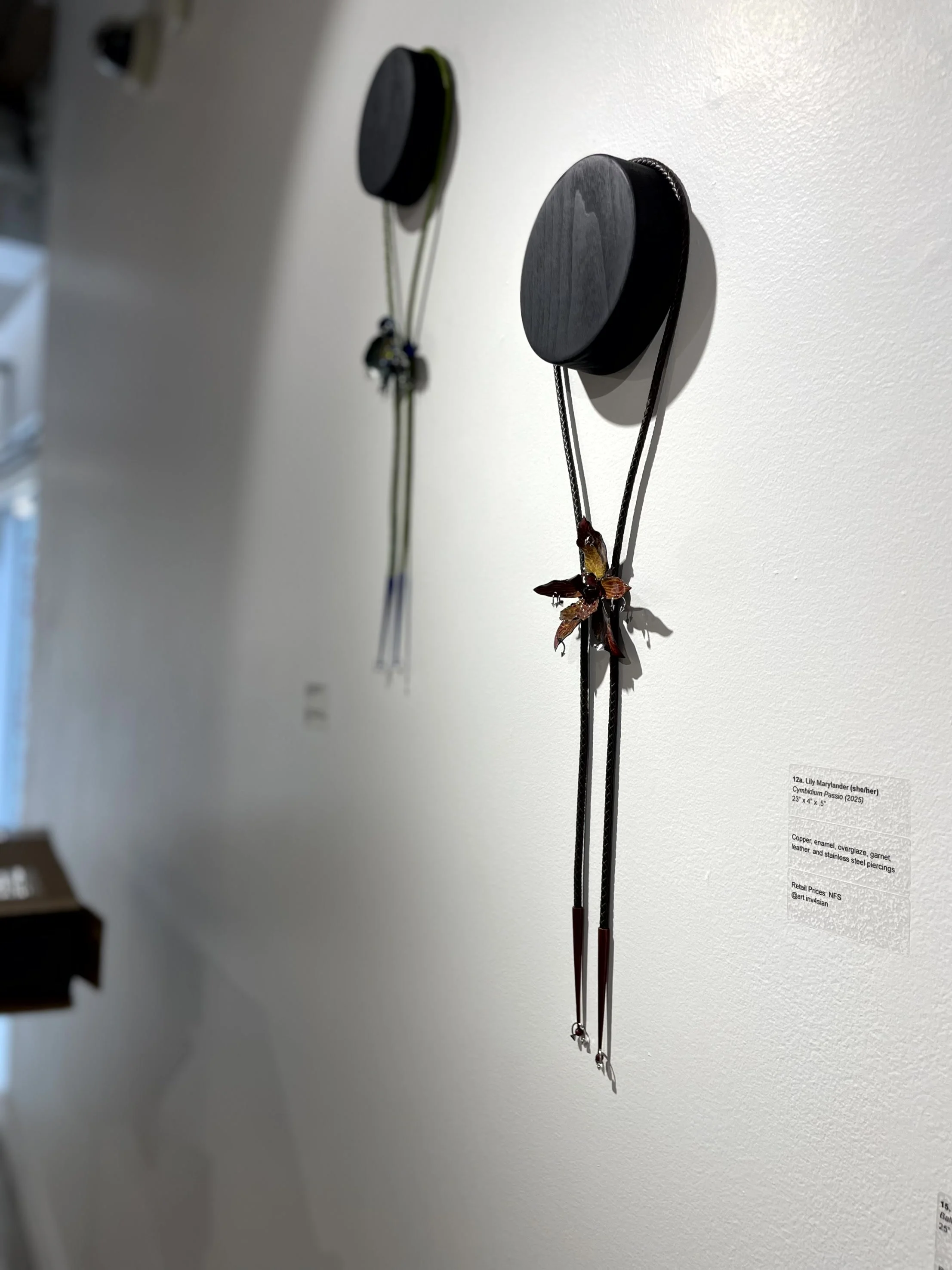
"Cymbidium Passio", copper, enamel, overglaze, garnet, leather, stainless steel piercings, 23” x 4” x 0.5”, 2025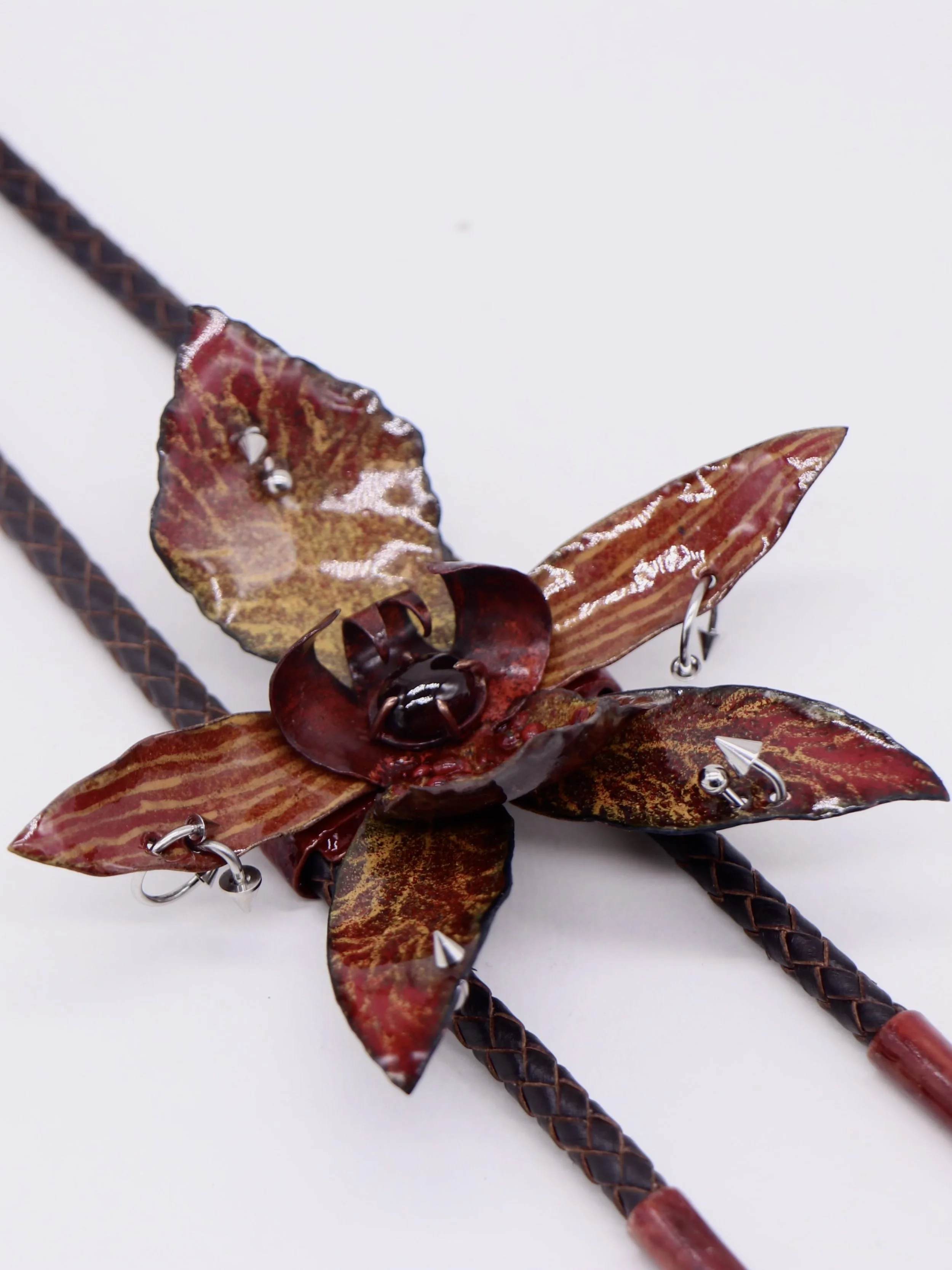
How does your work relate to the theme of flourish(ing)?
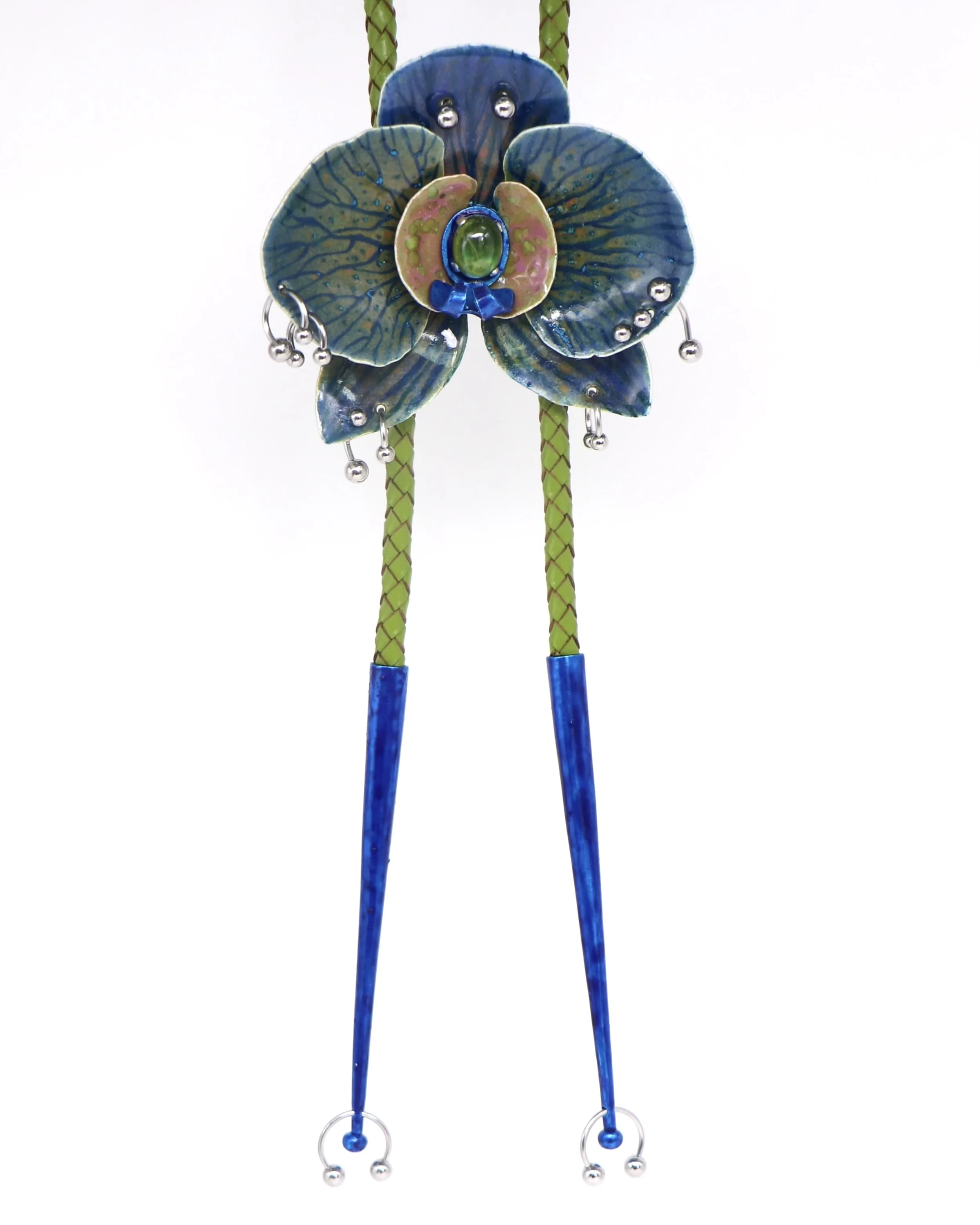
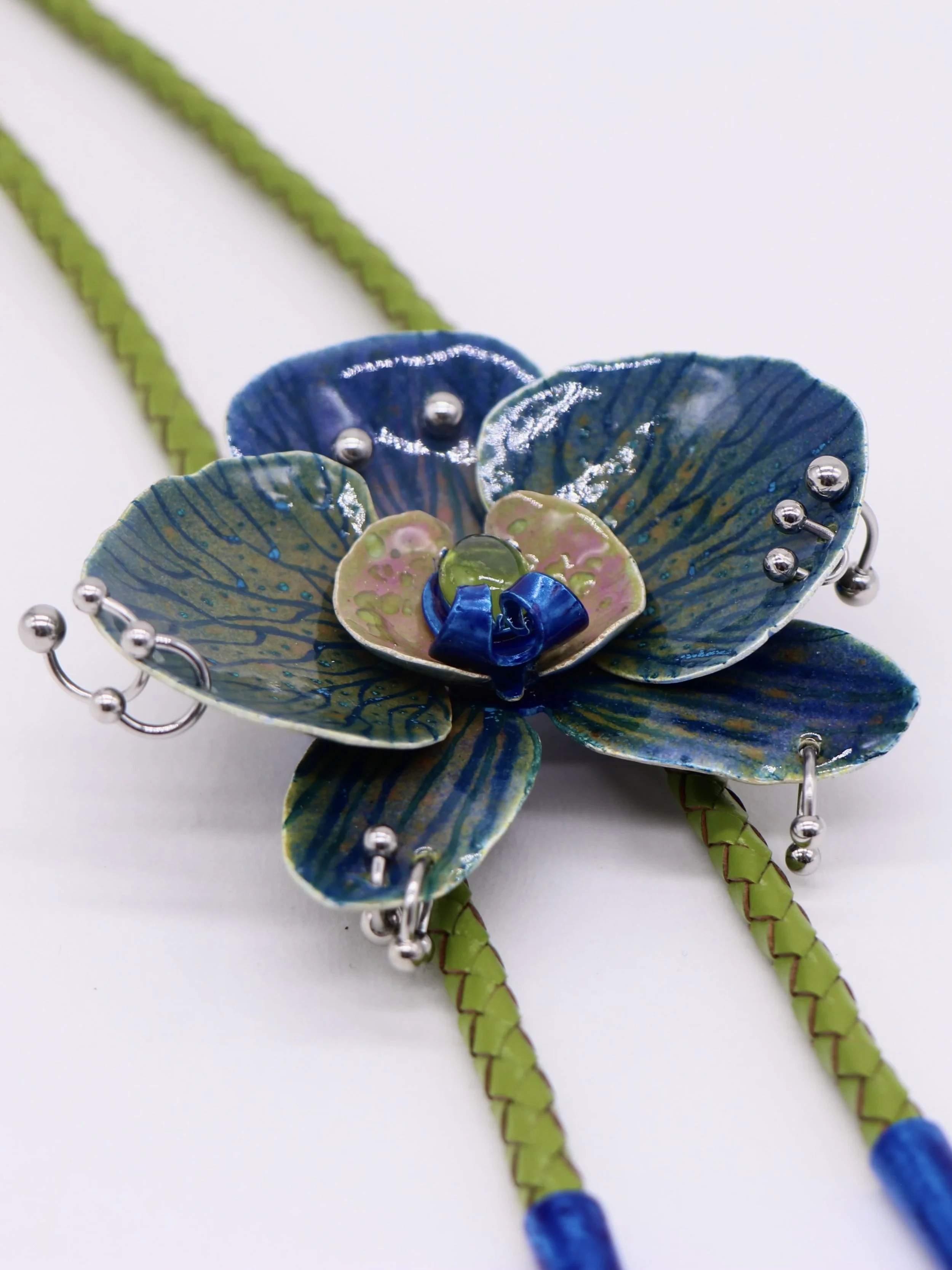
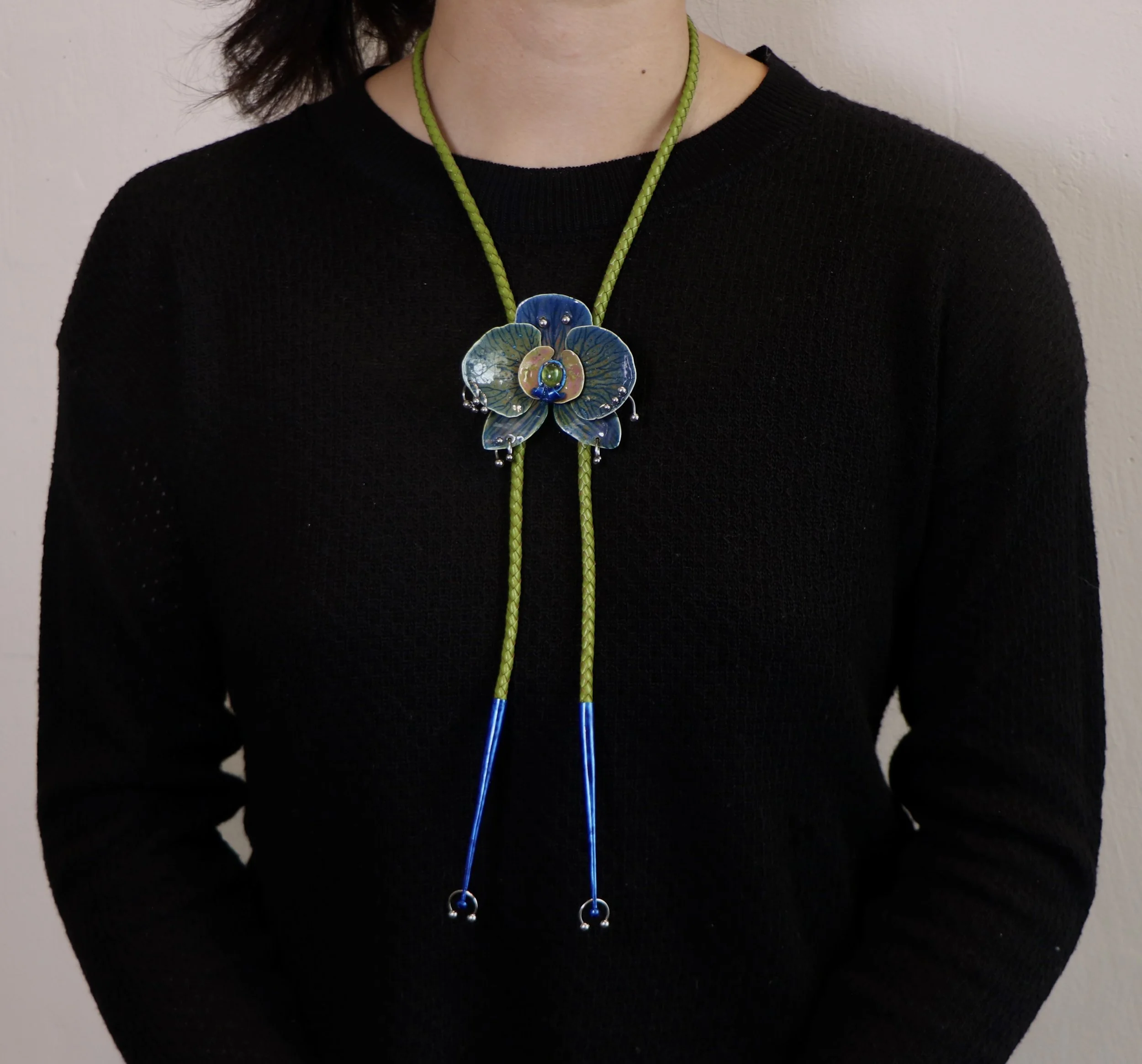
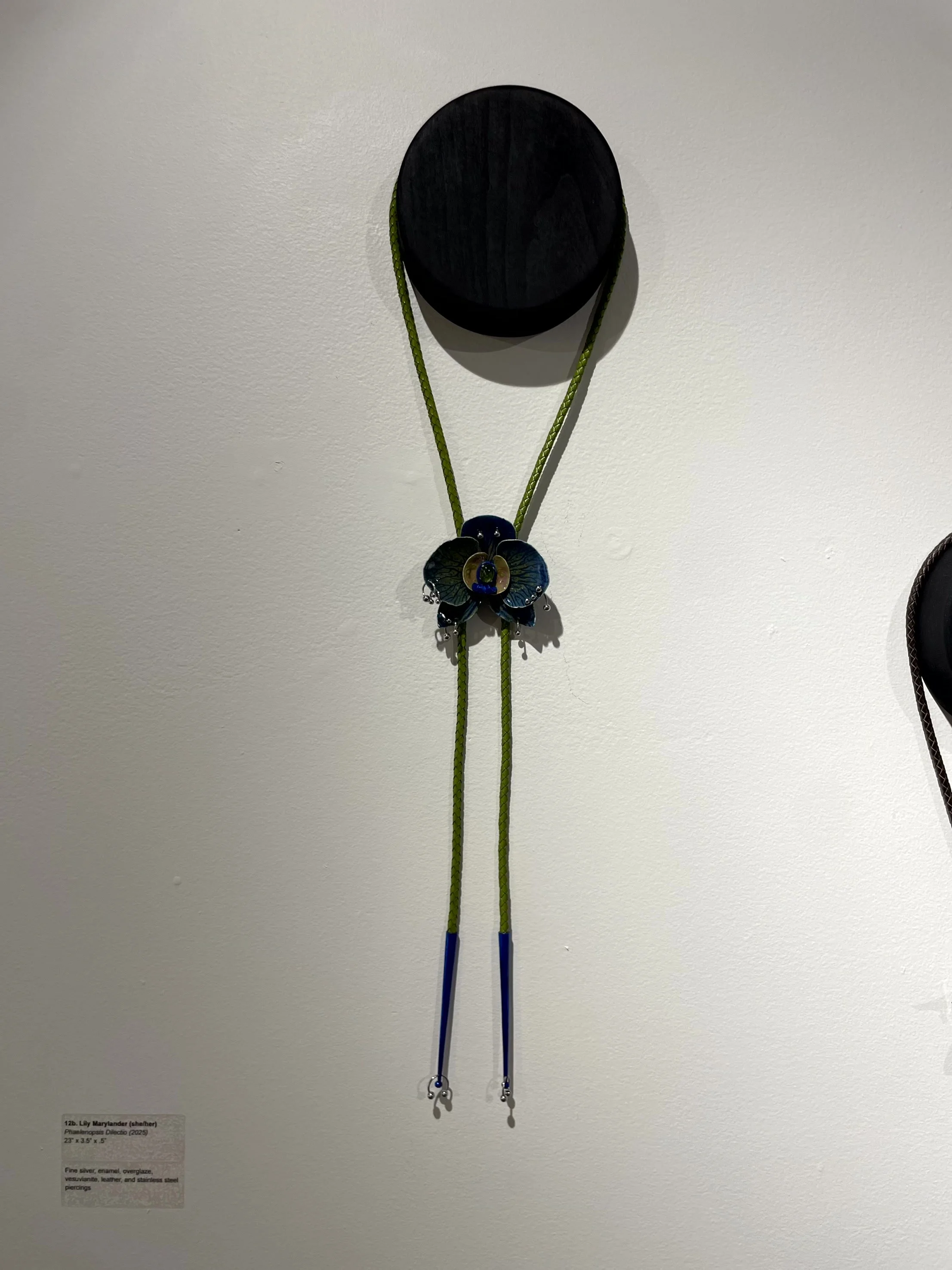
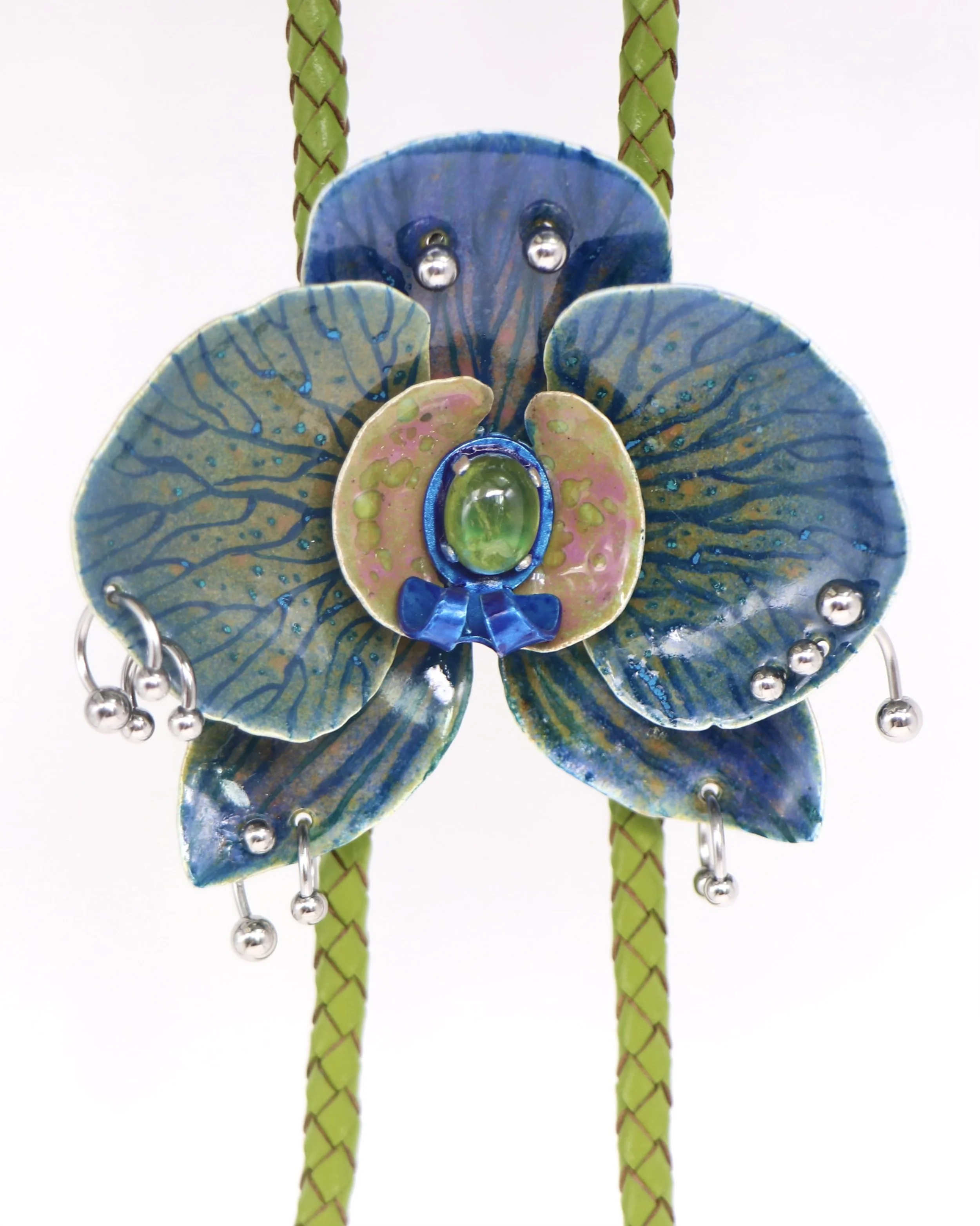
"Phaelenopsis Dilectio", Fine silver, enamel, overglaze, vesuvianite, leather, stainless steel piercings, 23” x 3.5” x 0.5”, 2025“My diptych of orchid bolo ties interprets the body as a site where both suffering and sensuality coexist. Drawing inspiration from Georgia O’Keeffe, alternative aesthetics, and queer culture, I created pierced petals to evoke chosen pain and self-expression with a distinctly sapphic undertone. The act of piercing transforms the orchid into a metaphor for resilience, echoing the ways queer bodies reclaim agency through practices of adornment and modification.
Orchids themselves symbolize rare beauty and adaptability, known for their ability to flourish in diverse and often hostile environments. By reimagining these flowers through the more androgynous format of a bolo tie—an accessory historically associated with masculinity and now reclaimed within contemporary fashion—I connect their adaptability to the queer body’s capacity to endure, transform, and thrive despite constraints. The works suggest that flourishing is not always a simple state but sometimes a negotiation of tension, like a plant growing through concrete cracks.
The two works in this series embody different facets of flourishing. Cymbidium passio (“passion” or “suffering”) burns with pointed, red petals, evoking fiery lust and the possibility of pain that comes with desire. Phalaenopsis dilectio (“affection” or “love”) softens into rounded, blue forms that embody fluidity, care, and tenderness. Together, the pair represents the spectrum of love and growth. And how thriving requires embracing both intensity and vulnerability.”
How does your creative practice allow you to flourish (grow, thrive, blossom)?
“My creative practice has been the foundation of both my personal and professional growth. Working across mediums, I continually challenge myself to expand my technical skillset while deepening the conceptual language behind my work. Each new piece teaches me how to translate complex ideas into tangible form, pushing me to grow not just as a maker but also as a thinker.
This growth extends beyond the studio into my relationships with others. My practice has connected me to teachers, mentors, and peers who have guided, challenged, and supported me. I have learned how to advocate for my work, especially when it touches on taboo or difficult subjects, and to fight for its visibility within academic and professional settings. Through these experiences, I’ve gained confidence in public speaking, in articulating my ideas clearly, and in building lasting collaborations with peers who inspire me.
My creative process has also shaped how I navigate personal relationships. Working toward artistic goals has taught me to be clear about the type of support I need and the boundaries I hold. This honesty has made my relationships outside of my art practice stronger and more sustainable.
Right now, my career feels like it is just beginning to take root and bloom. That sense of hopefulness and the desire to continue tending and nourishing it is the same care I try to bring to every other aspect of my life. Flourishing, for me, happens in the studio, but it also extends into conversations and collaborations that shape my life trajectory.”
As a queer+ artist, what would you like to see and/or what do you need in order to flourish during this time?
To flourish as a queer artist, I need sustained support in spaces that value both experimentation and professional development. Opportunities like Queer Metalsmiths are vital because they create visibility and community in a field where queer narratives have historically been overlooked or just not approached. I hope to see more platforms that not only exhibit queer work but also invest in mentorship, networking, and financial resources for emerging artists. These forms of support are essential for sustaining a long-term career and ensuring that queer voices continue to expand the medium of metalsmithing.
I am currently entering my last semester in school and while I’m nervous, I am so so excited to have the time to pursue whatever I want without the confines of class assignments. I want to finish with strength and ambition, but I also want to avoid burnout. To continue creating post grad, I need to be mindful of taking breaks in order to conserve energy; both for my work and wellbeing.
In today’s political climate, flourishing also requires resilience. It has been disheartening to see decades of progress for queer, trans, and marginalized communities reversed or threatened. At times it feels overwhelming, but I truly believe in the power of artists to create change by speaking up, building solidarity, and making work that resists silence. I want to see more people pushing back and finding the courage to keep making work that affirms and protects queer life..”
Anything else you would like to share about this work? This can be an important part of the process, sourcing materials, or research.
“Creating these orchid bolo ties taught me how to streamline and refine my creative process. I began with detailed sketches to generate base ideas, followed by paper models to work out scale and proportion. These paper layers served as templates for sawing out the various metal layers and mapping out the logistics of fabrication. Because the enamel wouldn’t allow for soldering, I decided to tube rivet everything together. This required careful tweaks throughout the process to ensure the pieces fit together in the end.
This project also marked my first major experience working with enamel, a notoriously unpredictable material. To prepare, I created a series of test tiles to experiment with color and firing, giving me more control over the outcome of the final works. I fabricated the copper orchid first, which allowed me to resolve challenges before moving on to the fine silver version. That built my confidence and reduced the stress of working with more expensive material. Finally, I sourced leather cords through Etsy that complemented the enamel colors.
These bolo ties represent my broader exploration of jewelry as a site for layered narratives. They embody bodily and emotional stories while also serving as a showcase of technical skill. For me, they sit at the intersection of adornment and sculpture as objects that can be worn, displayed, and used to provoke conversation.”
Photographs Courtesy of the Artist