
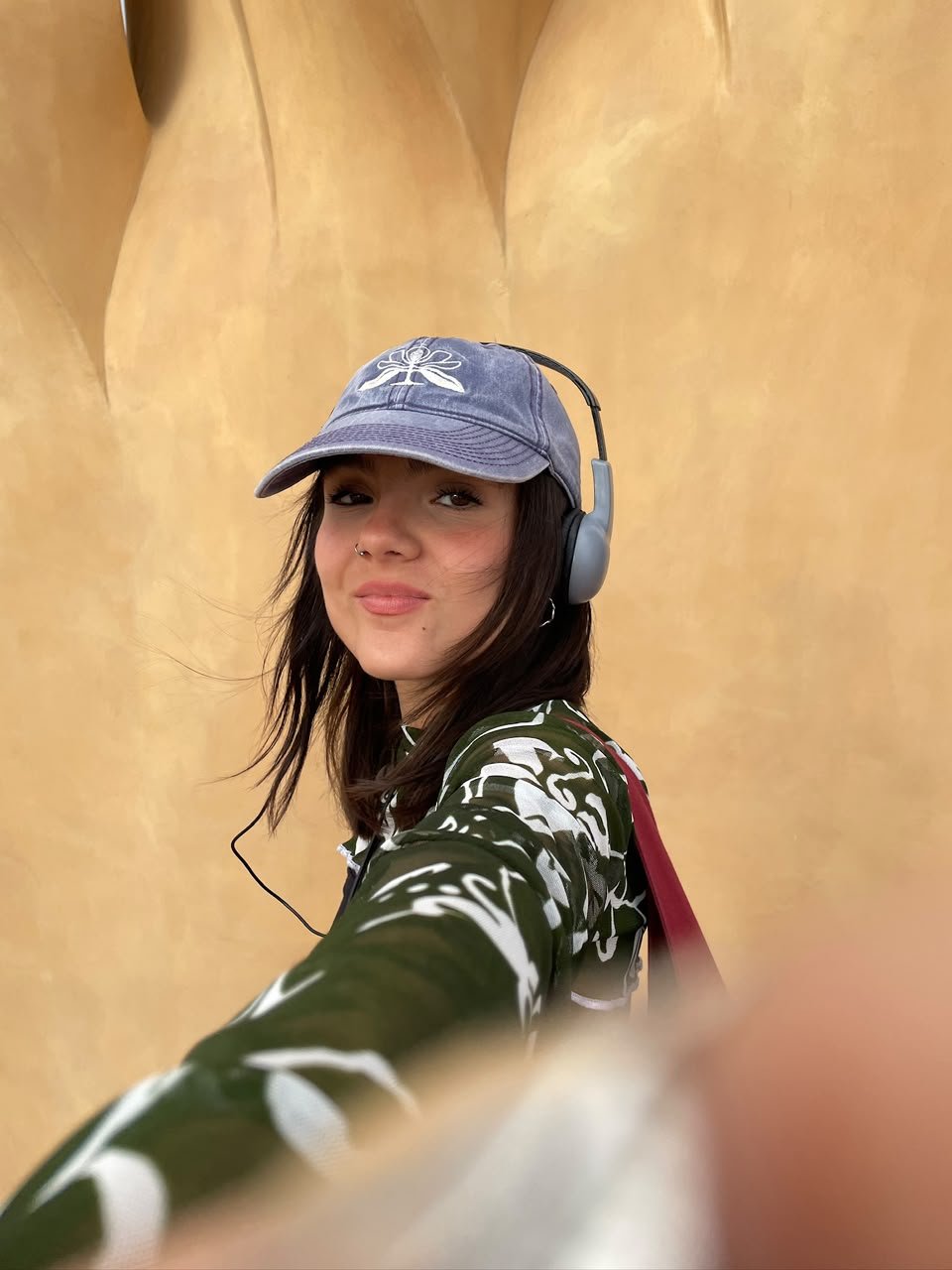
Alejandra Muñoz Delgadillo Ascandra
She/Her
Guadalajara, Jalisco, México
“Ascandra (Guadalajara, Jalisco) is a multidisciplinary artist who explores microscopic intimacy with the natural world. Through an affective reinterpretation of scientific methods, her practice investigates symbiotic relationships between human and non-human beings, understanding the body as a permeable and interdependent territory.
She works across sculpture, painting, soundscape, writing, and digital media, developing practices in which knowledge emerges through sensitive relationships between different forms of life. In 2024, she created Nephila Chamber, a jewelry project that imagines the body as a territory capable of surviving ecological collapse through fantasy and ornamentation.”
“My practice emerges from my experience in art conservation, where I developed a sensitivity to material deterioration and the presence of microorganisms. This led me to investigate microbial life and symbiotic relationships between human and non-human bodies, exploring how these interactions shape symbolic processes, such as the assimilation of the individual and imagination as an enactive process. I work across sculpture, painting, sound, writing, and digital media to explore interdependence and our sensitive relationship with other forms of life. Through speculation and methods of connection with biological beings and geological territories, I seek to understand the intrinsic harmony within the dynamics intertwining the self and the other.”
@ascandra__
How does your work relate to the theme of restoration?
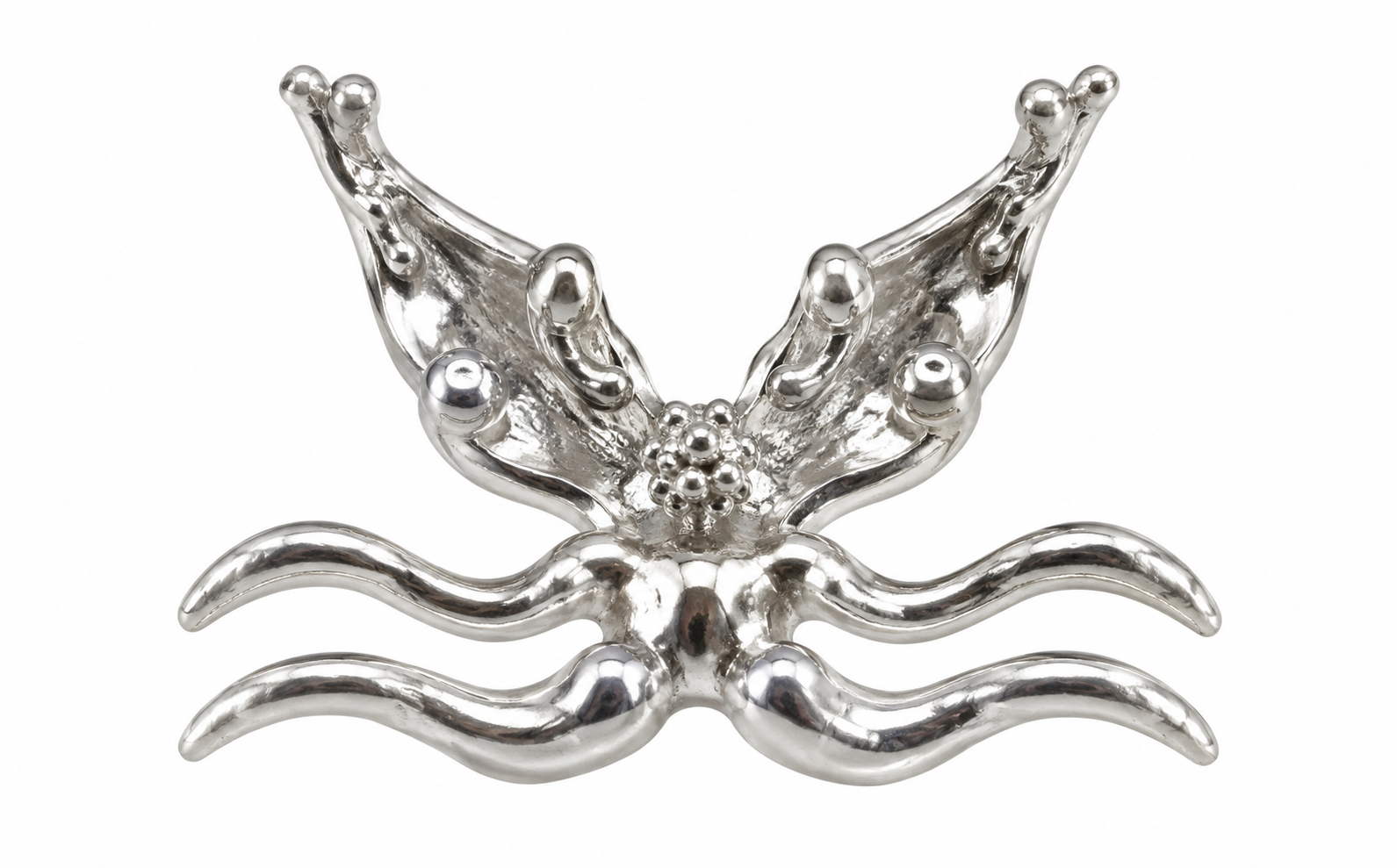
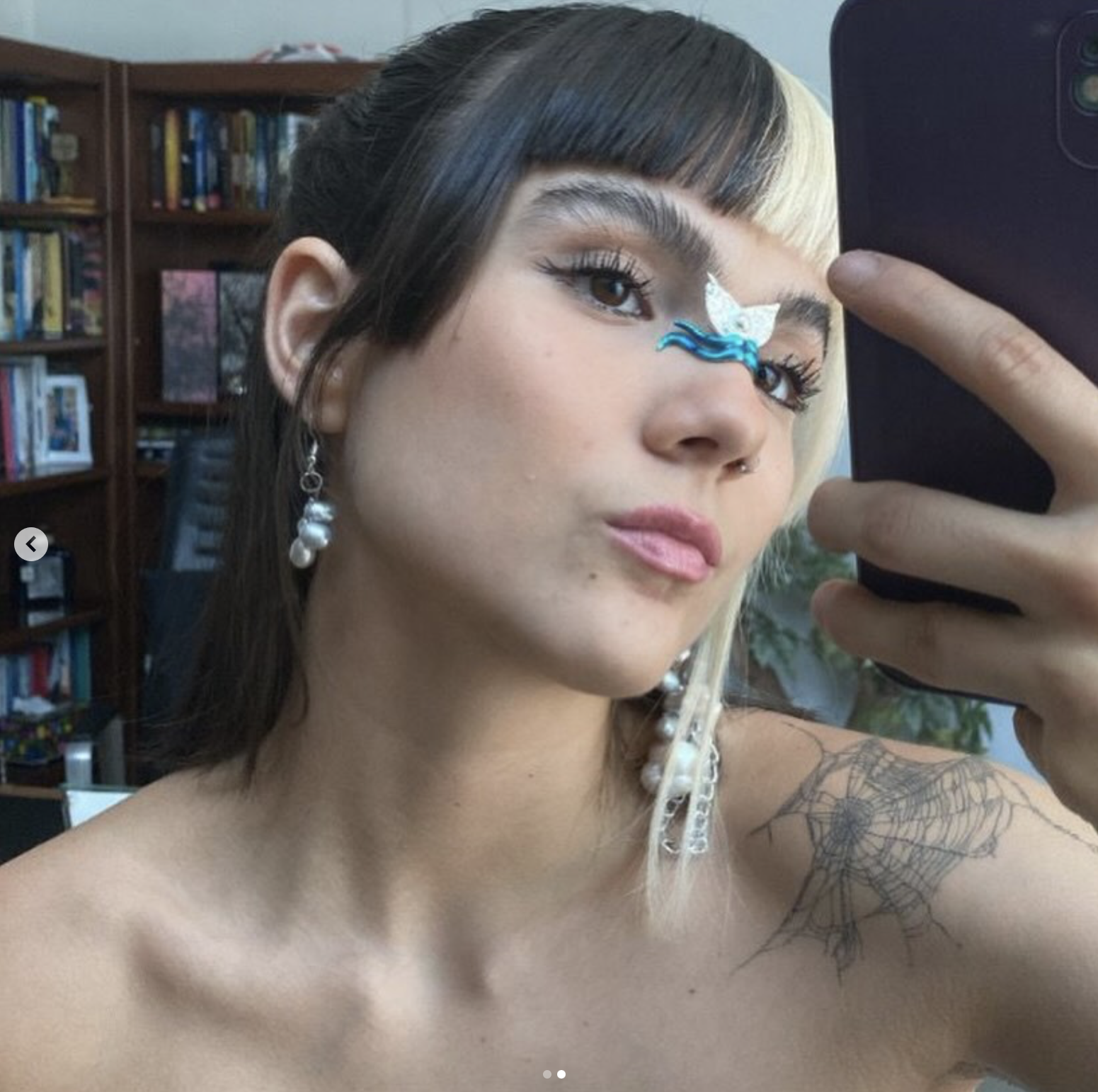
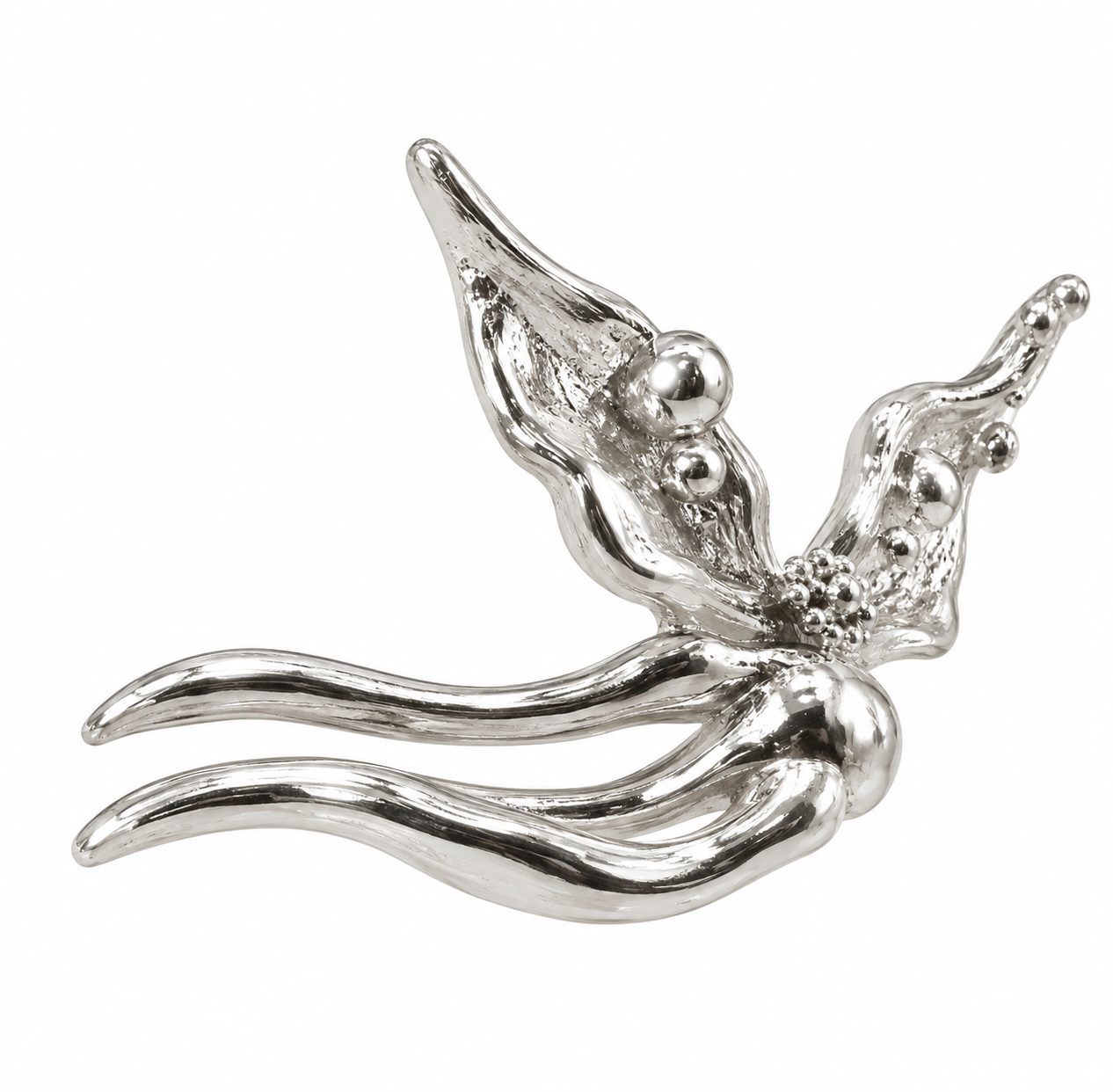
“Spiritual Autonomy is a facial jewelry piece that explores restoration as a symbolic act of reclaiming the body’s capacity to produce its own meanings, identities, and forms of knowledge. Positioned at the center of the face, the piece reconfigures the wearer’s appearance through an organic and symmetrical form that evokes another living presence emerging from the body. For me, symmetry becomes a form of reaffirmation. Rather than reproducing an imposed aesthetic ideal, I use it to celebrate the body through organicity and as an exercise in recognizing the other within the self.
The idea of restoration in this piece emerges from a historical separation between reason, nature, and spirituality. During modernity, as the state and capitalism consolidated new ways of organizing society, sacred and spiritual interpretations of the world were progressively displaced by scientific rationalization, transforming nature from a living and meaningful presence into an object of observation, classification, and control. This shift also contributed to the suppression and delegitimization of embodied forms of knowledge associated with feminized bodies and practices of care, including herbal medicine, reproductive knowledge, bodily cycles, and spiritual practices.
For me, restoration means recovering the possibility of relating to the body and the natural world beyond these divisions. Drawing from ecofeminist thought, I understand the historical disciplining of bodies and the instrumentalization of nature as interconnected processes.
Spiritual Autonomy proposes adornment as a speculative form of repair: a way of placing nature, intuition, spirituality, and embodied forms of knowledge back at the center of the body. The piece seeks to create a relationship between the self and the unknown in nature: even within what remains unseen, or within the wildness of bodies that resist domestication, there is space for identities that are still becoming. Restoration becomes an act of reimagining—of allowing the body to be a site of knowledge, transformation, and spiritual agency.”
"Spiritual autonomy", silver, 1.4" x 1.6", 2026, Gabriela de AlbaHow does your creative practice allow you to restore (renew, return, reclaim, recover)?
“My artistic practice has allowed me to restore by decentralizing violent ways of seeing myself. Through studying and recognizing other bodies—microorganisms, water, metal, clay—I have learned to understand my own body and identity through relationships rather than as something fixed or isolated. My background in art conservation informs this process: whenever I work with a material, I become attentive to its chemistry, interactions, transformations, and own form of embodiment. In these encounters, I recognize aspects of myself.
This recognition has allowed me to understand identity as something constantly transforming, and autonomy as something that must be continuously reclaimed and redefined. What autonomy means changes according to context, emotions, relationships, and the processes we are living through. My practice gives me a space to name these changes while remaining open to what I do not yet understand.
For me, ecological thinking is not limited to physical acts of environmental care. It also exists in dialogue, kindness, and becoming aware of the relationships that constantly shape our perception of who we are. My sense of self is crossed by the moon, local ecosystems, other people, microorganisms, materials, and countless relationships that coexist with me.
Working from what I experience and embody in relation to other forms of life allows me to develop an ecological way of thinking from a personal and situated perspective. I want to share this way of thinking as an invitation to exchange knowledge without imposing or moralizing our searches for how to live better.
In this sense, restoration is also a process of embodying collective knowledge. The more I allow these interdependencies to shape my own ways of thinking, relating, and moving through the world, the more I experience repair as something I can practice every day. My artworks emerge from these affective processes, becoming material traces of the relationships, questions, and transformations I am living through.”
As a queer+, artist, what do you see can be, needs to be, or cannot be restored?
“As a queer+ artist from Mexico, I believe that some forms of damage cannot be restored. The violence already inflicted on natural territories and the communities that inhabit them cannot simply be undone. Neither can we easily repair the ways these territories have been represented through colonial languages, or the appropriation and gentrification of places whose histories and identities are deeply rooted in ancestral communities.
I come from a mestizo context, with both Spanish and Mexican roots, and this has made me increasingly aware of how difficult it can be to connect with the roots of my own country through the colonial narratives that continue to shape its global image. I see this violence reproduced in my own city and in sacred pre-Hispanic archaeological sites, where the people who give meaning to many traditions and territories are often excluded from the ways those places are represented and valued.
At the same time, I believe that restoration can begin in the scale of everyday life. Colonialism and other systemic forms of violence can feel so vast that they seem impossible to transform from where we stand. But when we practice active listening, kindness, care, and acts of love toward ourselves and others, the macro becomes micro. These gestures can create real experiences of repair within a relationship, a community, or a specific encounter. They may not undo historical violence, but they can change the way we continue to reproduce or relate to it.
I believe art can create situations in which a community is invited to feel together, to listen to one another, and to become attentive to what connects us. Its important to create spaces where different forms of knowledge and experience can coexist without one needing to dominate the other.
What I hope can be restored is dignity, autonomy, the possibility of belonging, and the body as a sacred place. Restoration, for me, is not a return to what was, but a daily practice of reconfiguring how we think, relate, and care for each other, until these small acts of love become part of the worlds we build together.”
Photographs Courtesy of the Artist