

Casey Sobel
She/They
Brooklyn, NY, USA
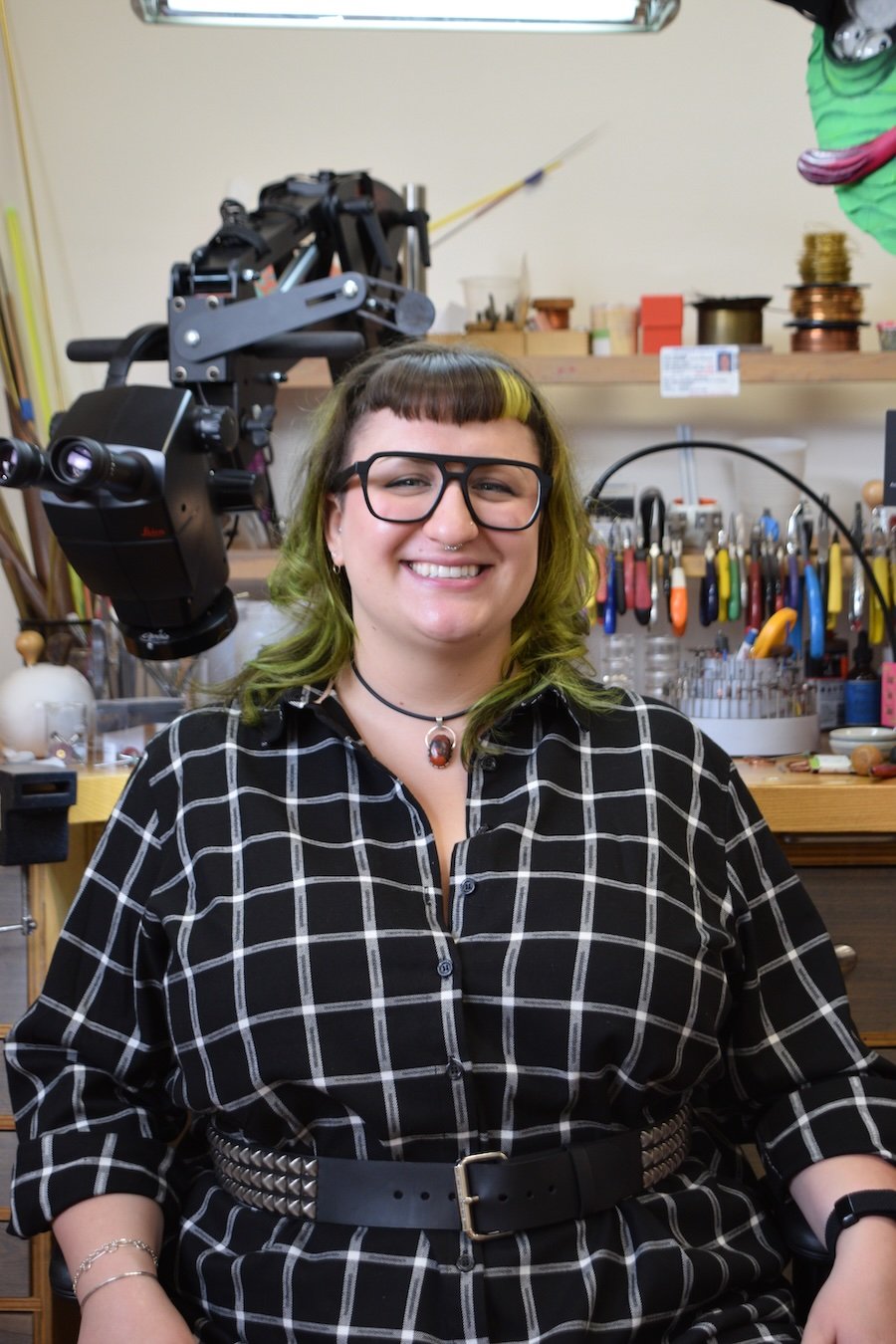
“Casey Sobel is a master jeweler, mixed media artist, and multidisciplinary maker whose expertise spans education, costume design, leatherwork, and makeup artistry. Named by the New York Times as one of "Six New York City Jewelers to Know," Sobel is among the youngest artists ever to have work acquired by the Museum of Arts and Design for its permanent jewelry collection.
Raised in rural New Jersey by a family of welders, carpenters, and seamstresses, Sobel developed an early reverence for the handmade object. After graduating from Pratt Institute, they worked with brands like Catbird and Alex Sepkus, and served as a master jeweler, engraver, and educator for Cartier, later returning to Pratt to teach.
Sobel's work has appeared in Architectural Digest, WWD, and Swarovski's Gem Visions, and lives in the permanent collections of MAD and the Brooklyn Navy Yard Museum. Committed to sustainable, ethically sourced practice, they now teach and consult from their Brooklyn studio.”
“Casey Sobel makes intimate jewelry and costume works that explore the full range of human experience including the strange, the tender, and the absurd. Each piece begins with resistance: industrial and up-cycled materials pushed until they yield something soft and unexpected.
Drawing on techniques from across craft traditions, Sobel juxtaposes hard metals with pliable, organic forms to create objects that feel both worn and alive. The result is jewelry that doesn't just adorn the body, but invites the wearer toward a more playful, unguarded version of themselves.”
@assantesobelstudios
How does your work relate to the theme of restoration?
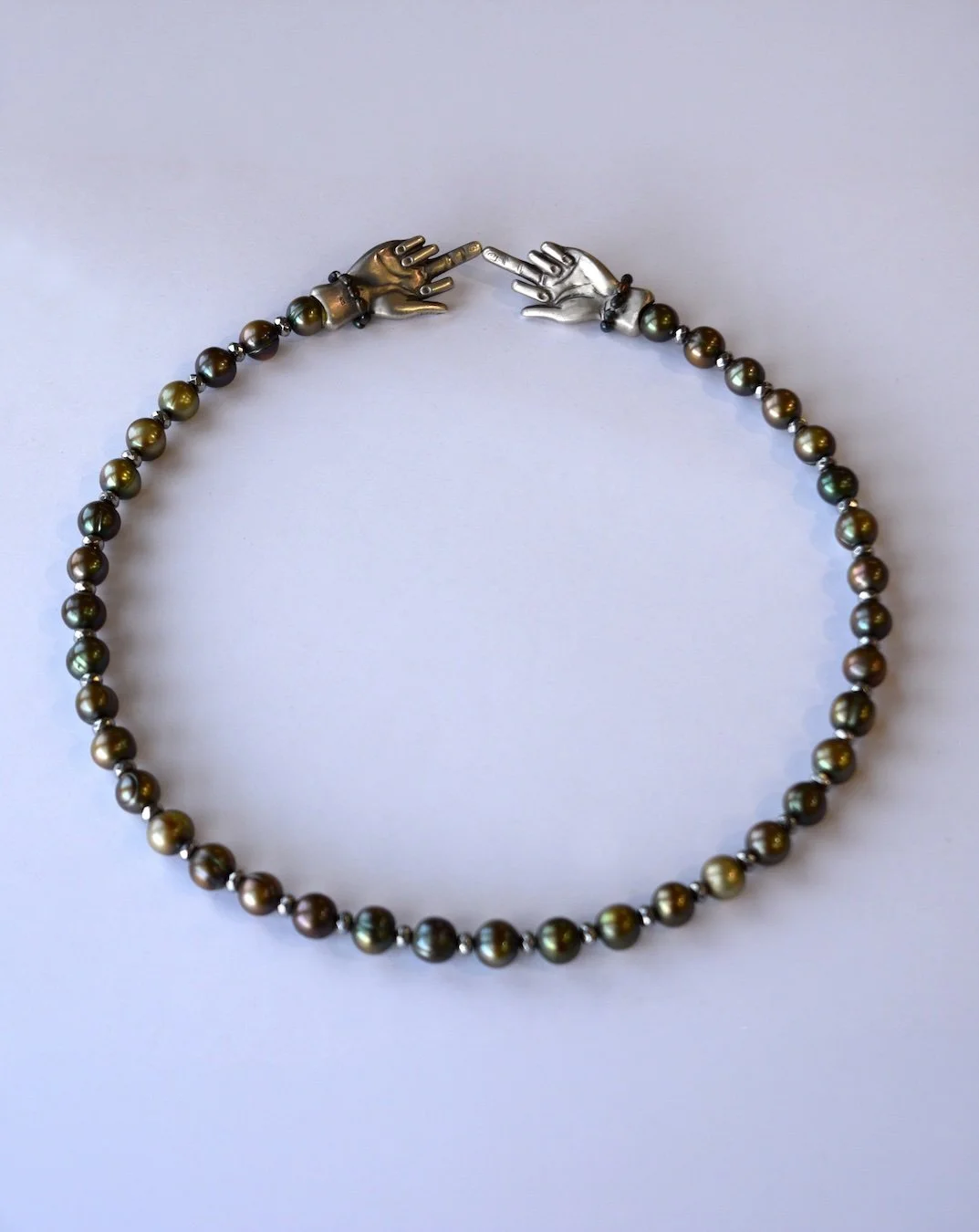
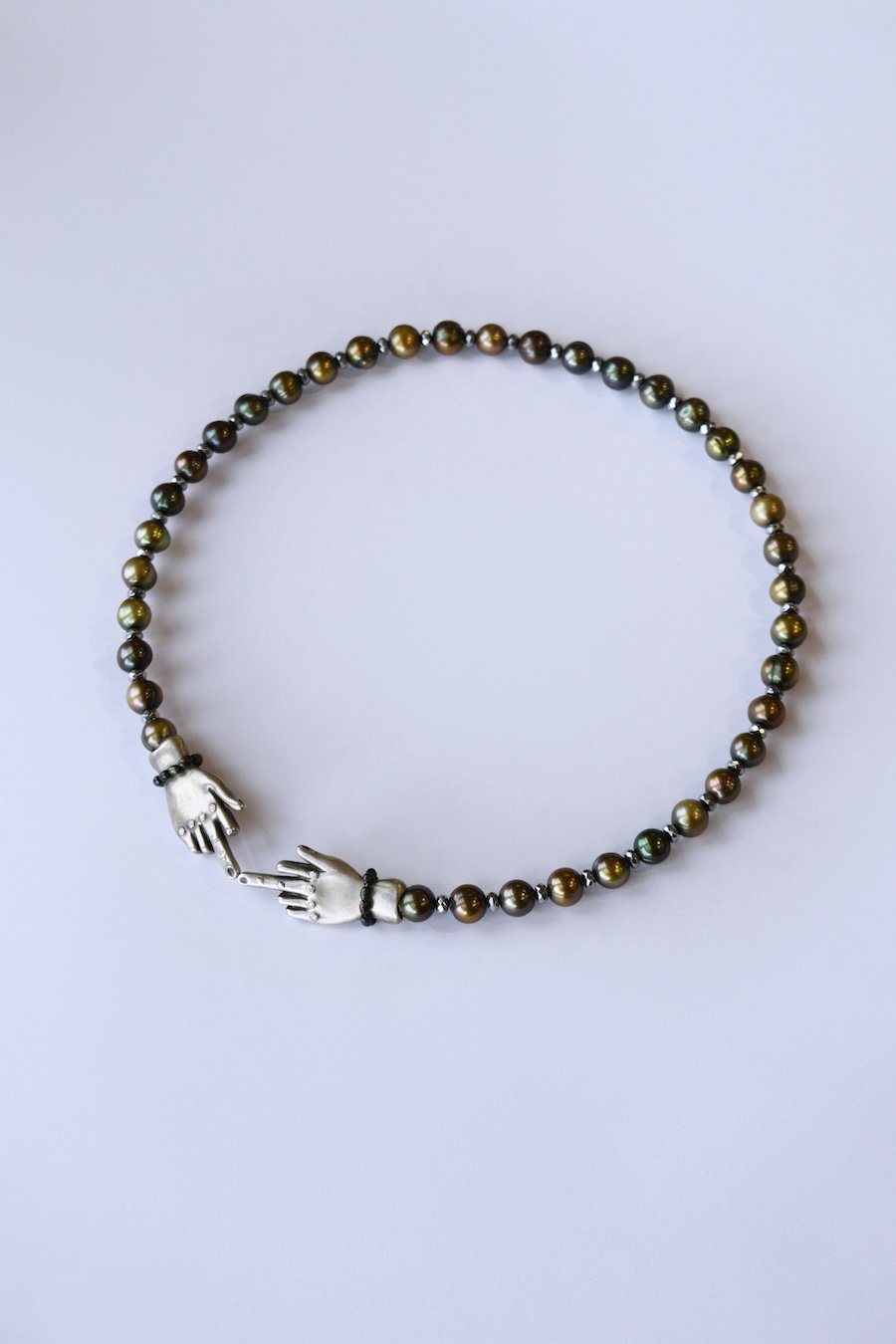
“Not Your Grandma's Pearl Necklace is about restoration as reclamation. It speaks to taking something inherited, traditional, even expected, and returning it to myself on my own terms. Pearls carry centuries of association such as classic beauty, quiet elegance, old money, and old rules. For ten years, I worked inside institutions that trade on exactly that kind of tradition, often as the only female, queer, and young person in the room. I understood beauty and craft through someone else's language, and made under someone else's name.
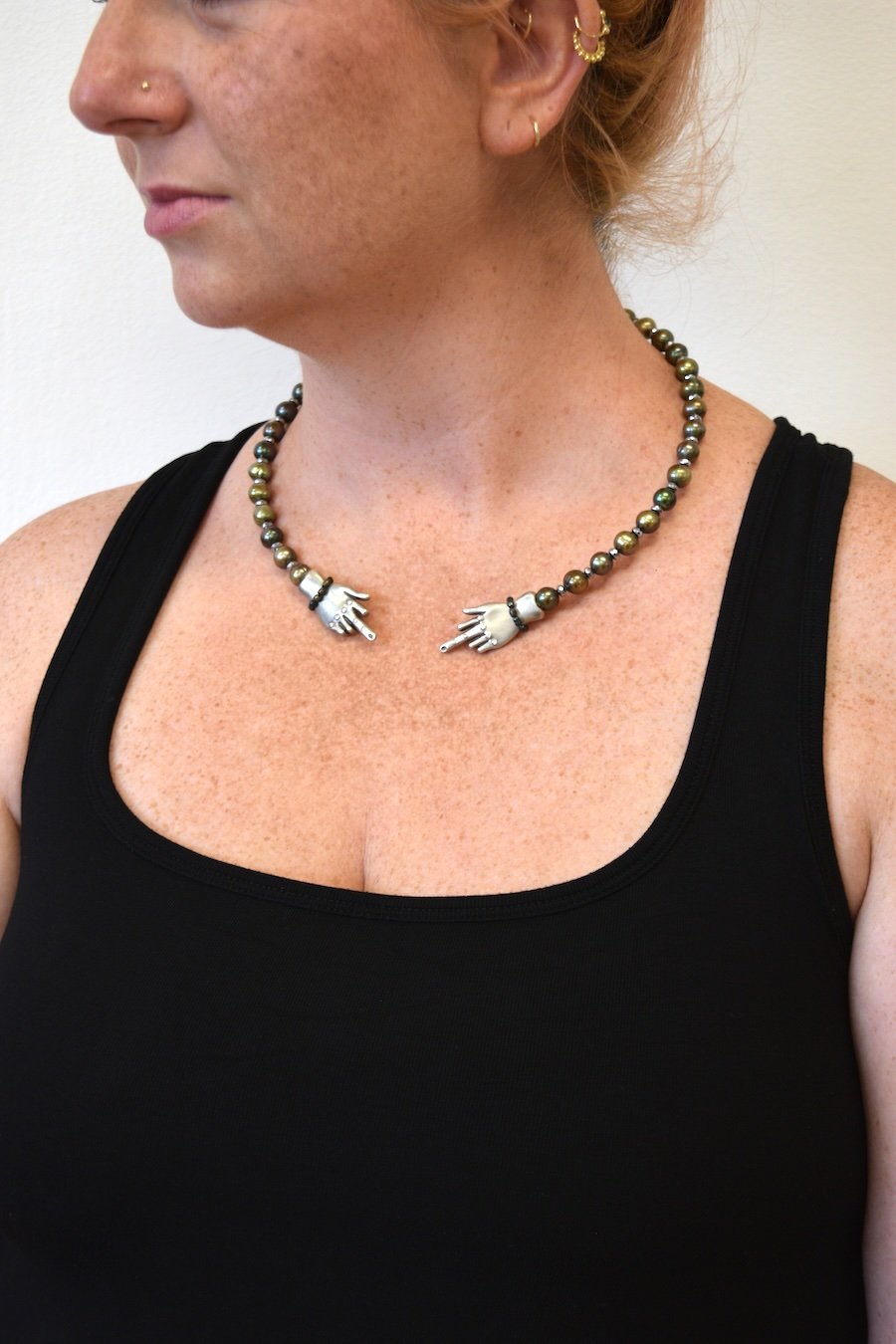
This necklace restores the pearl to my own experiences. There are two silver hands at its center with their middle fingers out and reaching, adorned with their own tiny bracelets. It is the moment I stopped representing an establishment and started representing myself. Adorning the adorned is the whole idea. Jewelry that doesn't just decorate the wearer, but decorates itself as well, cheekily elevating the maker instead of erasing her behind someone else's brand.
The diamonds set into the knuckles are another expression of this. They mark the exact place where a decade of bench work has cut and hardened my hands and instead of hiding that damage, I've set it with the most classically "precious" material there is. To me, restoration is choosing not to smooth over what the work has cost, but adorning it, insisting it was worth something.
Pearls form around irritation, diamonds form under pressure and I think of myself the same way. I have been shaped, and made harder and more myself, by years of friction I didn't always choose. This piece doesn't pretend that pressure away. It sets it in silver and lets it catch the light. Restoration, here, isn't a return to some untouched, original state. It's taking the version of myself that got worn down by a decade of confinement and building something whole and unapologetic out of exactly that material. Irritation, pressure, I claim it all with pride.”
"Not Your Grandma's Pearl Necklace", 2026. Materials: Freshwater pearl, platinum plated hematite, steel piano wire, silk thread, sterling silver, diamond. Photographed by Casey Sobel
7" round x .5" deep
How does your creative practice allow you to restore (renew, return, reclaim, recover)?
“Leaving the corporate jewelry world after ten years was less a decision than an exhale I'd been holding since I started. My practice now is the recovery from that decade — the slow, ongoing work of figuring out who I am when I'm not filtered through someone else's brand guidelines, someone else's idea of who belongs at the bench.
Working for myself lets me renew the relationship between my hands and the work itself. For years, my skill served someone else's vision; now every piece is a return to my own instincts, my own strange ideas, my own sense of what beauty gets to look like. That shift shows up quite literally in this necklace. The two hands reaching for each other are, in a way, me reaching back for the parts of myself I'd set aside to fit into rooms that weren't built for me.
Reclamation runs through the materials themselves. Pearls are one of the most classically "appropriate" jewelry materials there is. They're safe, timeless, and a little sanitized, but I'm not interested in safe anymore. Pairing them with expressive hands, diamond-set knuckles, mini bracelets and hidden palms lets me recover the pearl from its own good manners. I get to decide what "classic" means now and I proudly stick my middle fingers up to classism.
My practice also restores something more physical: my hands themselves. A decade at the bench as a master jeweler left them cut, calloused, and permanently marked. Rather than concealing that, I've started making work that puts those hands on display — literally, in this piece. That's recovery my recovery journey; not undoing the damage, but refusing to be ashamed of it. Instead I choose to adorn the scars until it reads as strength instead of evidence of what the industry asked of me.
This is the first piece of work I've made entirely for myself since departing the formal industry, with no client, no brand, no employer to answer to. That alone is a form of restoration, it's about the return of authorship over my own hands and my own voice.”
As a queer+, artist, what do you see can be, needs to be, or cannot be restored?
“I think what can be restored is voice — the specific, unfiltered version of yourself that gets quieted when you spend years being the only queer person, the only young person, the only woman, the only minority, etc, in rooms built by and for people who don't share those identities. For a decade, I learned to make beautiful things in a language that wasn't mine. Leaving that world didn't erase the decade, but it did let me start restoring my own language, my own sense of humor, and relearning how to apply my own edge back into the work.
What needs to be restored, more broadly, is queer people's right to inhabit tradition without asking permission. Queer makers have always been present, often invisibly, doing the labor without the recognition and under poor conditions. My hope for us is that we can restore our visible presence in that lineage as authors rather than guests, in a landscape actively legislating against our existence. Restoration also desperately needs to be applied to the tangible worth of a craftsman, shown through respect, authority, compensation and consideration.
I believe that the only thing that can't be restored is those of us who we've already lost, even as we continue to honor them through our own resilience. I don't believe restoration always means returning to something "untouched," either. Sometimes it means building something new out of what the pressure left behind, such as the influence of all that came before us. The same way a pearl can't un-become irritation, or a diamond can't un-become pressure. They just become something worth looking at anyway.
That's the restoration I believe in for queer people right now: not pretending the damage away, but refusing to let it be the only story, and insisting on our own hands making our own beauty, with our own joy, in public, without apology.”
Anything else you would like to share about this work?
“This piece marks a real threshold for me. After working as a master jeweler for Cartier for the last 8 years, this is one of the first pieces I made. I was so excited to be out and to be myself all I wanted to do was scream FUUUUCK and punch the sky with the ultimate joy at my freedom. Don't get me wrong, I appreciated all that I learned there but being a queer AFAB person in a shop of old men certainly took its toll on me. The unlearning has been a weird and challenging process for me but every day I return to myself a little more and for that I'm so unbelievably proud of myself.
I'm also a person with a chronic nerve based disability so I designed this piece to be on thick steel spring wire so I don't have to worry about fiddling with clasps when my nerves get the best of me. The weight of the silver hands in addition to the pearls helps to hold the piece in place, gently resting on my collarbones as a nod to not letting my disability hold me back. In a way, they're my hands when my own hands are feeling weak, carrying the emotional weight of the piece. That tension between engineering and narrative is where most of my work now lives.”
Photographs Courtesy of the Artist