
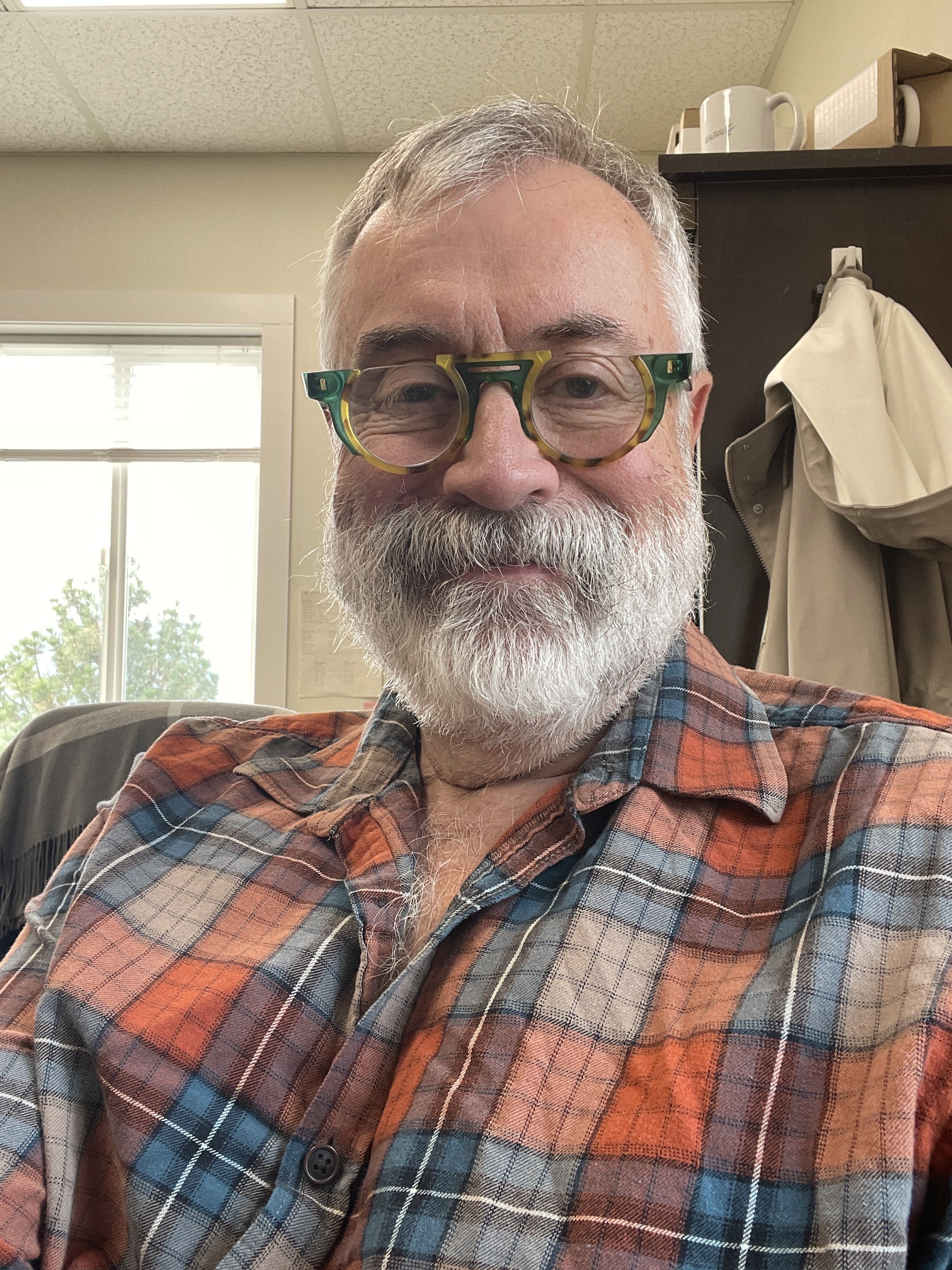
David J Lilly BA (Hons)
MA FRSA
He/Him
Vernon, British Columbia, CANADA
“David J Lilly is colour-blind. Born when colour-blindness was considered a limiting factor, sadly David was discouraged at school from pursuing an artistic/creative career.
David is a self-taught goldsmith & stained glass artist. David’s jewellery is inspired by both Brutalism and Mid-century Modern aesthetics; and since 2019 he has created a variety of jewellery collections using precious, semi-precious and non-precious materials.
In 2021 David won the SkyArts/Lexus ‘In Search of Takumi’ metalwork prize for his Amethyst Darricarrere Ring. Since then, David’s jewellery has appeared at NYC Jewellery Week in 2022, Las Lagunas Gallery, Los Angeles 2022, Gallerium Art Exhibitions 2020-21, in the Observica Elite Edition 2021, along with exhibitions in other UK galleries and publications.
David was a semi-finalist in the BBC’s ‘All That Glitters’ TV show in 2022. David has been interviewed on radio (BBC South), in publications and Podcasts including the ‘At The Bench’.”
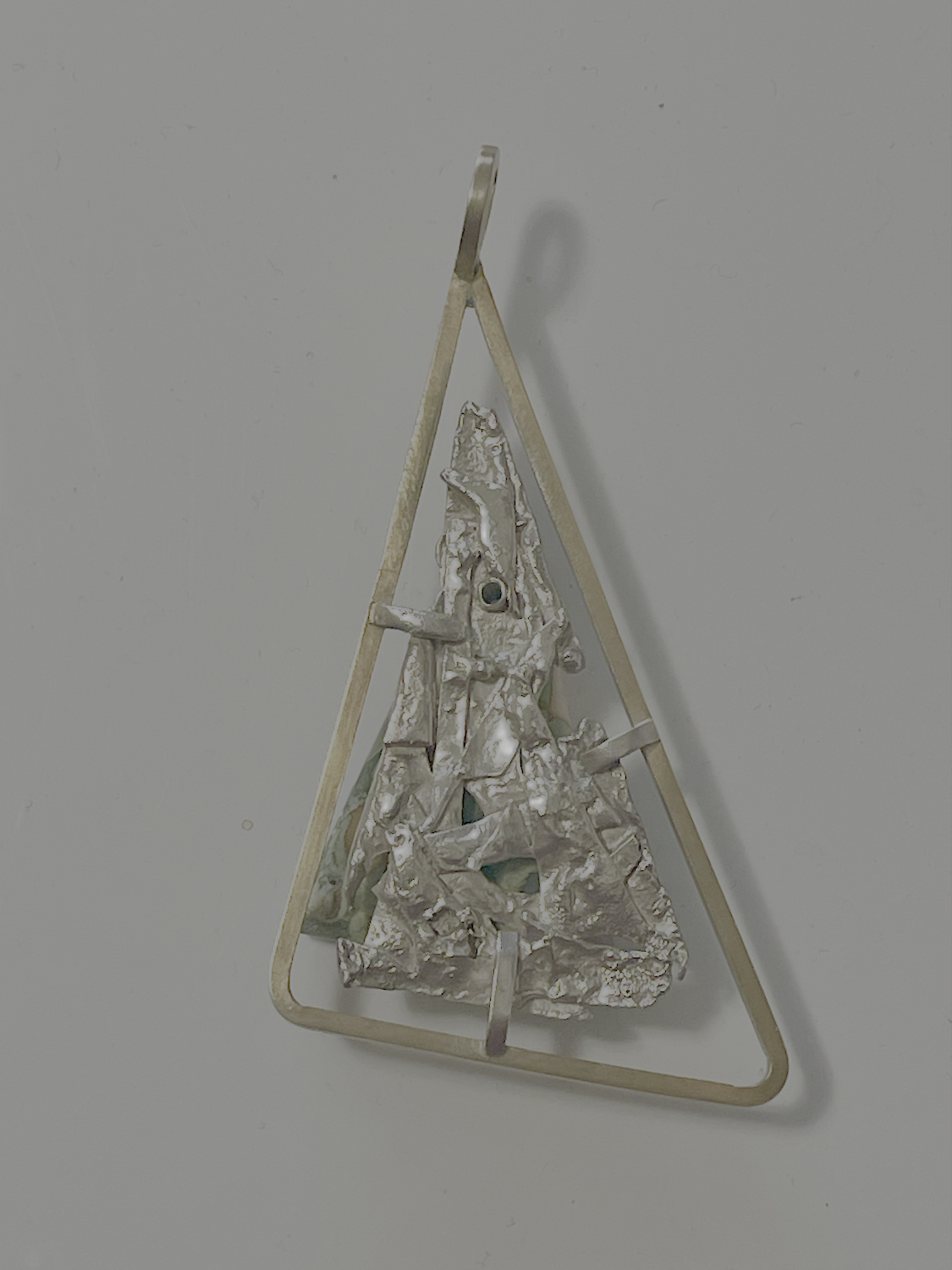
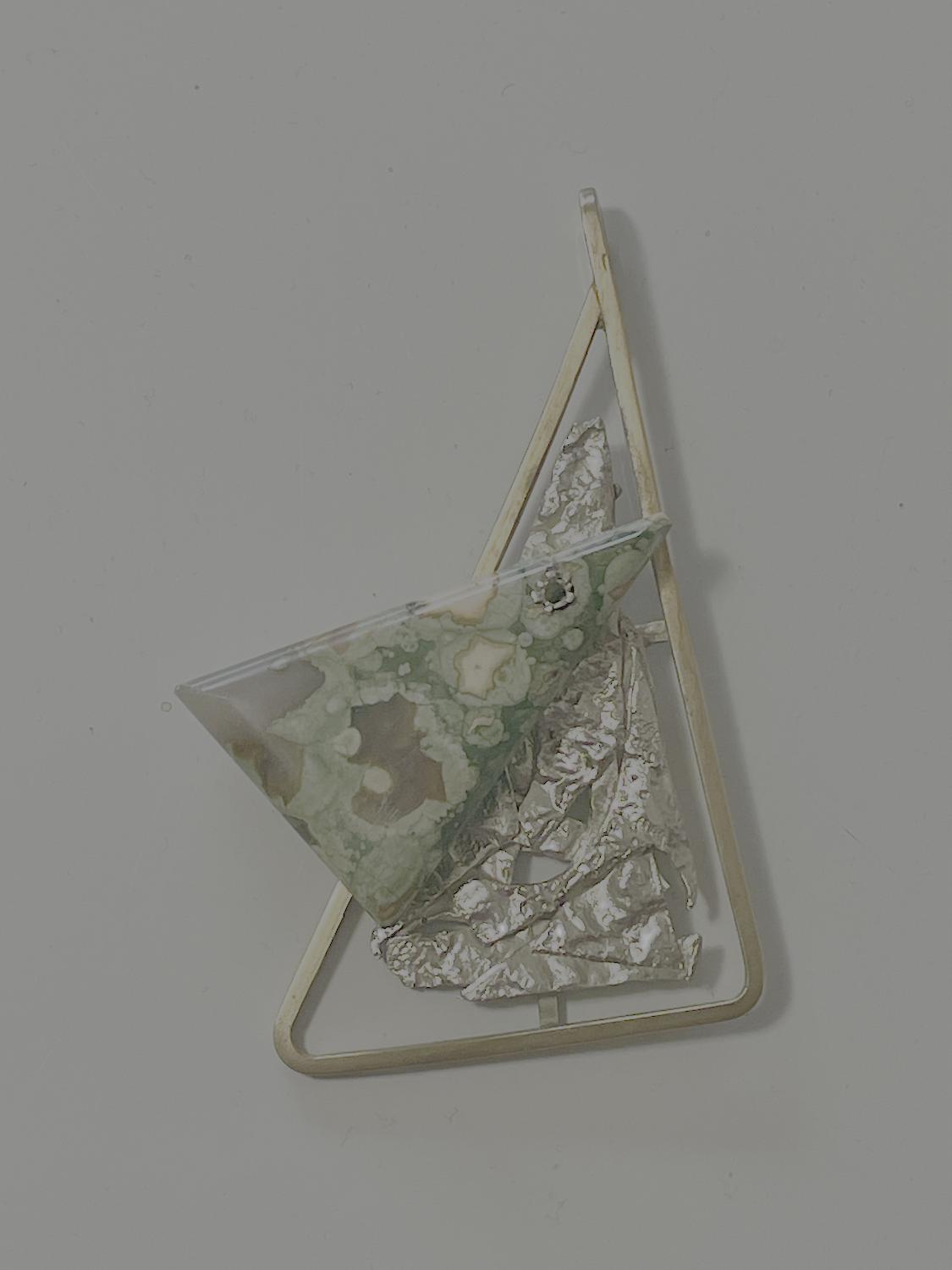
“Behind the Veil is an exploration of concealment, revelation and the fragile boundaries between the two. I am drawn to the transformation of worn, damaged and discarded materials, allowing their imperfections and histories to remain visible rather than erasing them. In this piece, the veil becomes both protection and barrier: it conceals what is vulnerable while inviting the viewer to look beyond the surface. The discarded materials and re-fragmented form suggest something that has endured damage but remains capable of transformation. Through jewellery, I explore how identity, memory and experience can be obscured, reclaimed and ultimately restored.“
@dj_lotinga_jewellery
How does your work relate to the theme of restoration?
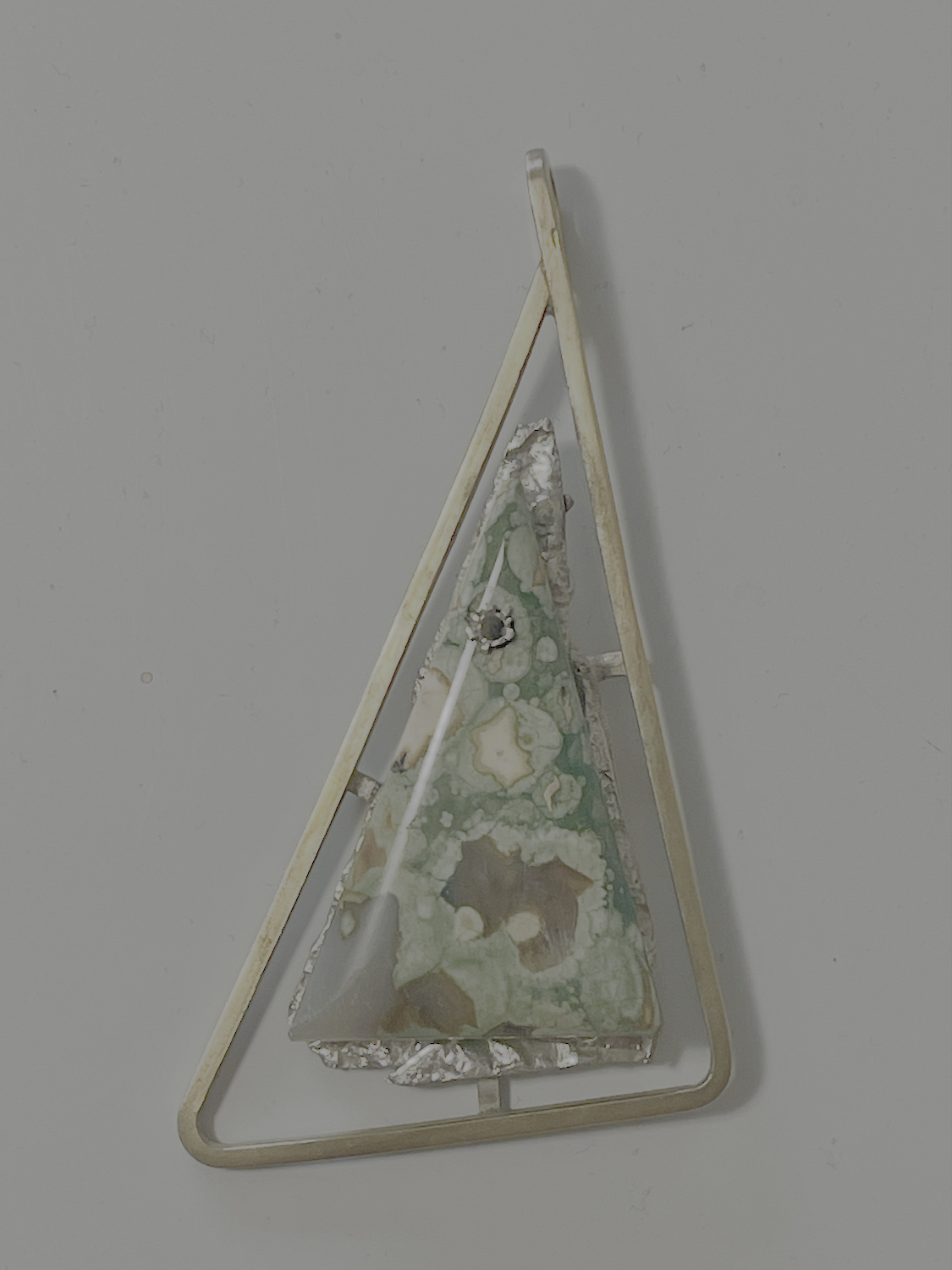
“Behind the Veil explores the tension between concealment and revelation, and the ways queer identity can be both protected and constrained by what we choose, or are forced to hide. The fragile, weathered surface suggests something damaged but not destroyed: a self, history, or a relationship waiting to be restored. The veil obscures while simultaneously drawing attention to what lies behind it, inviting the viewer to look more closely. Through its juxtaposition of robust and broken, framed materials, the piece reflects restoration not as a return to an earlier state, but as an act of reclaiming, rebuilding and becoming.”
"Behind The Veil" David J LillyHow does your creative practice allow you to restore (renew, return, reclaim, recover)?
“My creative practice is at times concerned with the restoration of possibility. I work with fragments, discarded materials, weathered surfaces and objects that have been overlooked, transforming them into new forms through jewellery and assemblage.
For me, restoration is not about returning something to an original state. Instead, it is a process of renewal, reclamation and recovery: finding value in what has been neglected and allowing its history to remain visible. I am interested in the traces that materials carry. the marks of use, decay, damage and time, and in how those can become part of a new narrative rather than something to be erased.
Jewellery is compelling to me because of its intimate relationship with the body. An object can carry memory, identity and significance, while also acting as a marker of belonging, protection or transformation. Through jewellery, I explore the tension between what is revealed and what remains hidden, and between the identities we present and those we keep protected.
This approach allows restoration to become both a material and conceptual process. I reclaim materials and give them purpose, but I also consider what else might be recovered through making: memory, identity, agency, connection or a sense of possibility.
In Behind the Veil, these ideas come together through a fragile, beaten form that suggests something partially concealed yet present. The veil becomes both protection and barrier, obscuring what lies behind while inviting closer examination. The piece speaks to the experience of carrying something hidden and to the possibility of reclaiming it.
Ultimately, my practice asks what can be recovered without erasing what has happened. I am interested in restoration not as a return to the past, but as an act of transformation: taking what remains, acknowledging its history, and allowing it to become something new.”
As a queer+, artist, what do you see can be, needs to be, or cannot be restored?
“As a queer+ artist, I think about restoration in terms of what has been lost, concealed, damaged or deliberately erased—and what it might mean to reclaim it.
Some things can be restored: histories that have been forgotten or suppressed; objects and materials that have been discarded; stories that have been silenced; connections to community, place and identity. Restoration can return visibility, dignity and value to things that have been judged unworthy. It can recover fragments of queer history and give them new contexts, allowing the past to remain present without allowing it to define the future.
Some things need to be restored: our sense of belonging, our right to occupy space openly, and the recognition that queer lives and experiences are part of the wider human story. We need to restore the voices and histories that have been excluded from archives, institutions and cultural narratives. We need to restore possibilities—to imagine relationships, identities and futures beyond the limitations imposed by convention.
But some things cannot be restored. Lost lives cannot be returned. Time cannot be recovered. The damage caused by rejection, discrimination, shame and erasure cannot simply be undone. Nor should restoration mean returning to an imagined past in which everything was somehow whole or better. There may be no original state to return to.
For me, this is where restoration becomes transformation. Rather than repairing something until the evidence of damage disappears, I am interested in making the history of that damage visible and allowing it to become part of what something is now. A scar can become part of an object's beauty; a fragment can acquire a new purpose; something hidden can be brought into view without losing its complexity.
For me, restoration is therefore not about going back. It is about recovering what still has the possibility to become.”
Photographs Courtesy of the Artist