
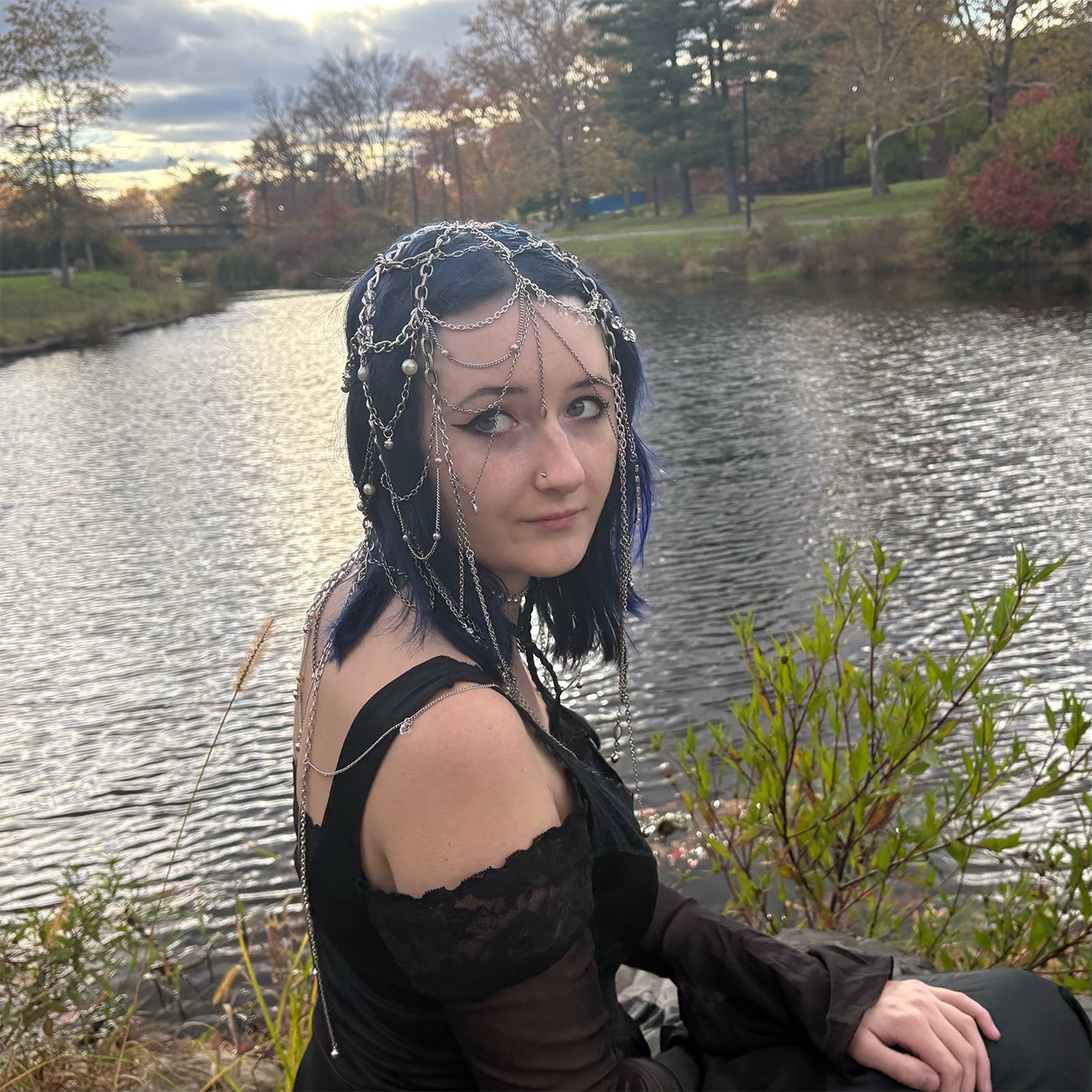
Eva Wallace
She/Her
New Paltz, NY, USA
“Eva Wallace is an artist pursuing her Bachelor of Fine Arts in Metal at SUNY New Paltz. Working primarily in metal, she creates jewelry and sculpture using gold, silver, bronze, copper, and bone. She has been trained in multiple disciplines, yet she has a certain affinity for metal. Early in her career, she is driven and excited to make her mark on the art world and share her passion for craft and technique. Wallace’s work has been featured in So Fresh + So Clean 2025 by Ethical Metalsmiths, Otherworldly by Rule of Thirds (2025), and Acquired Tastes by Radical Jewelry Makeover (2025). She was also a third-place award recipient in Sculpture/Crafts at the Wallkill Valley Art Invitational in Hamburg (2023).”
“My work explores transformation, identity, decay, and regeneration, challenging conventional understandings of the self, death, and humanity’s separation from the natural world. Working primarily in metal, I use materials including gold, silver, bronze, copper, and bone to examine the tension between fragility and permanence. Through processes of breaking down, reshaping, and reconstruction, I consider how both physical forms and identities can change over time. I am particularly interested in the relationship between decay and regeneration, and in the ways death can be understood not as an ending, but as part of a larger cycle of transformation. By altering materials and familiar forms, my work invites viewers to reconsider death as a new beginning, and to recognize transformation not as an ending, but as an essential part of becoming. I see transformation not as a loss of what was, but as a necessary part of what comes next in our continual process of changing and finding ourselves.”
@eva.metalworks
How does your work relate to the theme of restoration?
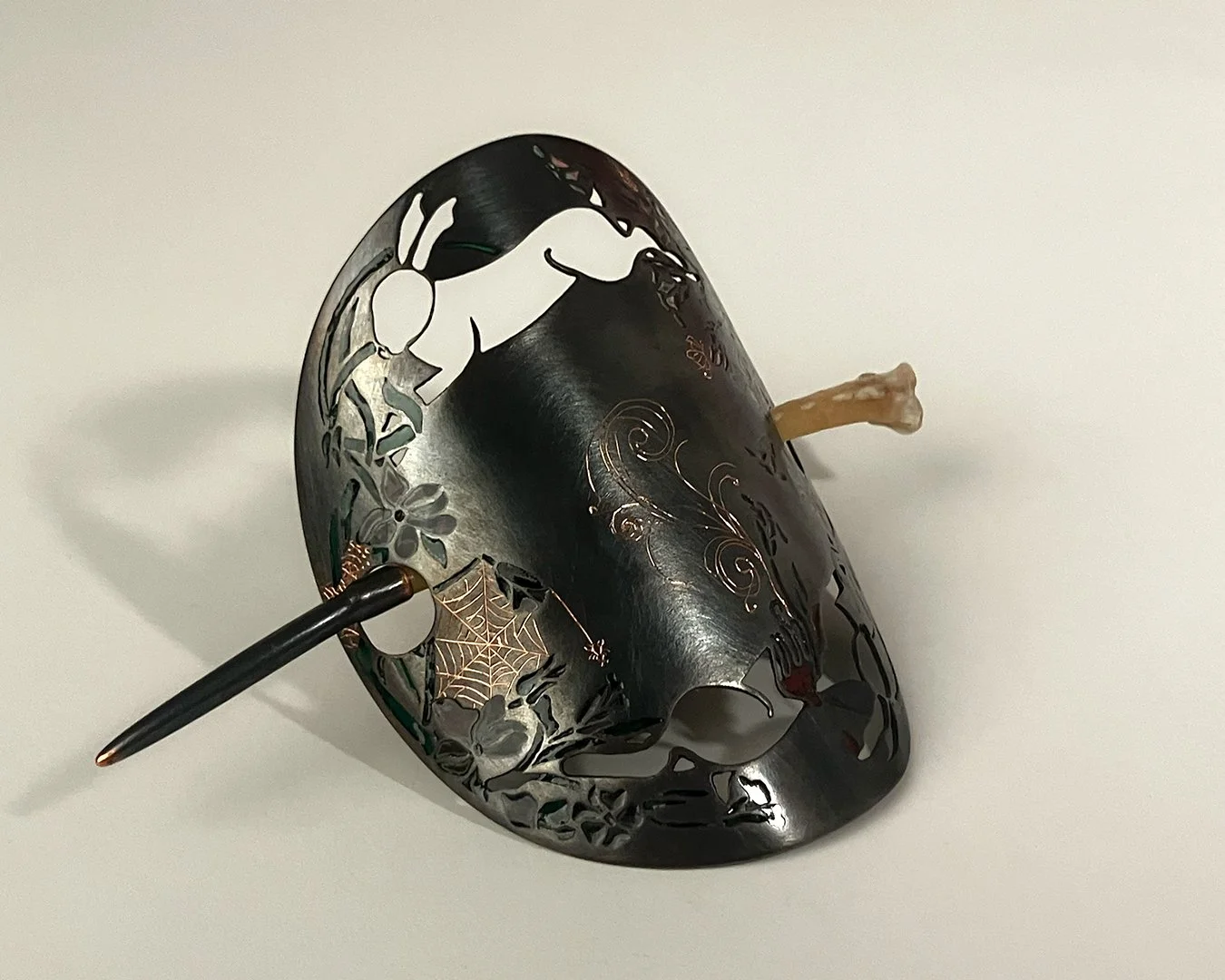
“My work explores restoration through transformation rather than repair. Many of the systems around us are deteriorating, whether they be social, ecological, governmental, or cultural. Through my work, I question our instinct to restore them to their original state. While our natural response may be to repair what has been broken, I wonder if breakdown can instead create an opportunity for something new to emerge.
Nature offers a model for this kind of transformation. Ecological systems are constantly breaking down, decomposing, and regenerating. Although this process can appear destructive or unsettling, decay creates the conditions for new and vibrant forms of life to take shape. I see restoration as existing within this same cycle: not a return to an original state, but a process of becoming. My work asks what might become possible when we stop treating breakdown solely as something that needs to be prevented. Perhaps restoration does not always mean putting the pieces back together. Maybe it means allowing them to be transformed into something new, and in alignment with our needs.”
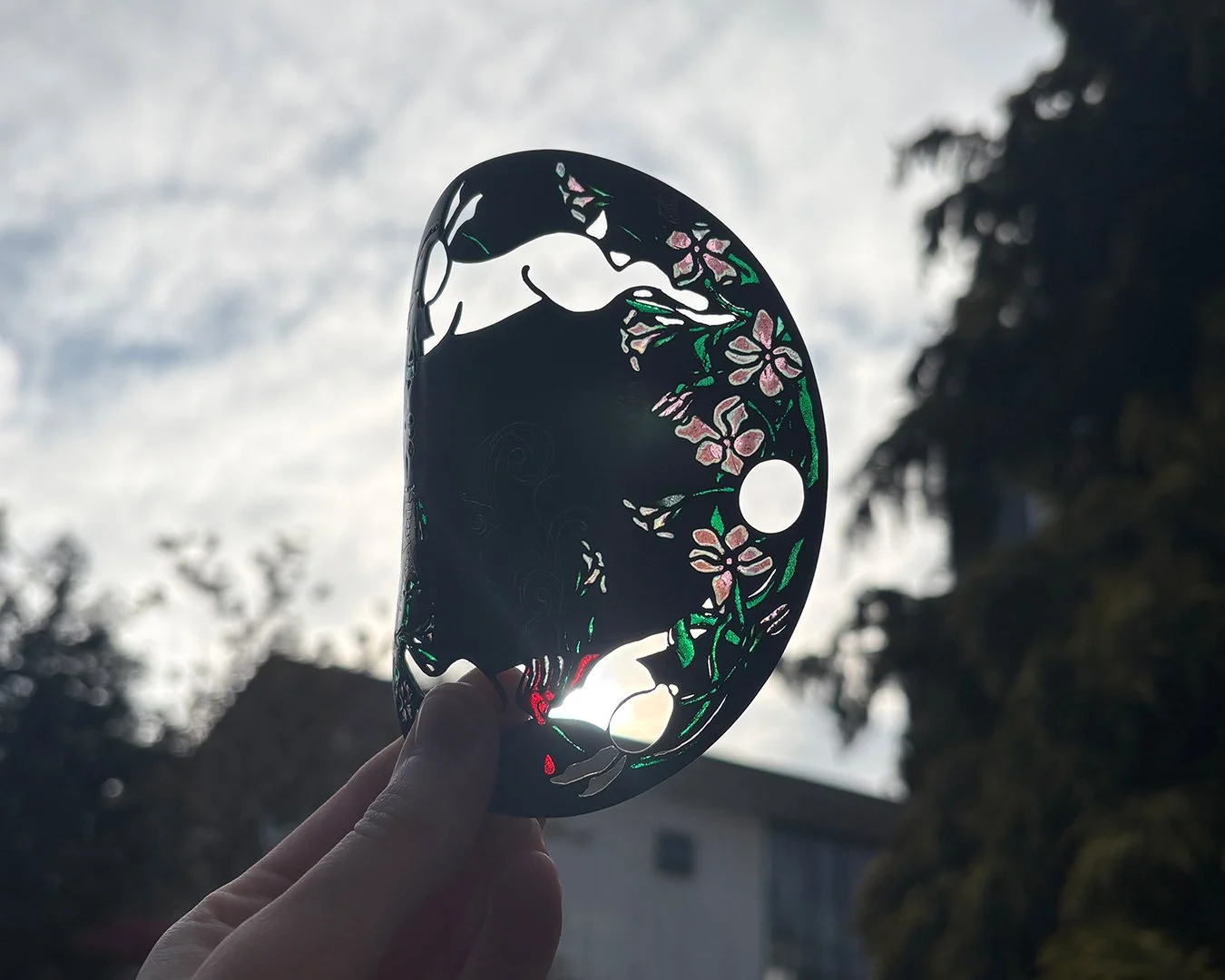
"Cycle Of Regeneration" Eva Wallace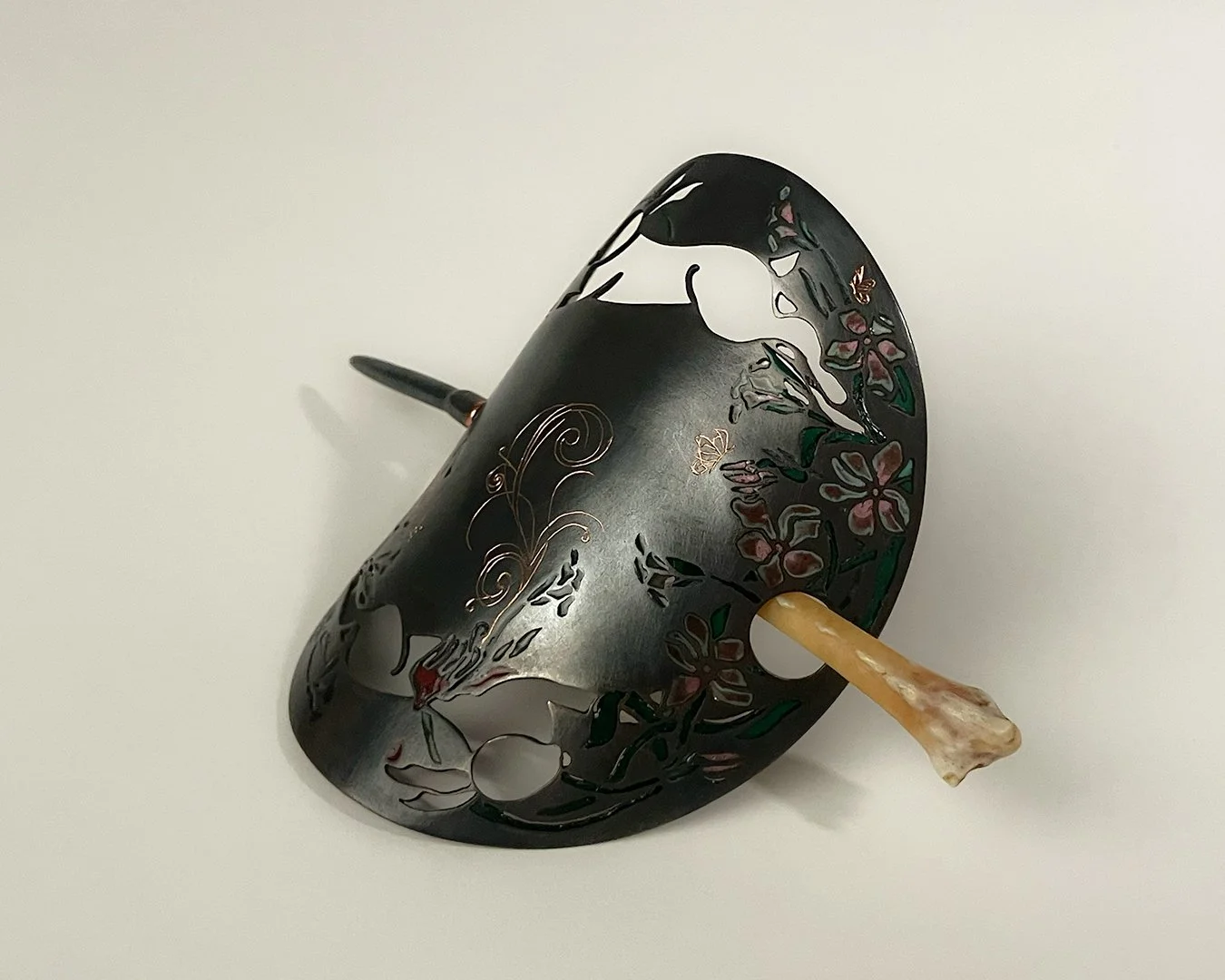
How does your creative practice allow you to restore (renew, return, reclaim, recover)?
“In my creative practice, I work with found and reclaimed materials such as bone, teeth, dead insects, and discarded metal. I think of these pieces as a type of contemporary reliquary, objects that preserve, honor, and give new meaning to these remnants of life. Through metalwork and craft, I elevate these fragments of life, transforming what might otherwise be overlooked or discarded into objects of art and reverence. Bones hold a particular significance for me. As physical structures that supported life, they endure beyond it, becoming tangible records of something that once existed. By incorporating these materials into my work, I ritualistically honor their past while transforming them into new narratives. My practice reclaims death as a transformative process rather than a final state. I am interested in the possibility that what remains after something has ended can become the foundation for something new. Through preservation, transformation, and recontextualization, I explore death as part of a larger cycle, one in which decay and loss make space for renewal, growth, and new life to emerge.”
As a queer+, artist, what do you see can be, needs to be, or cannot be restored?
“Through a queer perspective, restoration becomes an interesting concept, as it implies a return to something that once existed. Yet I do not believe that returning to a former state is inherently positive, particularly when that original state excluded, condemned, and constrained queer individuals.
At the same time, this history should not be abandoned. There is a rich and complex queer history that deserves to be explored, understood, and carried forward within the community. What we need, then, is less a restoration than a transformation: one informed by the past but oriented toward creating a new social system for young queer people.
This system should be a place of meaning, connection, and individual voice, a community that allows people to understand queer history while also having the freedom to imagine where it might go. We must, in a sense, restore without returning. Rather than recreating a previous state, we can restore the histories, relationships, and voices that have been overlooked or suppressed, using them as foundations for something new.
This new social system must also remain permeable to change. As identities, communities, and social conditions inevitably evolve, we should meet that transformation with openness, allowing the community to become anew, more inclusive, more connected, and more whole. Thus, I do not think queer identity should be restored to some former state. Instead, it should be continually transformed, an accepting and fluid community that welcomes change, remembers its history, and remains open to new beginnings.”
Photographs Courtesy of the Artist
Anything else you would like to share about this work? This can be an important part of the process, sourcing materials, or research.
“Ethical sourcing is deeply important to my practice. I gather bones and other natural materials through foraging in the woods, along roadsides, or from roadkill collection sites, never harming a living animals. I approach every remnant of life with care and reverence. These materials once belonged to living beings, and I see my work as a way of honoring that life rather than exploiting it. By giving these remains another context and purpose, I hope to encourage reflection on the animals around us, the ecosystems we share, and the often unapricated connections between human and natural lifeforms. My intention is not simply to work with what nature leaves behind, but to celebrate it, to invite curiosity, conversation, and a deeper sense of responsibility toward the ecosystems we are a part of. Ultimately, I hope my work can contribute to a way of living that recognizes humans not as separate from nature, but as participants within it.”