

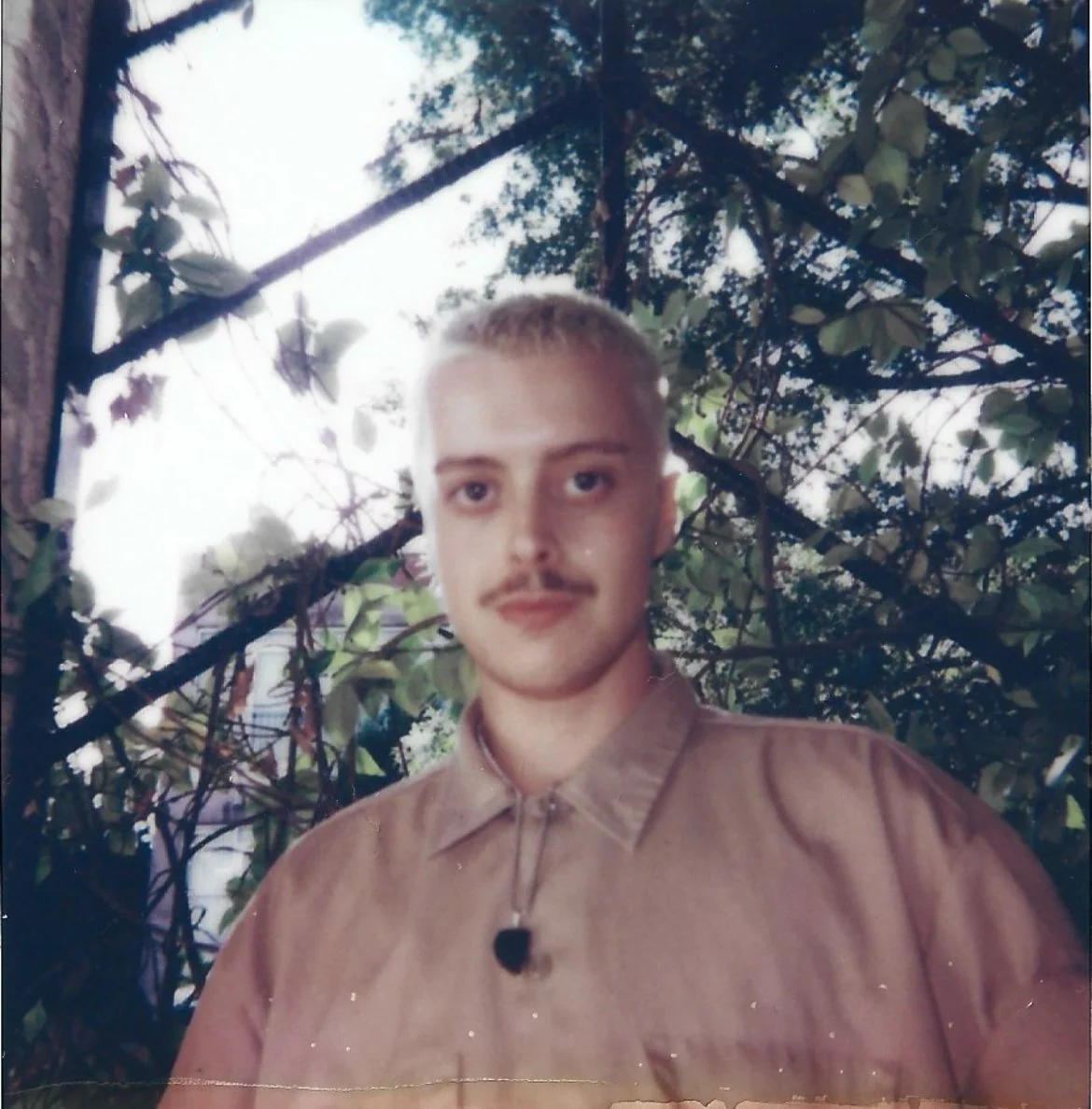
Rian Archer and Mirth
He/Him & He/Him
Atlanta GA USA
“Mirth is a writer, studio artist, and creative instructor with a focus on printmaking and wax smithing.
Rian makes jewelry and objects through fabrication, casting, and woodworking. He also takes photos on film.”
“Rian and Mirth are two interlocking puzzle pieces, determined to reveal the insides of each one's heart to the other through the act of creative collaboration, the exploration of truth, and the cultivation of love for all living beings.”
mirthmaker.art / rianarcher.square.site
@specialdelivery4444
How does your work relate to the theme of restoration?
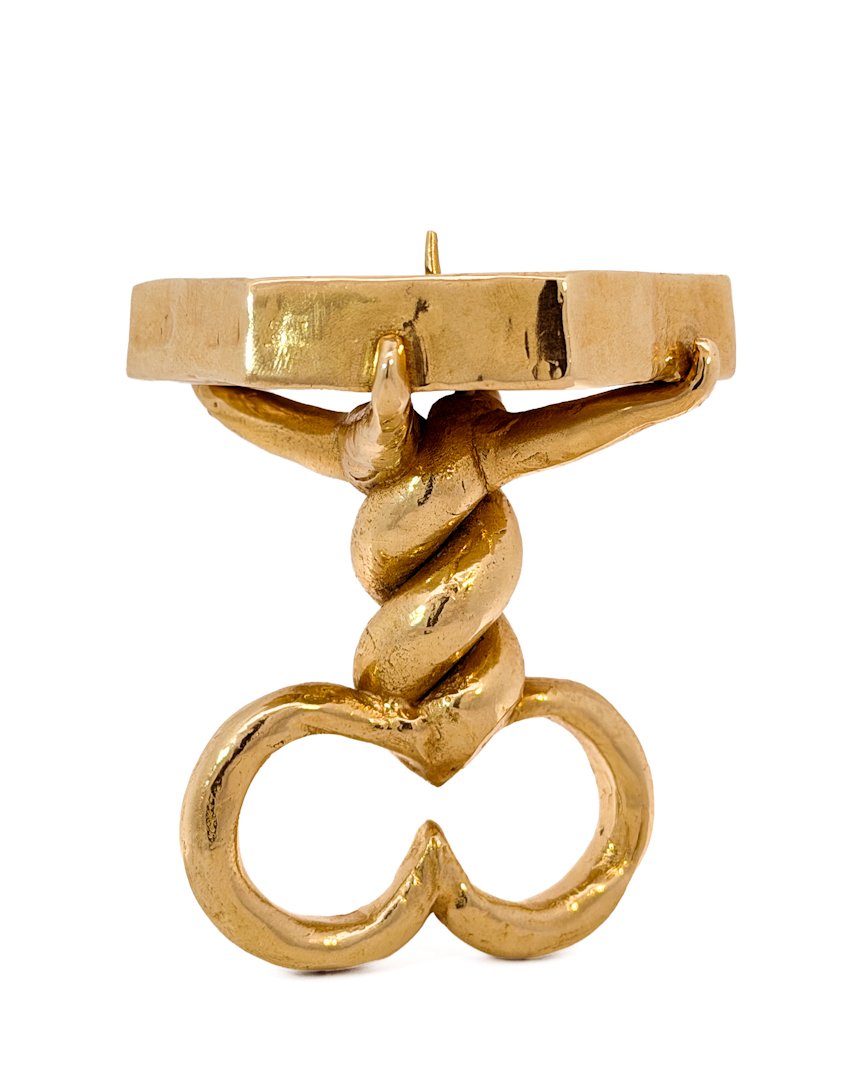
“Emptiness Gained was inspired by the practice of candle gazing – a yogic kriya known to restore connection to the mind’s eye, clearing and calming an internal space cluttered with received images and noise. Both this practice and the process of lost wax casting remind us that some things are not meant to be restored – the emptiness gained where something is lost will be filled with something else, but the creative power of our choice decides exactly what that will be.
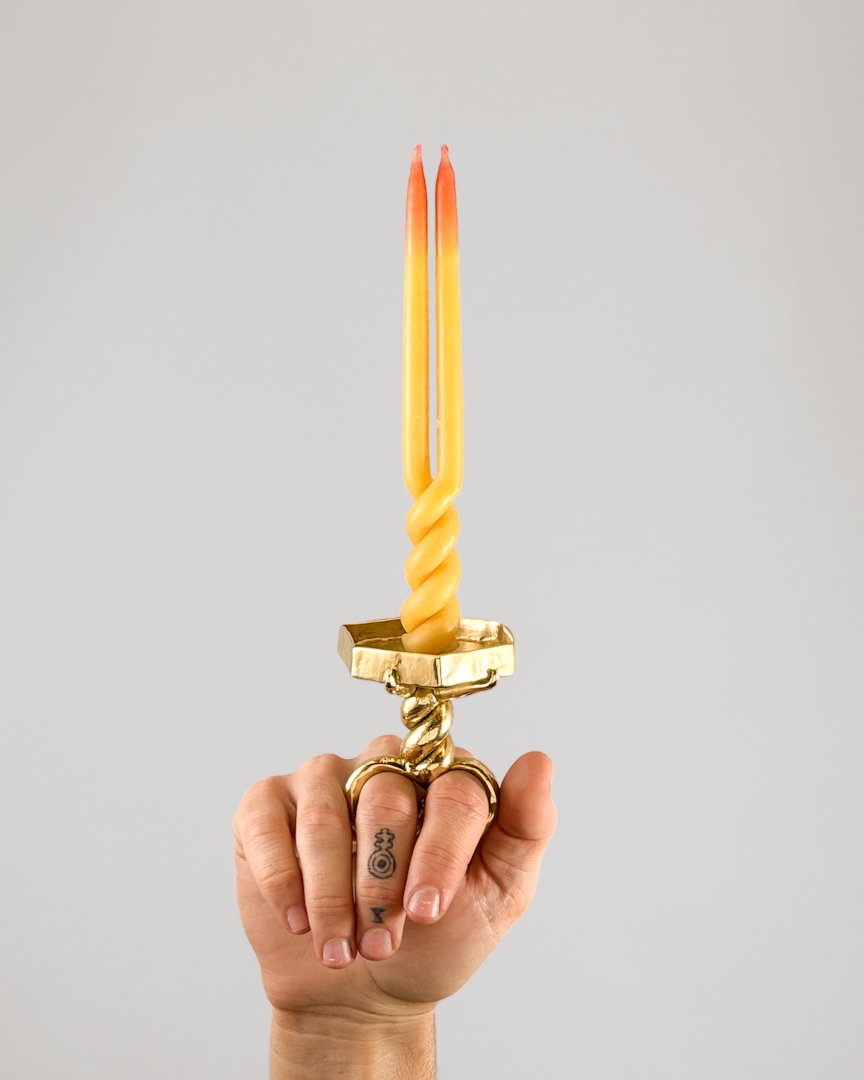
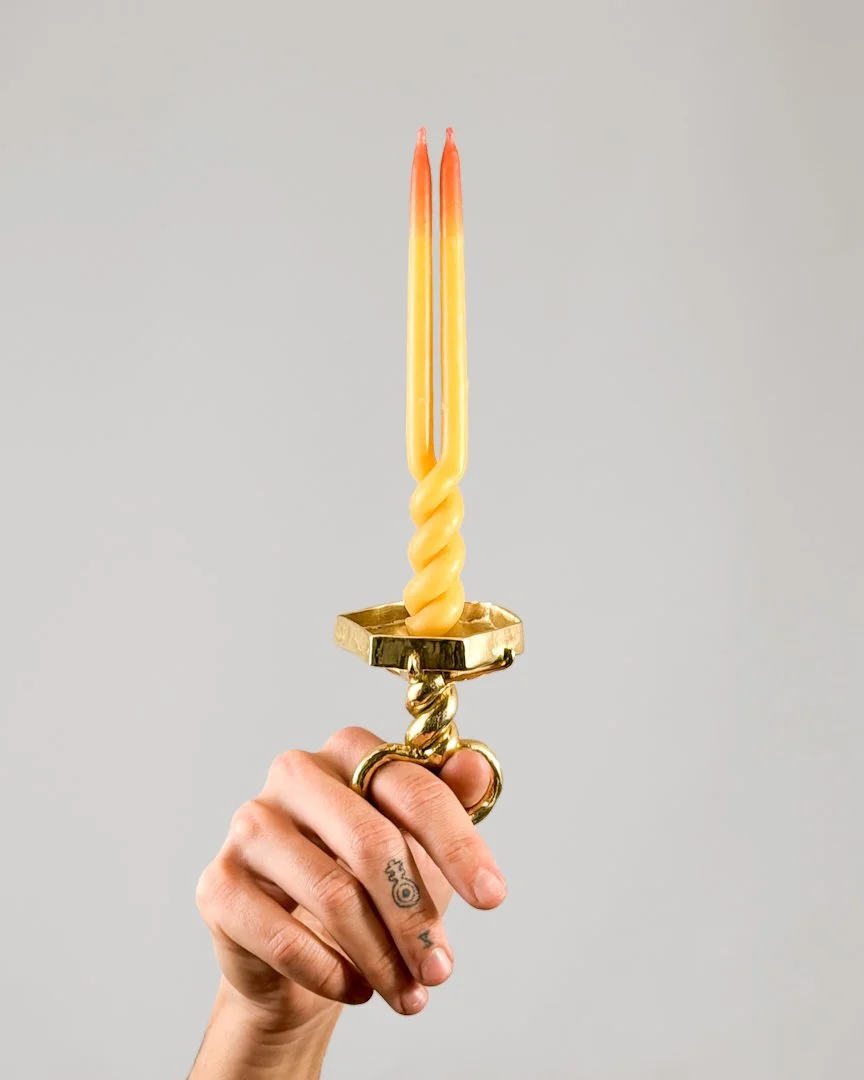
Emptiness Gained is a double ring fitted with a platform and spike to hold a beeswax candle, designed to be worn by one hand or by two hands intertwining. As the dual-wicked beeswax candle burns, the platform catches fresh wax artifacts released by the flame– these offerings can be remolded into new shapes, softening at skin temperature.
To create Emptiness Gained, beeswax artifacts were reclaimed and shaped into the hexagonal platform and spike atop the ring, while a partially burnt twin taper candle, wick and all, was formed into the base and ring shank. This wax form was designed to be destroyed through the lost wax casting process – by burning the organic material away, the hollow form could be cast in manganese bronze.
Both the bronze form and the candle perched atop it are possible because of beeswax – a sacred material that carries the spirit of the beehive, an organic wax structure built to the rhythm of sustaining life, collectively.”
"Emptiness Gained" Rian Archer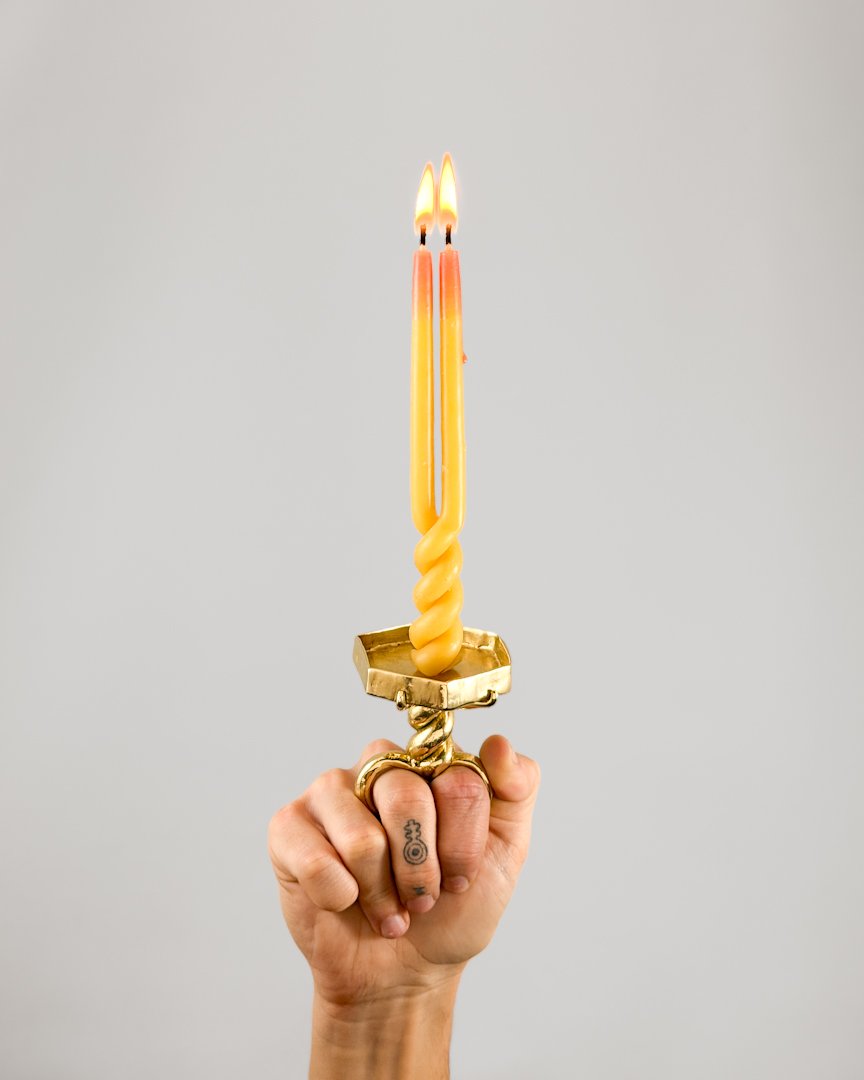
"Emptiness Gained" Rian Archer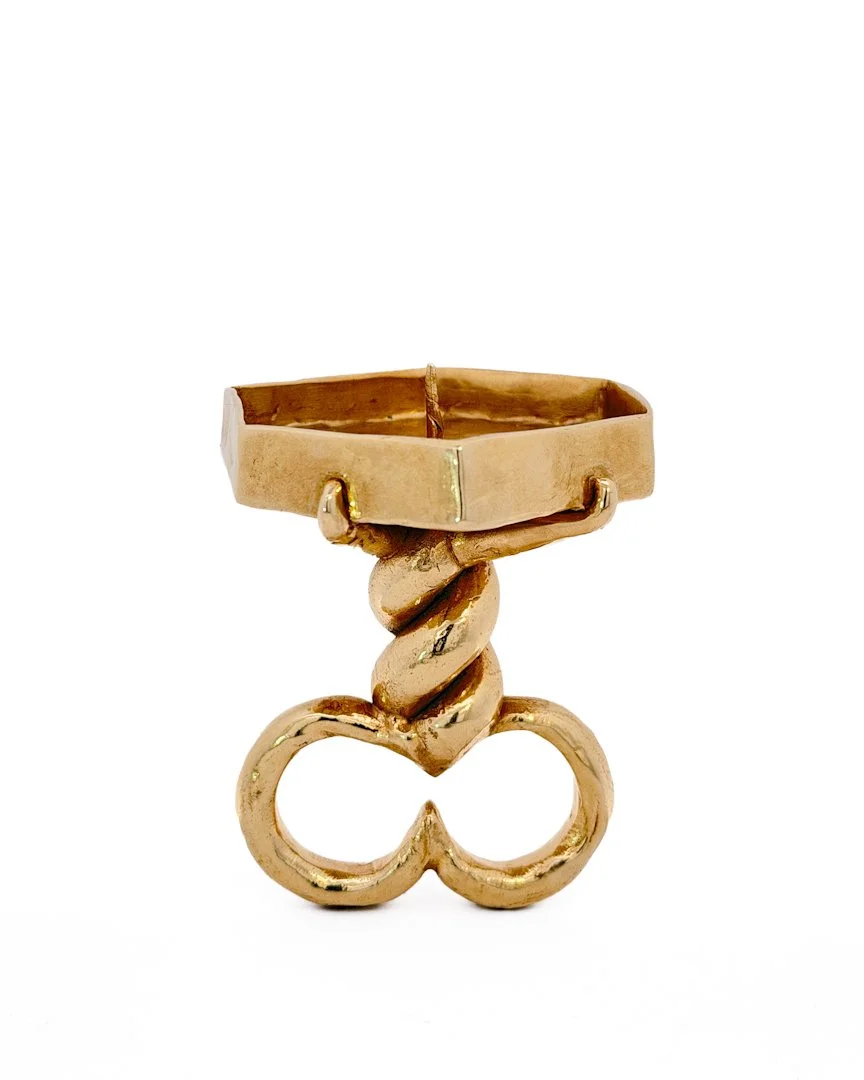
How does your creative practice allow you to restore (renew, return, reclaim, recover)?
“When we are subject to systems of extraction, we learn there are consequences if we do not submit our will to serve our own exploitation. The sticky allure of overconsumption, despair and cheap dopamine fill us with an inner confusion about how to take restorative action, sapping us of the vital energy to even try.
Creation is the blueprint to restoring an embodied relationship with agency – the act of dreaming, ideating and manifesting through a creative practice restores a connection between desire and the will. The profound experience of recognizing a 3D form emerging from the realm of imagination is in and of itself transformative – connecting the mind and the body through a creative practice builds resiliency and self-esteem that translates into all other contexts.”
As a queer+, artist, what do you see can be, needs to be, or cannot be restored?
“The raw material of life – grief, lost futures, scar tissue – cannot be restored. Some things that are lost cannot be put back – the emptiness gained can only be transformed into something we choose. Acknowledging the emptiness invites creative action. Like the wax form, accepting that the raw material is impermanent is the same as accepting that it can be changed.”
Photographs Courtesy of the Artist
Anything else you would like to share about this work? This can be an important part of the process, sourcing materials, or research.
“Beeswax isn’t the typical choice used in contemporary lost wax casting – but it is the first material ever used in ancient wax casting processes. As part of the artists’ regular practice of candle gazing, many wax artifacts have been released over time. Reclaiming these artifacts, melting and reshaping them by hand into a wax form for casting was a collaborative process between both artists. Mirth makes beeswax altar candles and hand-twisted beeswax sculptures. As a metalsmith, Rian invested and cast the piece in bronze, then refined, finished and polished the surface of the cast ring – taking care to preserve the organic shape and surface texture, echoing the original wax form.”