

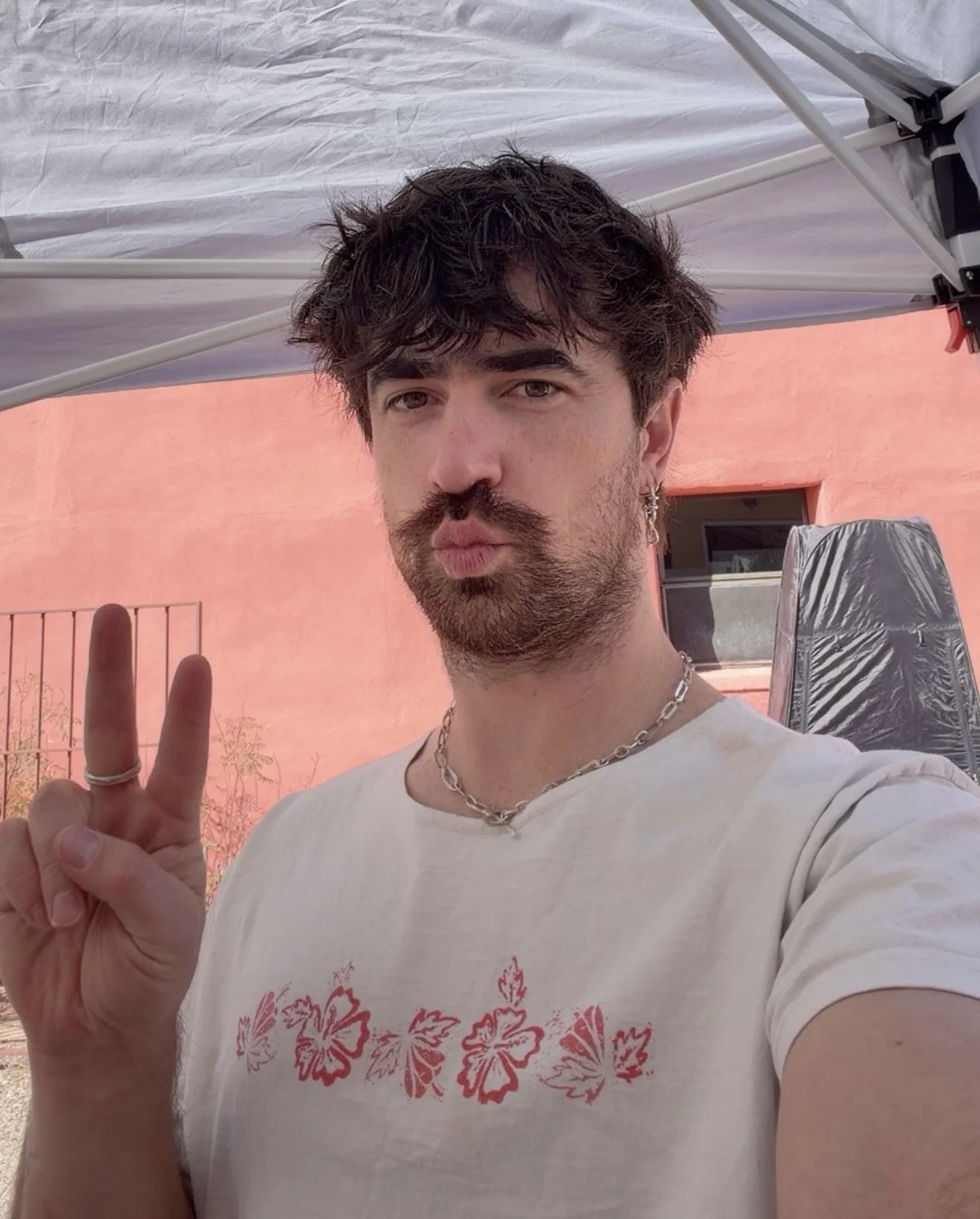
Trevor Mock
They/Them
Tucson, Arizona, USA
“Trevor Mock is the artist behind Gilty Boy, a queer contemporary jewelry brand founded in spring 2021 in Tucson, Arizona. Mock began their professional art journey in 2018 with reverse glass botanical painting before discovering lost wax casting, which became their primary medium for exploring themes of sexuality and queerness.
Through Gilty Boy, Mock creates jewelry that serves as both personal expression and broader commentary on queer identity and desire. Their work transforms intimate experiences into wearable art, using traditional metalworking techniques to craft pieces that celebrate sexual freedom and authentic self-expression.
Since establishing their practice, Mock has participated in various art shows and exhibitions throughout their community. They actively seek opportunities to connect with other jewelers and artists, fostering collaborative relationships within the contemporary jewelry scene. Mock's work continues to evolve as they develop their technical skills while maintaining their commitment to creating art that reflects and supports queer experiences and visibility.”
“My brand draws its name from "gilty" (as in gilded, coated in gold) – a deliberate play on "guilty," reflecting my intention to reframe narratives around queer sexuality and desire. Traditional gilding transforms ordinary surfaces into something precious and worthy of attention. My jewelry practice does the same, seeking to recontextualize aspects of queer sexuality often deemed shameful as worthy of celebration. Drawing from my illustration background, I create pieces that function as both personal adornment and storytelling medium. My work explores themes of sexual liberation, transforming what society might consider taboo into objects of beauty.”
giltyboy.com
@gilty_boy
How does your work relate to the theme of restoration?
“The penis, or phallus, is a symbol that a lot of people associate with violence, toxic masculinity, and dominance.
Even before I saw the penis as something sexual, I was both fascinated and very uncomfortable with them. I remember myself as a kid sitting at the kitchen table while my family buzzed around me, secretly filling my sketch book with drawings of what I hoped people would see as pine trees, but what I meant to be penises.
As an adult, referencing penises in my work has come from the same fascination, but now with a clearer intention to transform my discomfort into a feeling of safety, celebration, and playful sexiness.
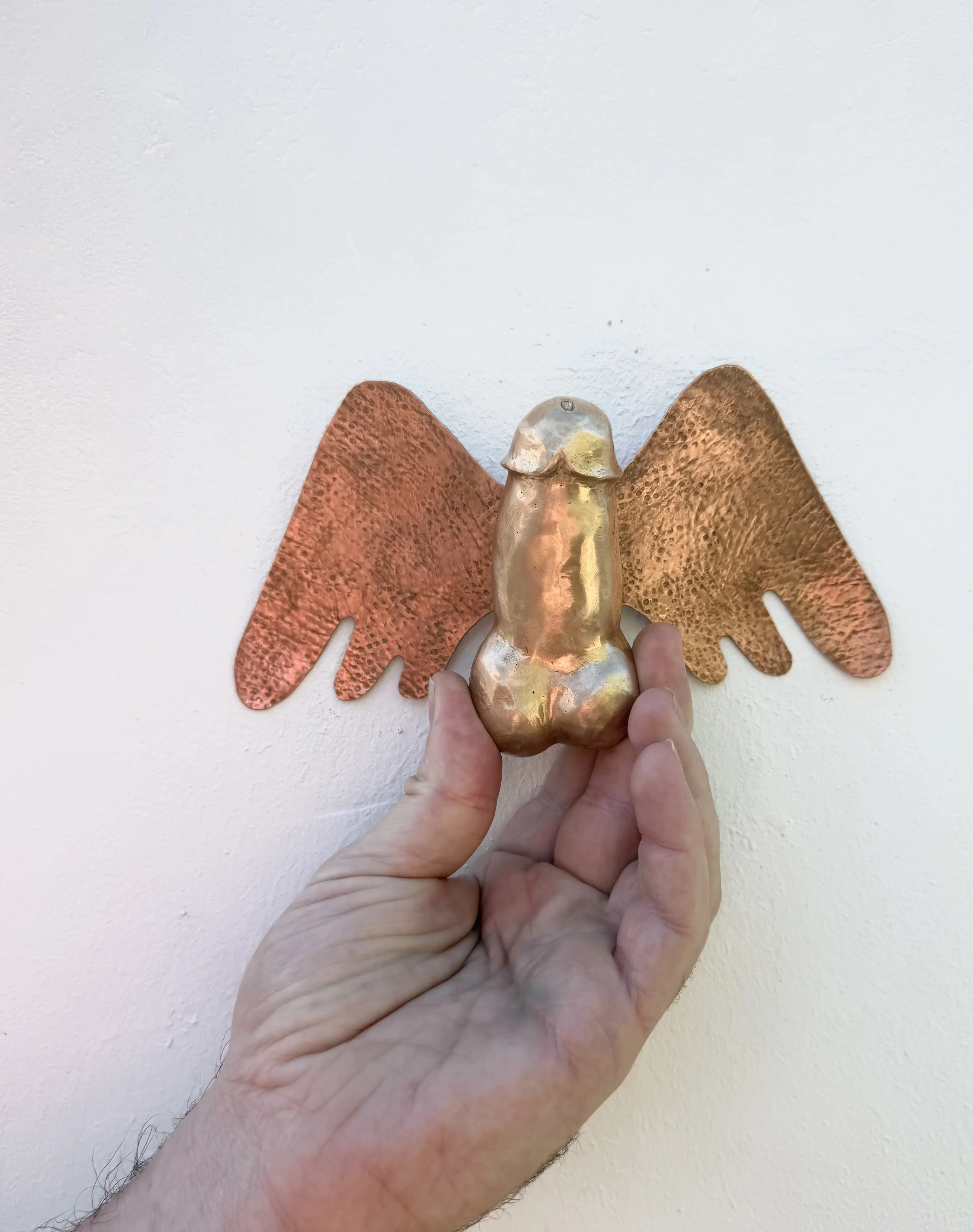
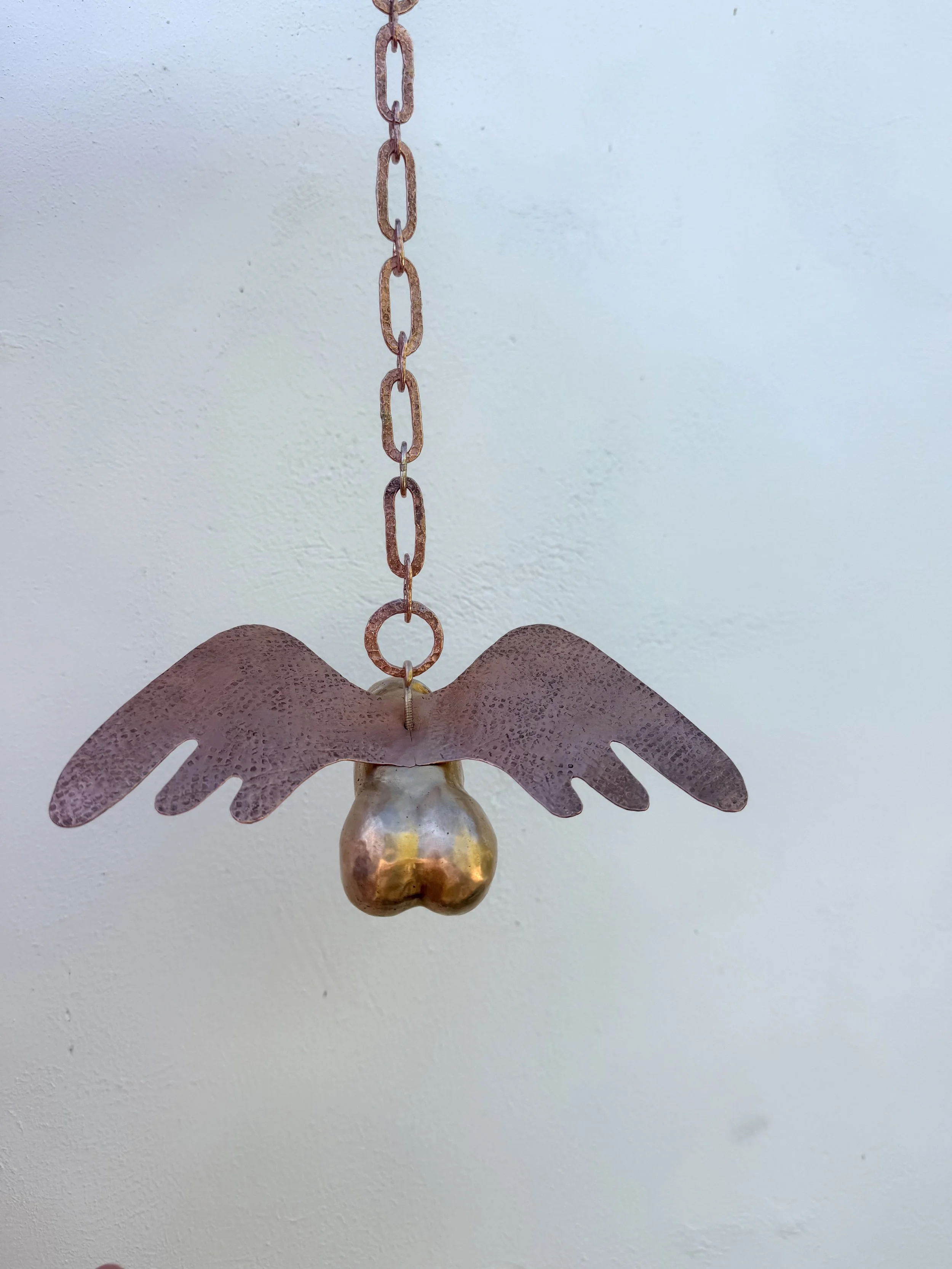
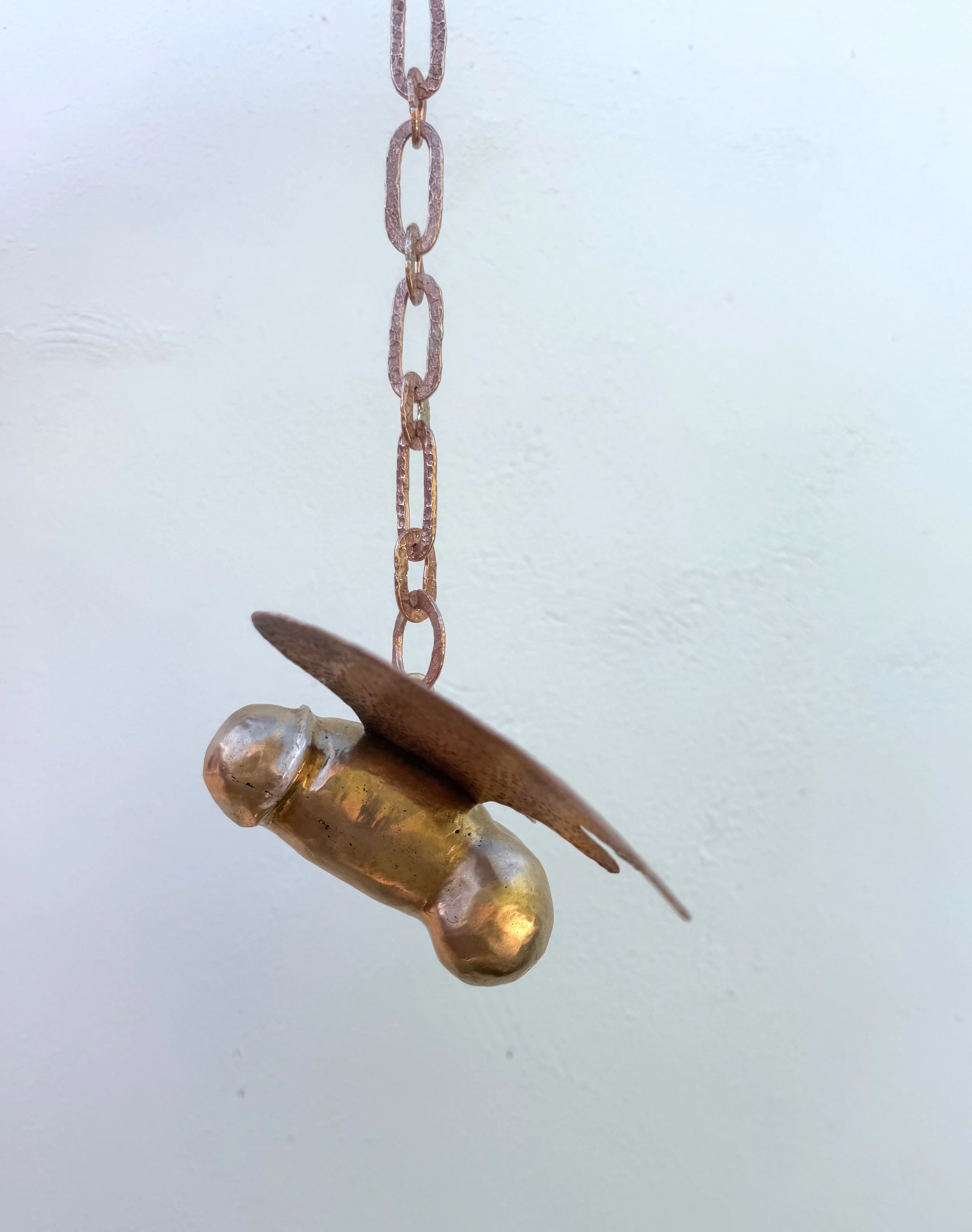
“Tintinnabulum” is silly and whimsical, and it is my modern take on the ancient Roman tintinnabulum: a charm hung with a winged phallus. Tintinnabula have been a recurring inspiration in my work. They were meant to bring good luck and protect a home from harm, a ward against the evil eye.
As a person that identifies strongly as a homebody and whose name comes from two welsh words meaning “great homestead”, I love the idea of creating amulets of protection for the home and the body.
In this piece, “restoration” is the act of transforming a sometimes alienating symbol of masculine power and violence into something tender and personal.”
"Tintinnabulum", ancient bronze and copper, 7.25"x3.5"x11", 2026, Trevor Mock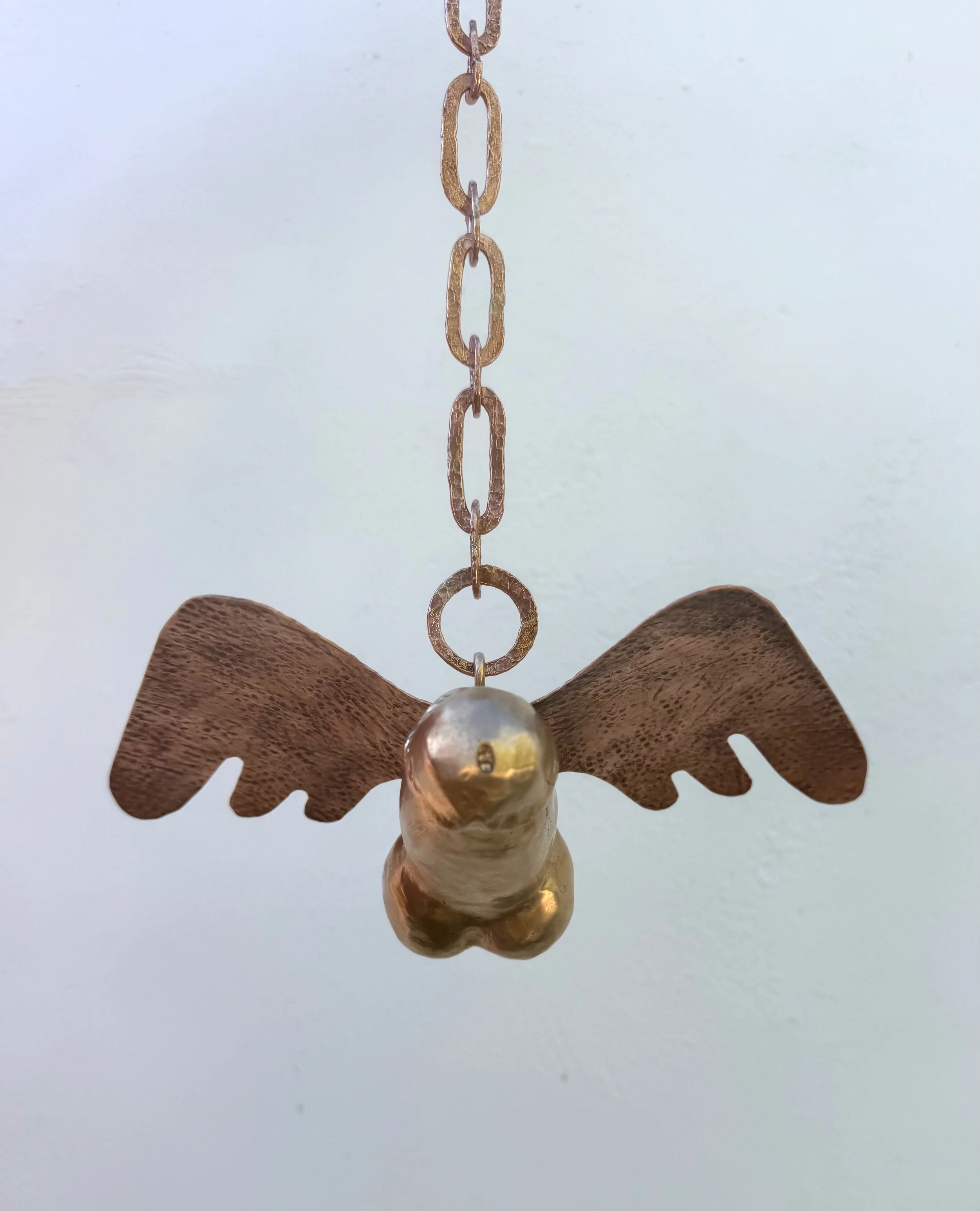
How does your creative practice allow you to restore (renew, return, reclaim, recover)?
“My creative practice is what centers me and allows me to recover from the stressors of life. When I am feeling out of control and disconnected, sitting down at my wax table can be the most restorative thing, for my art practice and also for my mental stability.
As a jewelry artist, I am constantly balancing work that will sell with work I feel a deep connection to. That puts a big strain on my time, because I have to split it between pieces that sustain me artistically and pieces that sustain me financially. When I make time to sit down, let my mind wander, and play with wax, I am making time to renew and recover from the pressure to make money.
These are some of my most treasured moments in life. They connect directly back to the hours I spent as a child creating worlds and magic in my head. In those moments, everything that weighs on me as an adult drifts away, and I feel like anything is possible. My brain feels like it took a trip to a mountain hot spring, scoured clean of the gunk built up from the constant stimuli of the world.”
As a queer+, artist, what do you see can be, needs to be, or cannot be restored?
“A lot of what can be restored is personal. Shame is something you learn, so it can be unlearned. Feeling playful, bold, or tender about your body and your desires can come back. Making erotic and phallic art is part of that for me. It lets me approach a subject with a lot of baggage as something fun.
I think about that version of me hiding drawings in a sketchbook. That discomfort was real, but it wasn't permanent. Through my art practice, the thoughts I once hid have become things I make in metal and share with people.
I feel a sense of restoration in becoming more and more comfortable with my inner world. Although I can't comfort that confused little kid, I feel very connected to them in the direction my practice has taken me.
I think a lot of queer people feel a disjointedness between their childhood and adulthood, and I think bridging those two identities can restore how we connect with ourselves and the world around us.”
Photographs Courtesy of the Artist
Anything else you would like to share about this work? This can be an important part of the process, sourcing materials, or research.
“The piece is a sandcast bronze penis with copper wings that I sawed out and textured with a hammer. It hangs from a handmade threaded hook and a copper chain that I fabricated and textured with the same hammer.”