
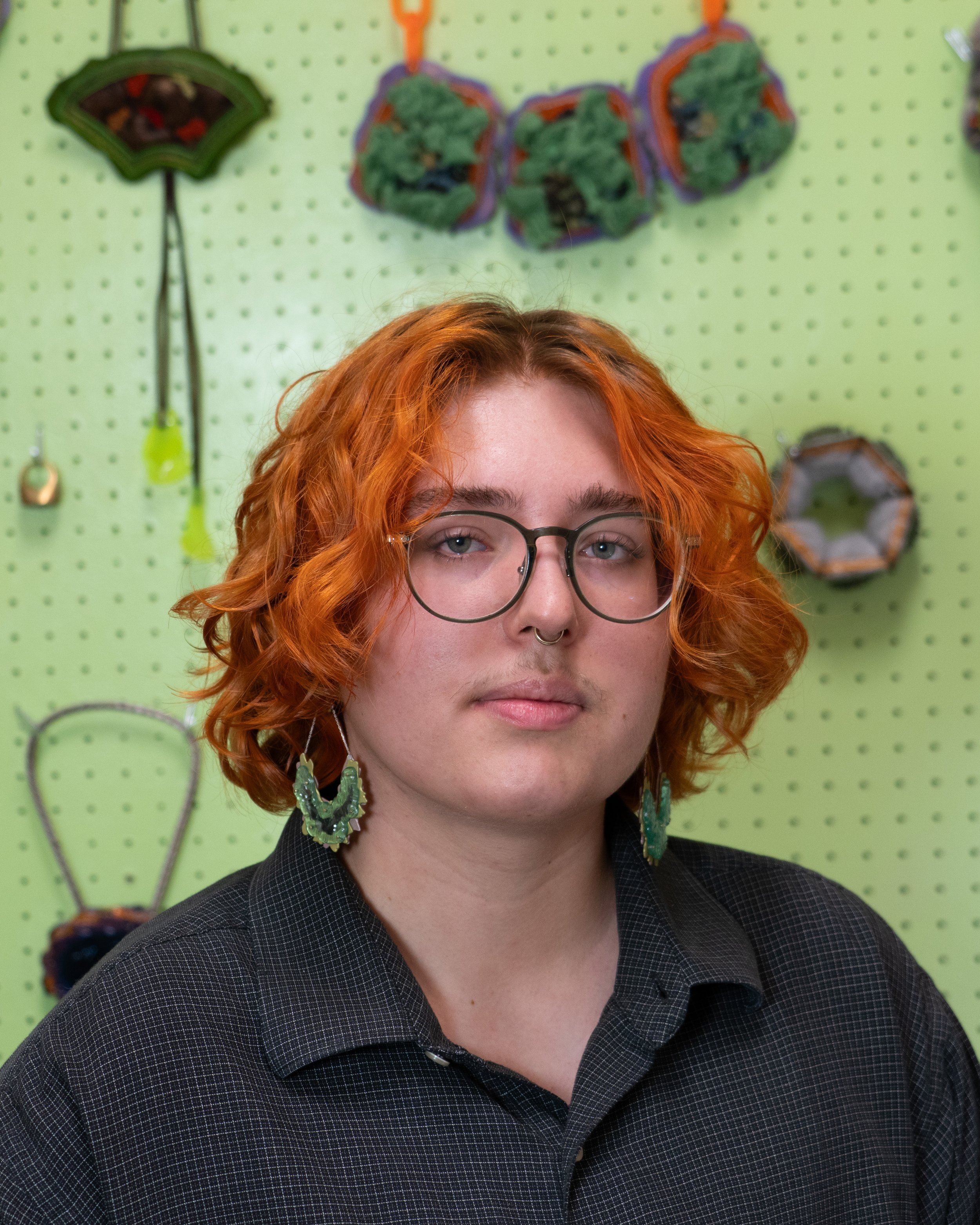
Wren Schulz
They/Them
Erie, PA, USA
“Wren Schulz is a mixed media metals artist currently pursuing an MFA in jewelry and metals at Pennsylvania Western University, Edinboro. Their work plays with combining traditional metals techniques with plastics, fibers, and aluminum in layers of colours and textures that exist as a broader conversation around place, queerness, and their experiences with disability. ”
“In my practice, adornment exists as a social accessibility tool – the unspoken signal of who the wearer is, a marker within their landscape of identity. I think a lot about how people move through the world, how we morph ourselves to environments in order to be safe within them. Materials work with me to create this performance of expression – layering hard with soft, recycled with new, precious with discarded. I am interested in the ways that these materials inhabit space and how they embed themselves into people and places; how we associate objects with memories and emotions.”
@wrenschulz
How does your work relate to the theme of restoration?
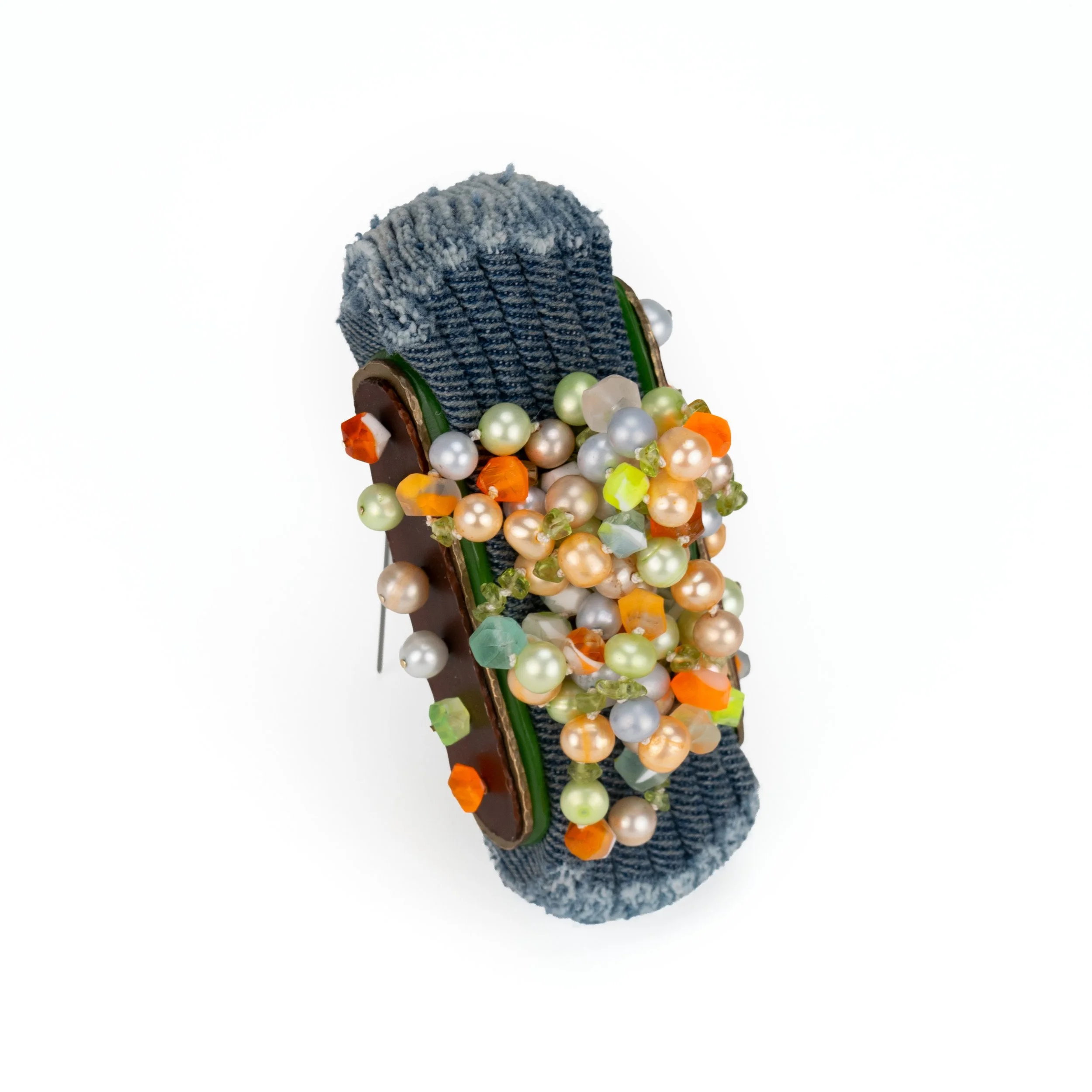
“In my practice, I think about restoration less as returning something to its original state and more as recognizing what remains, what has changed, and what can be created from what is left behind. My work often brings together materials that have been discarded or overlooked. While I do use more traditional metals, I am very interested in the relationships I am creating between aluminum, left over scrap plastic from laser cutting, pearls, and old worn through workwear. I love finding an object that is deemed unusable or invaluable and giving it a new life. This process mirrors the way I think about identity – as something that is constantly being reconstructed rather than something fixed that can simply be recovered. Through adornment, I am interested in the possibility of restoring a sense of agency, connection, and visibility while still acknowledging the histories and transformations that came before. In this piece, I am using recycled acrylic plastic and repurposed denim to create a new wearable object – something to adorn rather than discard.”
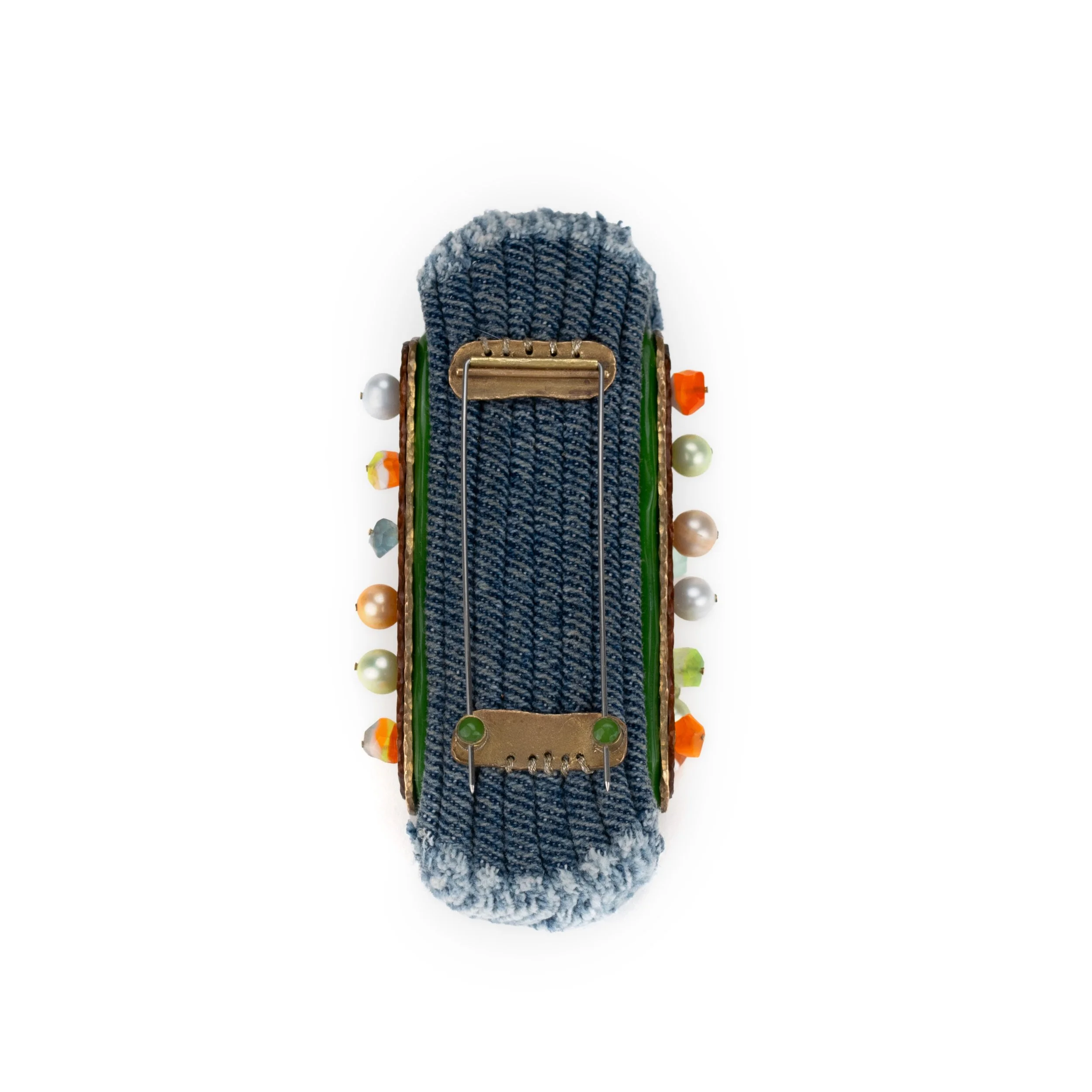
"Bunch/Gather", Repurposed denim, anodized aluminum, thread, silk, polyfill, dyed freshwater pearls, recycled acrylic, peridot, 3 x 4.5 x 0.5 inches, 2026, Wren Schulz 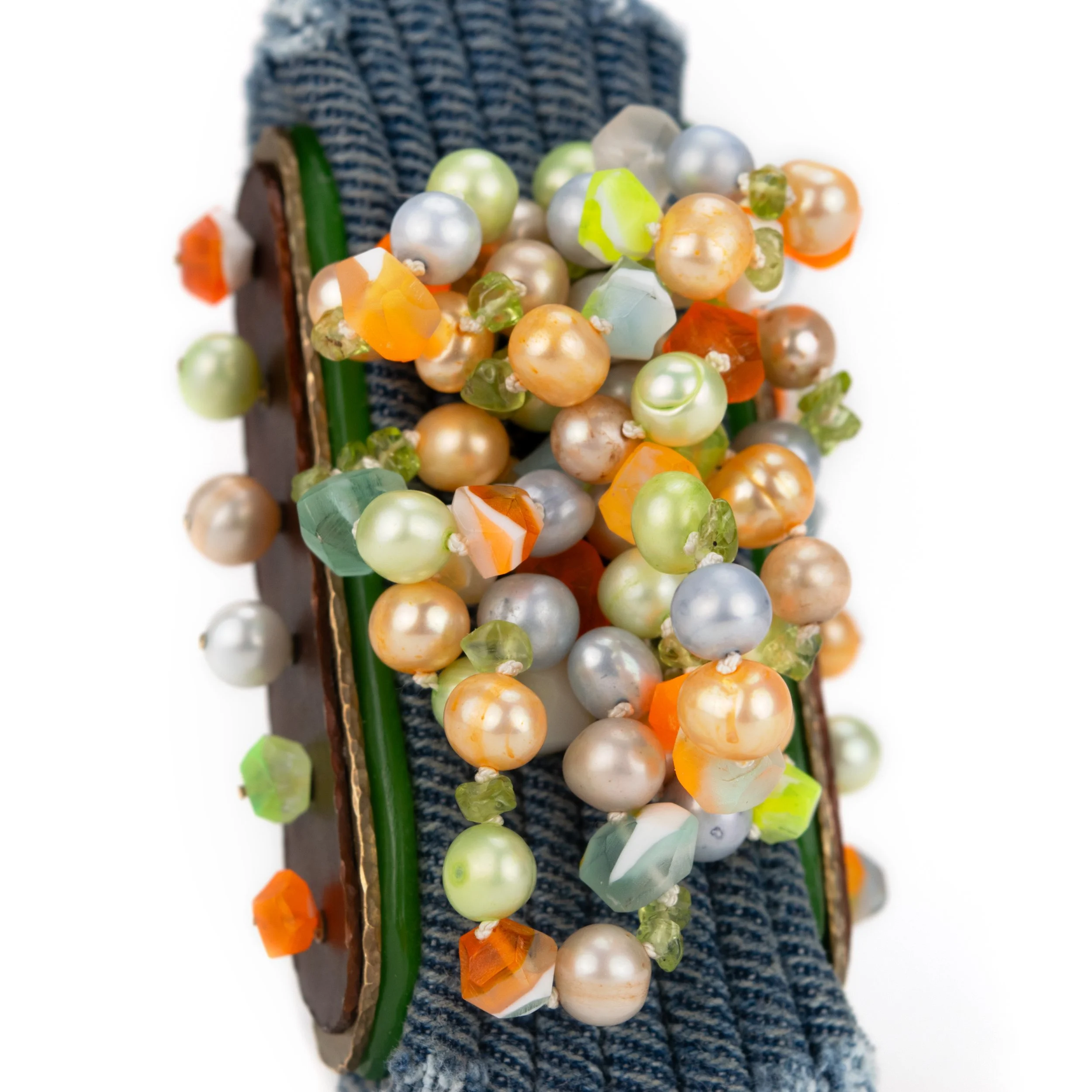
How does your creative practice allow you to restore (renew, return, reclaim, recover)?
“My creative practice allows me to restore through reclamation; most materials that I work with must be reclaimed or recycled in order to be used. To me, restoration is less about repair and more about recognizing value in what has changed. I am making new material out of scraps or, in the case of the fibers I work with, taking something that was wearable and is no longer and turning it into a new wearable object. This also connects to the way I think about identity. My work gives me a way to recover and reclaim parts of myself that have been shaped by my surroundings, relationships, queerness, disability, and transition. Adornment becomes a way of physically carrying those experiences and making them visible on my own terms. Through making, I can revisit things from my past, transform them, and decide what I want to carry forward. The work does not erase what happened or attempt to return me to an earlier version of myself. Instead, it allows me to build something new from those experiences.”
As a queer+, artist, what do you see can be, needs to be, or cannot be restored?
“I think there are a lot of things that need to be restored. Queer histories, relationships to community, and the value of identities that have been erased or misunderstood need to be continually recovered and made visible – especially in today’s political environment. I think a lot about queer organizations that have been defunded or forced to go underground within the past two years. But I also think that while restoration needs to happen, I also think that change is incredibly important. I don’t think that there is a ‘going back’ that can happen, only a moving forward. We don’t need to bring back corporate pride celebrations or empty platitudes, we need active change. I think the phrase “nobody is free until everybody’s free” rings extremely true.”
Photographs Courtesy of the Artist
Anything else you would like to share about this work? This can be an important part of the process, sourcing materials, or research.
“A large part of my process relies on my community at different educational institutions finding scrap acrylic for me to recycle – it's so important to me that my work exists because of community.”