

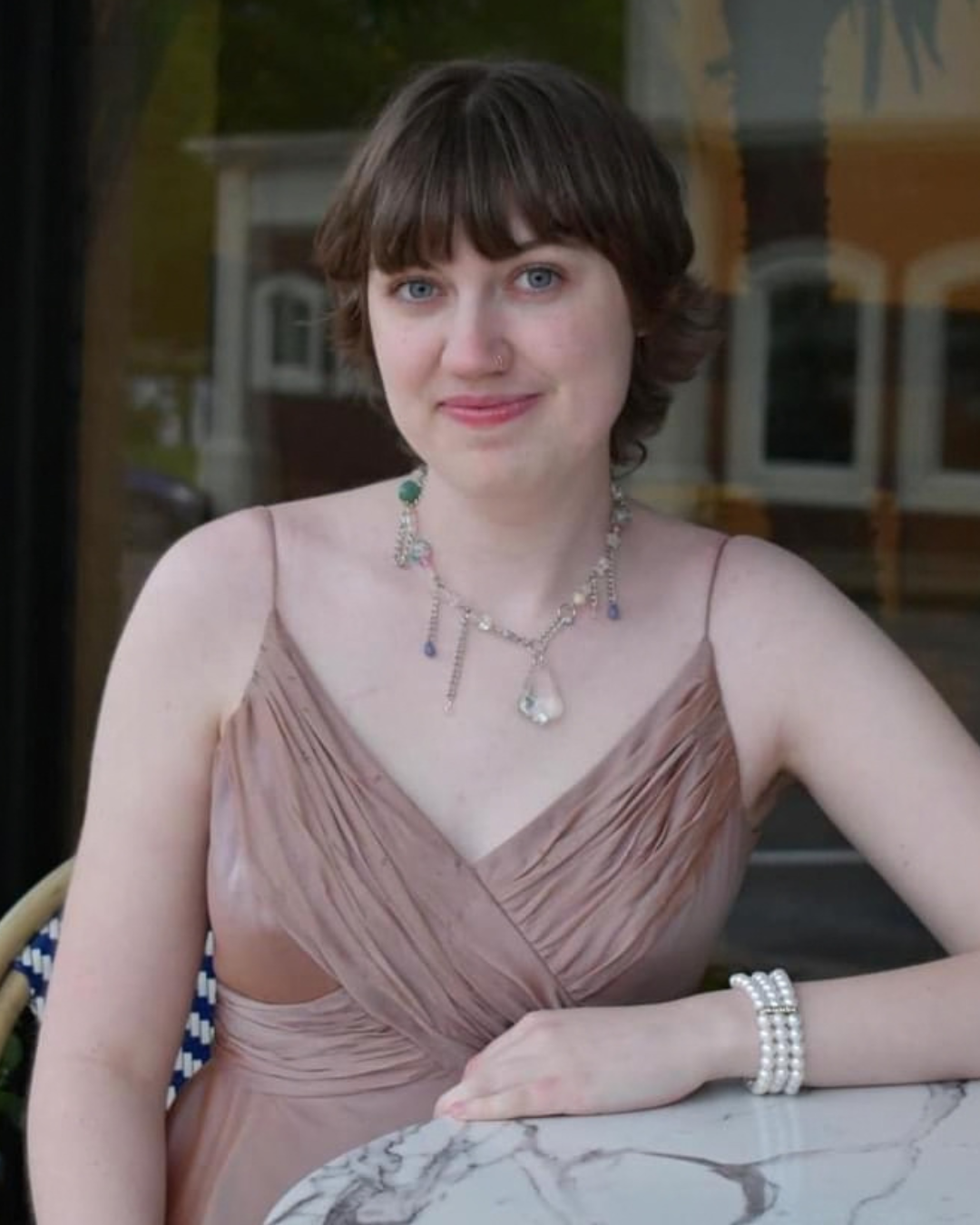
Zoe Tarbill
He/They
Little Rock, AR, United States of America
“Zoe Tarbill is a jewelry artist and craftsperson from Texarkana, Arkansas, currently pursuing a Bachelor of Arts in Studio Art with a Certificate of Proficiency in Jewelry and Metalsmithing and a minor in Art History at the University of Arkansas at Little Rock. Tarbill is particularly interested in jewelry as a form of storytelling and self adornment, creating wearable pieces that explore the relationships between people, nature, and daily life. Using bright colors, playful details, and biological and cellular imagery, they create jewelry that brings attention to overlooked moments and familiar experiences. Their work incorporates metal, beads, enamel, fabric, and found objects to transform familiar experiences into colorful and playful wearable pieces. Their practice is influenced by their upbringing around animals and nature, as well as artists such as Yayoi Kusama and Hilma af Klint.”
“My practice explores the connections between people, nature, and the ordinary moments that shape our lives. Through jewelry and metalsmithing, I transform everyday experiences, biological forms, and personal observations into colorful, playful objects. I am interested in overlooked details and how giving them attention can make the familiar feel extraordinary. I use bright colors, tactile surfaces, and unexpected combinations of metal, beads, enamel, and found materials to create work that feels warm and alive. Through my practice, I invite viewers to slow down, notice what surrounds them, and consider the connections that make life meaningful.”
@zoejenaemetals
How does your work relate to the theme of restoration?
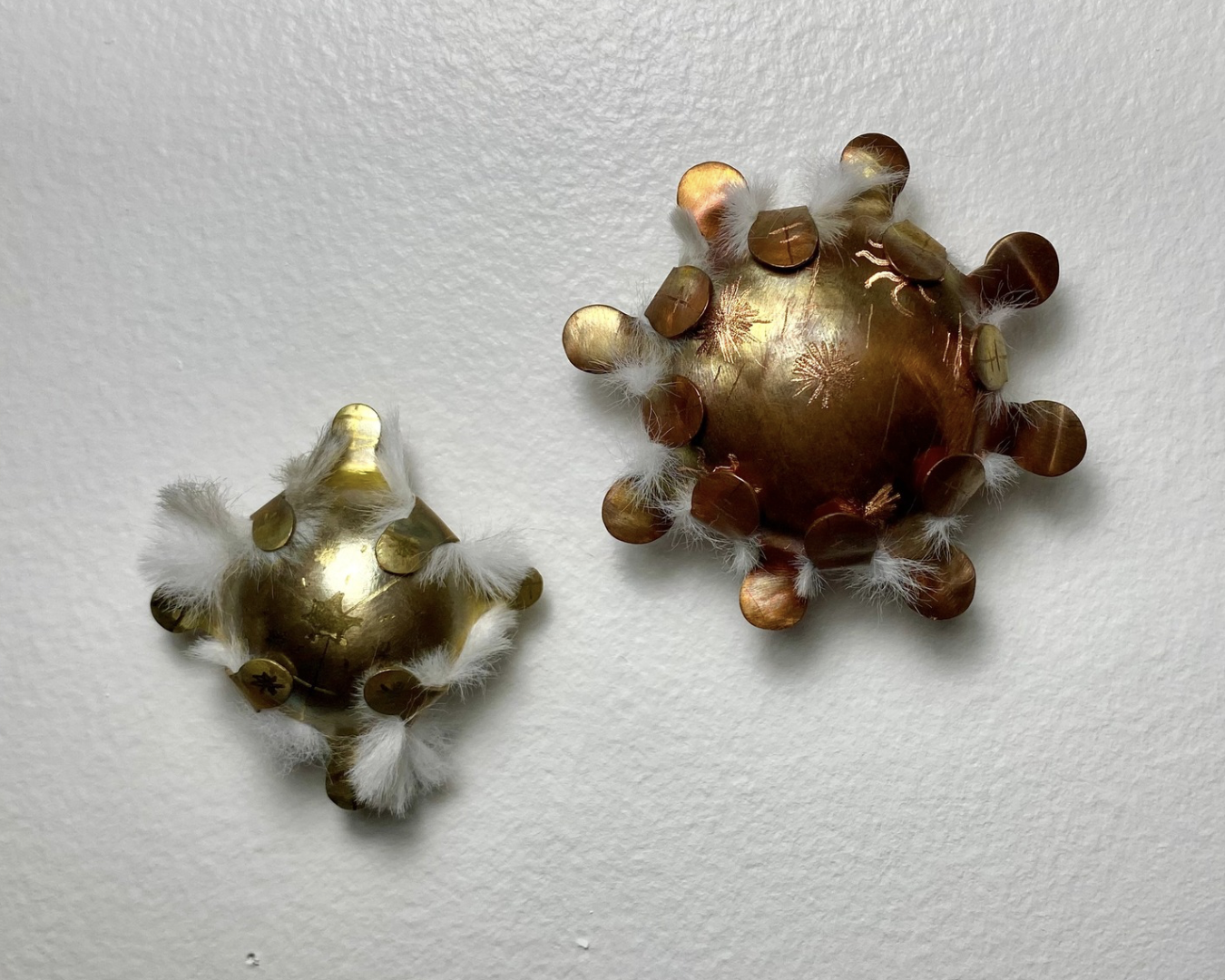
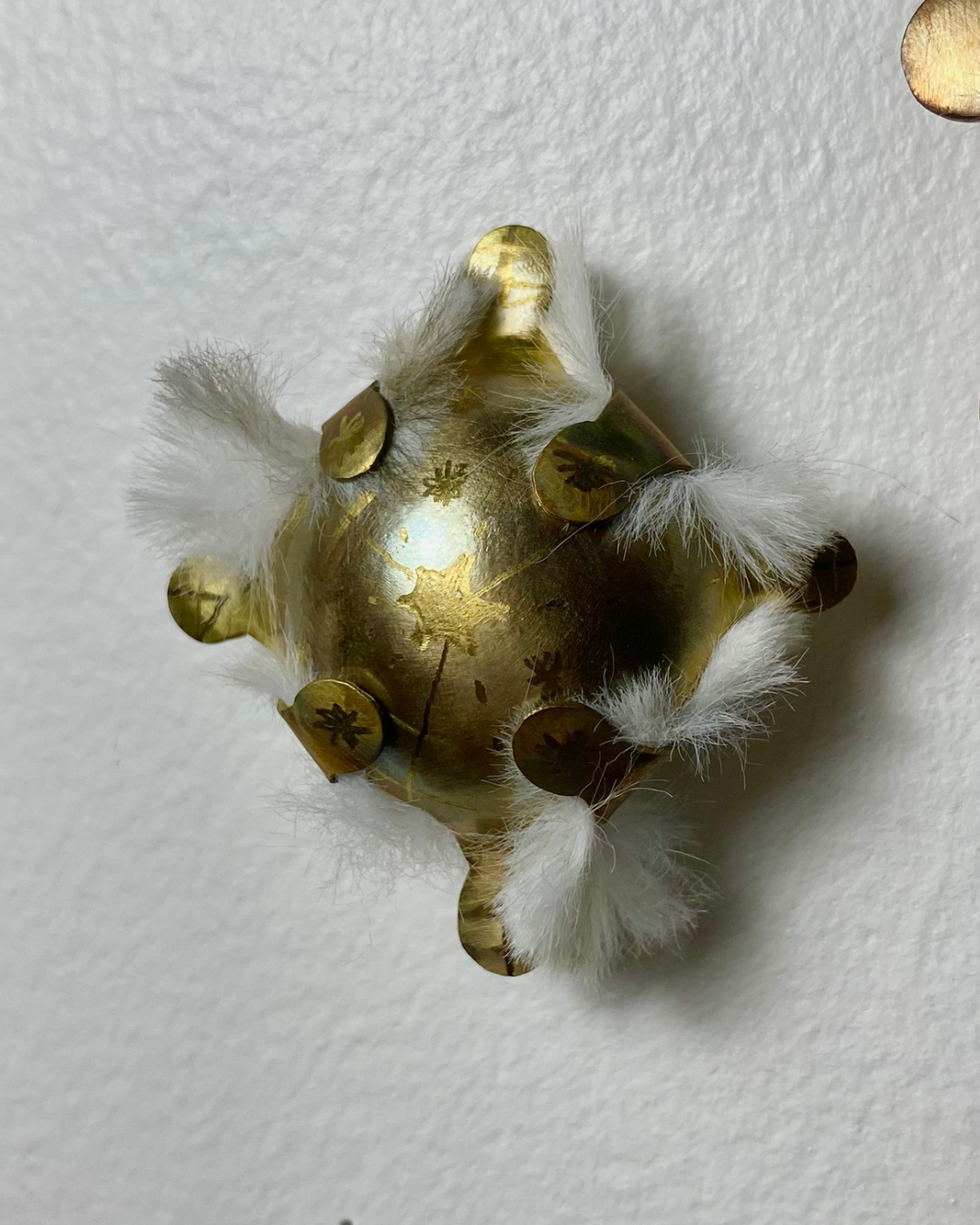
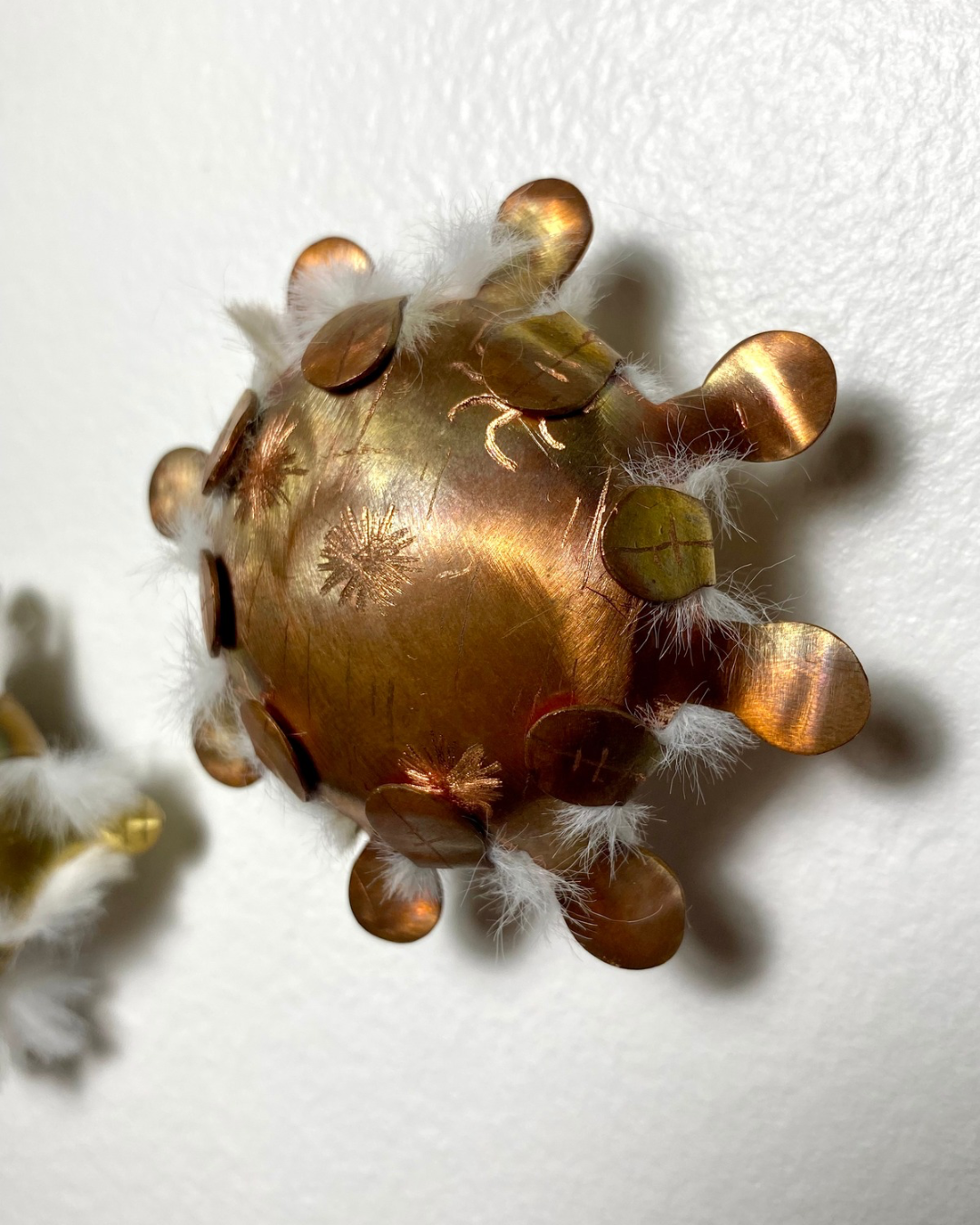
“My Dear LUCA explores restoration as something inherent to life itself. Cells constantly multiply, repair, and renew within our bodies, quietly restoring us every day. Inspired by LUCA, the Last Universal Common Ancestor, the piece reflects on the cellular connection shared by all living things. If restoration exists within us, then perhaps we also have the capacity to restore one another: to repair relationships, strengthen our communities, and care for the world we share. The work is a reminder that restoration does not have to begin somewhere outside of us. It can begin within us and grow outward through our connections to one another.”
"My Dear LUCA", Copper Alloy, Brass Alloy, Fabric, 3 in x 4.5 in x 1 in, Photographed by Zoe Tarbill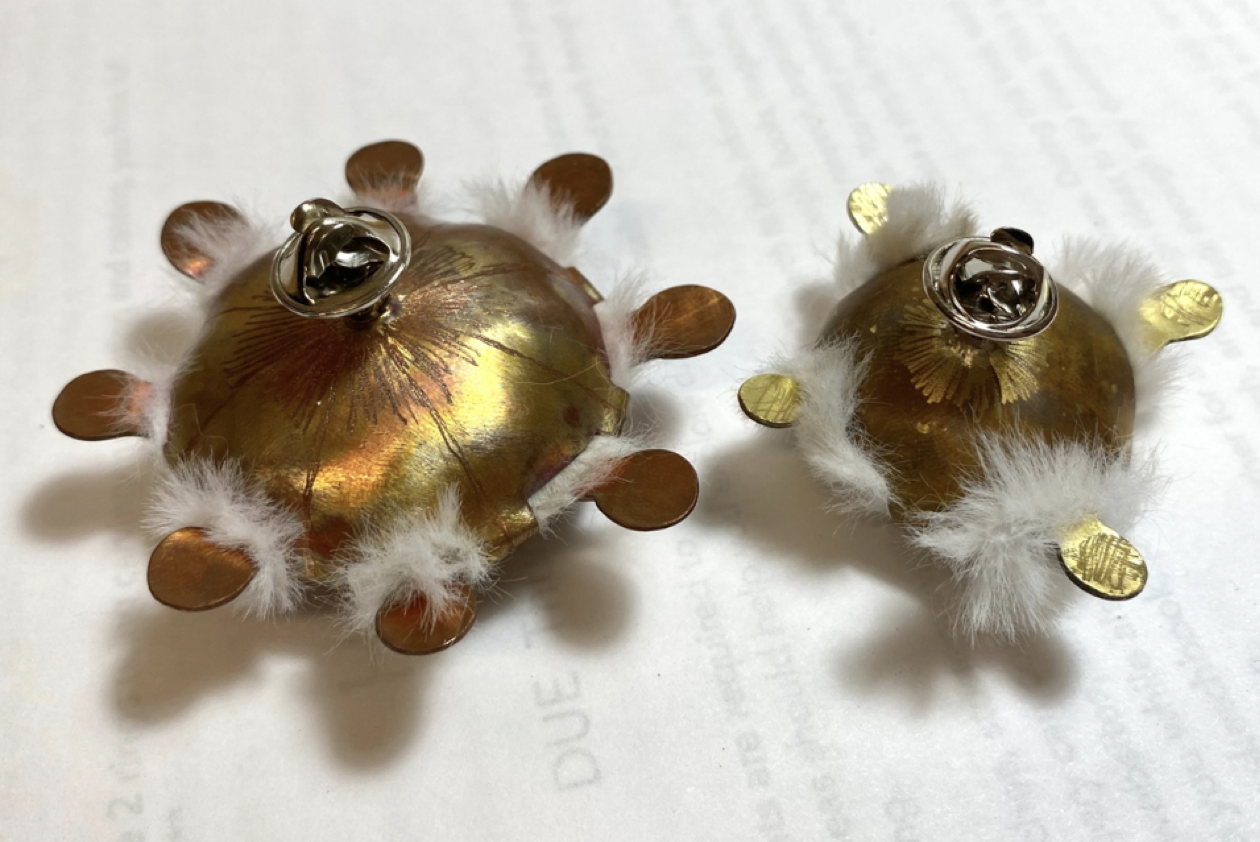
How does your creative practice allow you to restore (renew, return, reclaim, recover)?
“My creative practice allows me to restore my sense of wonder. I am drawn to the overlooked parts of everyday life; small moments, biological forms, colors, textures, and experiences that might otherwise pass unnoticed. Through jewelry and metalsmithing, I transform these observations into objects that can be held close to the body. The slow, tactile process of making gives me space to notice, reflect, and reconnect. Making allows me to take something ordinary and give it attention, care, and meaning. In that sense, my practice is restorative: it reminds me that there is beauty and significance in simply being alive and connected to the world around me.”
As a queer+, artist, what do you see can be, needs to be, or cannot be restored?
“As a queer artist, I believe we can restore what has been made to feel separate. Queerness has taught me that there is no single way to exist, love, create, or belong. I believe we need spaces where difference is not something to overcome, but something that can be celebrated as part of the larger fabric of our communities. My work reflects my belief that connection can exist alongside difference. Just as every living thing shares an ancient lineage, our individual experiences can remain distinct while still belonging to something larger. I believe art can help us remember that we have always been here, that our stories matter, and that there is room for all of us to become who we are.”
Photographs Courtesy of the Artist
Anything else you would like to share about this work? This can be an important part of the process, sourcing materials, or research.
“My Dear LUCA grew from my fascination with the origins of life and the idea that every living organism on Earth can be traced back to a shared ancient ancestor. I began researching LUCA, the Last Universal Common Ancestor, as a way of thinking about the biological connections that exist beneath our differences. This research became both scientific and deeply personal as I considered what it means to share such an ancient connection with every other living thing.
The piece is my love letter to LUCA and to the life that came after it. I wanted the work to feel joyful and alive rather than clinical, using bright color, organic forms, and the intimacy of jewelry to translate a large scientific concept into something that can be held and worn close to the body. The work invites the wearer to carry a reminder of their connection to the larger living world.”