

Amy Liu
She/They
Brooklyn, NY, US
Amy Liu is a Brooklyn-based architectural designer and metalsmith specializing in fine art jewelry. During her M.A. at Pratt Institute, she studied metalsmithing and fell in love with the craft, developing pieces in her small studio in her kitchen.
“Born and raised in Arizona and Nanjing to Chinese immigrant parents, I developed my work based on my experience growing up with Chinese folklore, celebrations, but also the diasporic struggles of separation from my culture. Utilizing cloisonne enameling- a classic technique used in Chinese jewelry and pottery, I aim to tell stories through color expression. My practice is driven by constant utilization of new techniques- my first time making hinges, my first time working with enamel, in an effort to constantly improve and learn in a vastly changing art jewelry world.”
“I just like to make things. Some of them tell of my story and some don't. I believe it is my existence and lived experience that truly reflects being a queer Chinese artist. I have no clients, make whatever I want, rarely if ever sell my jewelry, because these are deeply personal pieces to me and I believe in creative freedom.
My parents were poor Chinese farmers who came to the United States with nothing, and now I am able to fund my passion for art with my job, and have the time to do so. That to me is freedom."
How does your creative practice reflect your experience of living and making as a BIPOC and/or 2SLGBTQIA+ maker?

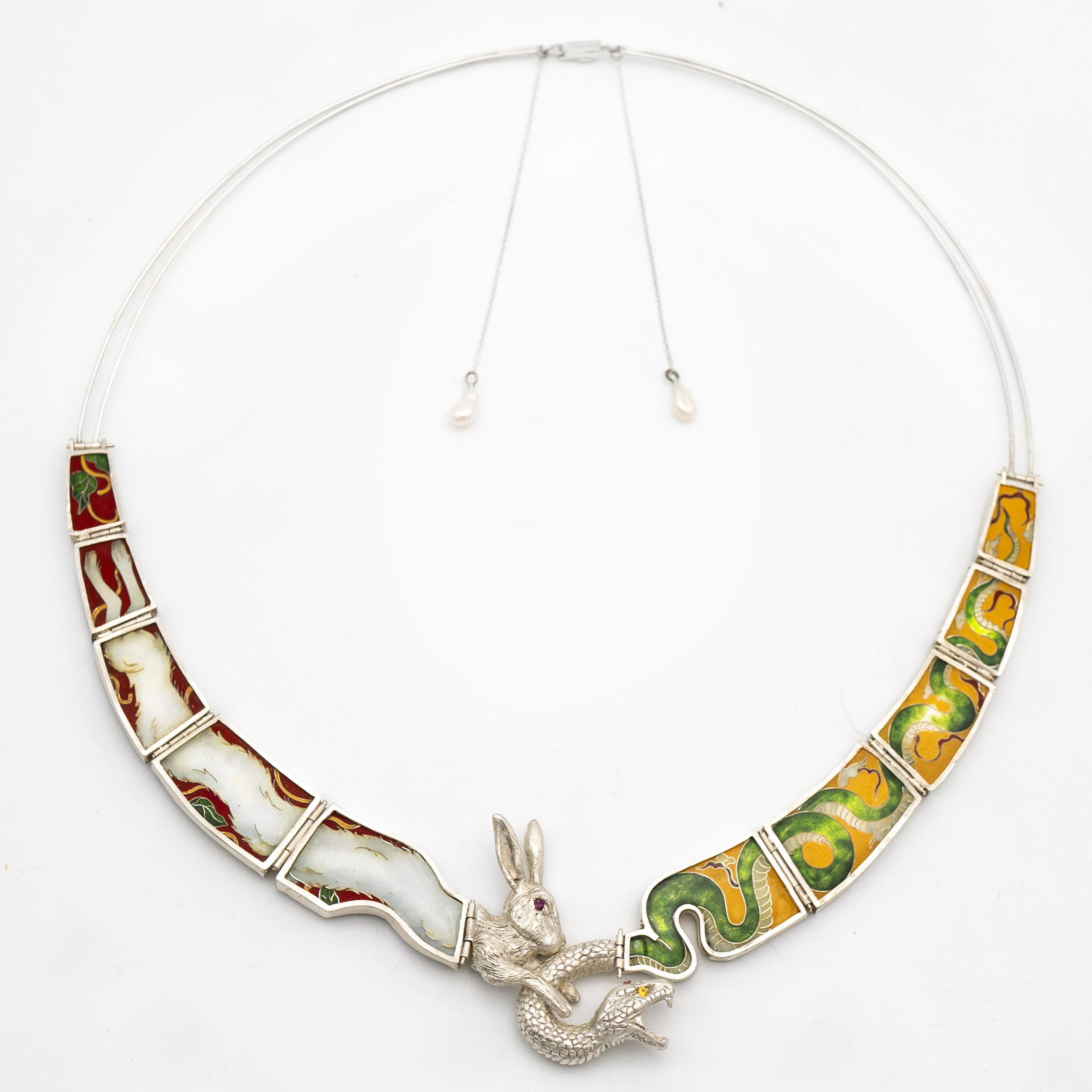
"I Have Never Known Peace", Fine and sterling silver, enamel, ruby, yellow sapphire, keshi pearl, 11" x 11", 2026What techniques, stories, or materials have been passed down to you, and how are you reimagining them in the present?
“At the moment, I am developing a jewelry box ‘trinket’ that opens up to tell the story of Sun Wukong, presented in champleve enamel and painted vitreous enamel. Sun Wukong, Nezha, and many others were the cornerstone of the stories I grew up with. Though I speak fluent Mandarin and celebrate the customs/holidays, I feel very disconnected to my extended family in Nanjing and therefore my culture. I try to not focus on the frustrations of this diasporic experience, but rather celebrate the third culture that comes up naturally as a result of being from two different cultures. I remember recording my grandmother telling stories of herself back in the Korean War before she passed away, and all these influence me to tell my own version of a narrative that I grew up seeing and hearing."
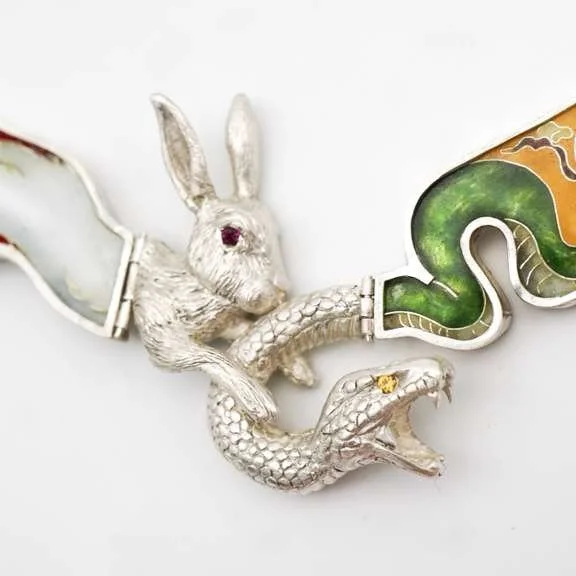
Photographs Courtesy of the Artist
How does your work honor those who came before you while forging new pathways for the future?
“I grew up mostly in Arizona. When I was five I began drawing and painting, and it was there I began taking my first metalsmithing class in 2019 with my mom in a small studio in Phoenix. There my love for the art initiated. Since then I have had professors from the Anishinaabe Nation, mentors from the Yavapai-Apache Nation, who through their Indigenous jewelry showed me the importance of storytelling in adornment. At Pratt, I was supported by great professors who taught me more techniques and the eye for detail. And most recently, at Jewelry Arts Inc. I learned how to enamel, something I have wanted to do for years and never took the plunge on until now. All the people who have been in my path before showed me something different. I am grateful to create jewelry mostly for myself, in a way that tells my own story and the ones that have come before."