
Andrew Thornton
He/Him
Ligonier, PA, US
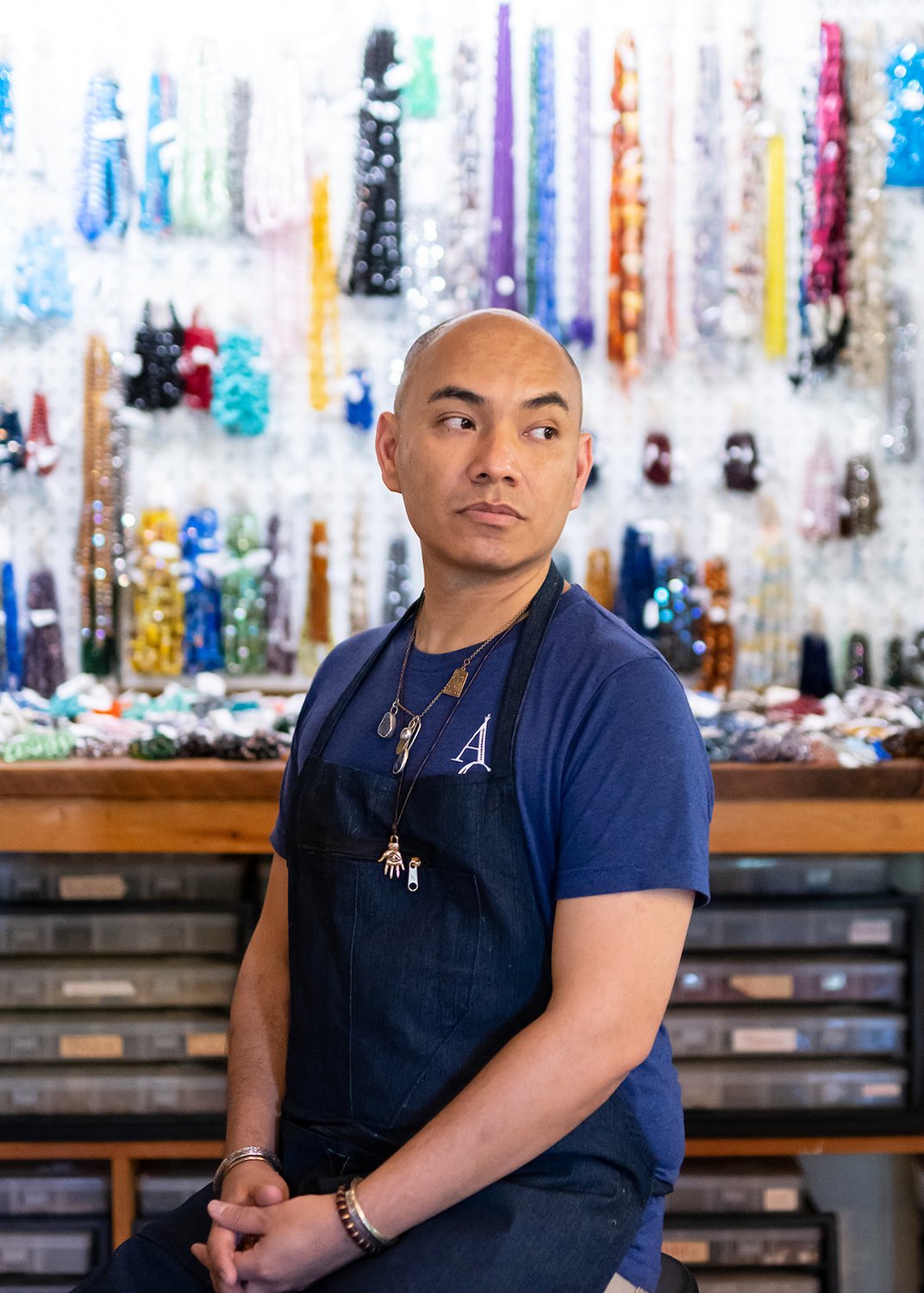
Andrew Thornton is a mixed media artist, trained at the School of Visual Arts. He works in painting, collage, metal-smithing, and jewelry. His work explores identity and what it means to be BIPOC and gay. He is the co-owner of Allegory Gallery.
“The artist is the chronicler and captures, distills, and synthesizes the world around them. I am a storyteller and draw upon elements of fantasy, magical realism, and pop culture to convey my narrative. Growing up gay and a person of color, most of my life has been a game of translation and seeing myself through other people's eyes and expectations. I am curious about the stories I have been told and the stories that I tell myself. My latest series investigates the way that I see myself and tell my truth.”
How does your creative practice reflect your experience of living and making as a BIPOC and/or 2SLGBTQIA+ maker?
“Being BIPOC and queer always made me feel different. Even before I could understand what those differences meant, I was singled out as “other”. I remember when I was walking home from school and people would scream from their cars passing by that I should go back where I came from. I didn’t know what racism was at the time, but when I told my mom what happened, she was so mad. She had immigrated from the Philippines during the Civil Rights Movement and had worked so hard for a different life for her children. Because I always felt like an outsider, the work that I make is shaped by looking in and trying to make sense of things. When I was growing up, it was in the aftermath of the AIDS epidemic and there was still a lot of shame and social stigma around what it means to be gay. There was also a lot of survivor’s guilt. I have spent most of my adulthood unpicking those knots and learning to love my queerness and celebrate it. My work will always have a vein of sadness that runs through it, but I hope it shows joy too."
What techniques, stories, or materials have been passed down to you, and how are you reimagining them in the present?
“My mother and grandmother were quilters. This was forbidden to boys at the time. I begged my grandma to learn though and one of my earliest memories is when she snuck me into the sewing circle. I remember laying on my back, looking up at the patchwork quilt. The light poured through the rainbow of pieces of fabric. I could see hands moving with needle and thread and hear a murmur of conversation. My relationship with my artwork has always been one marked by rebellion and bucking social norms. Much like my mother and grandmother’s quilts, I would bring pieces and parts together. There is also a love of color. I remember my dad telling me that he liked the color pink but never wore it because a manly man didn’t wear colors like that. That color was for girls. People would tell me that things like sewing or pink weren’t for boys and I would always ask, ‘Why not?’"
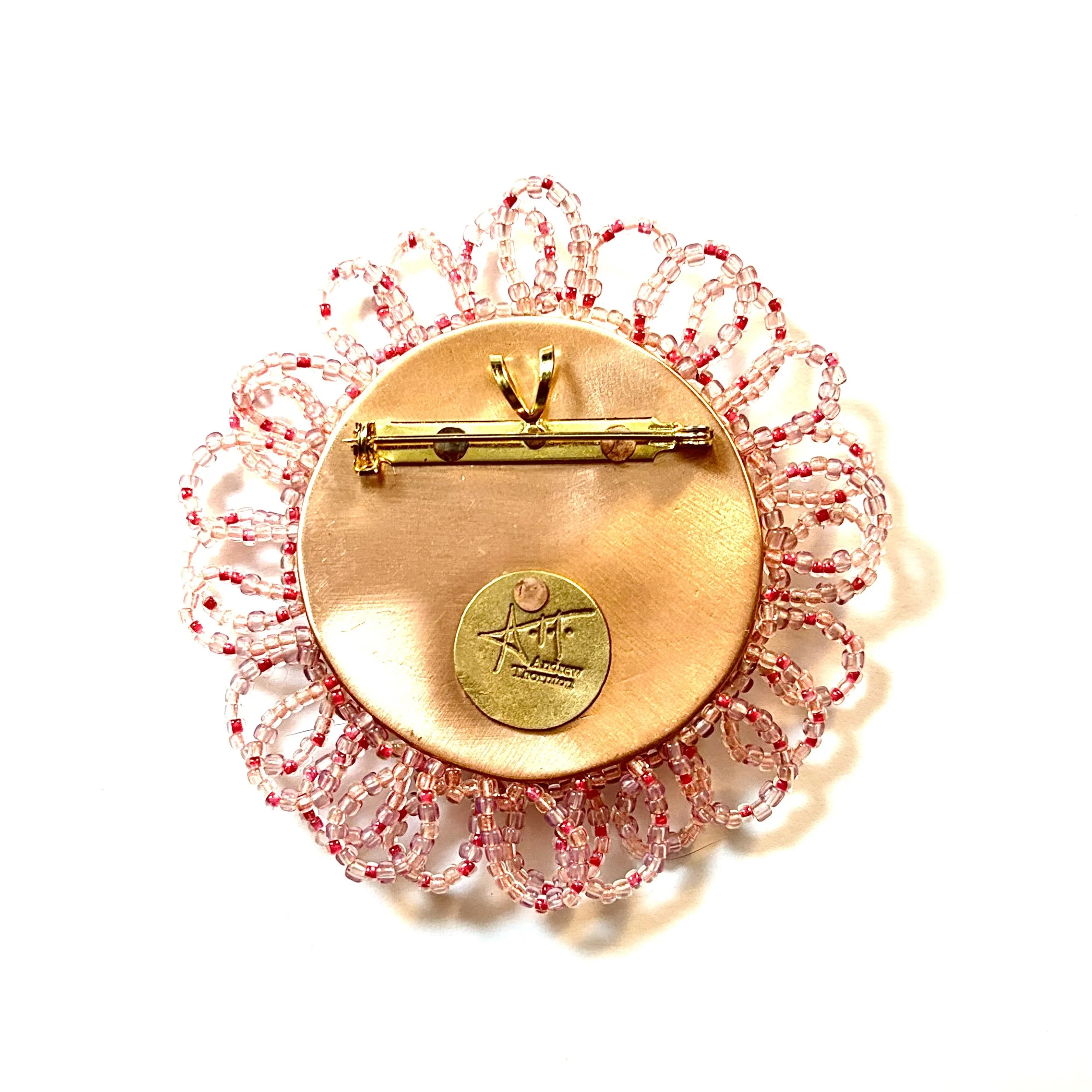
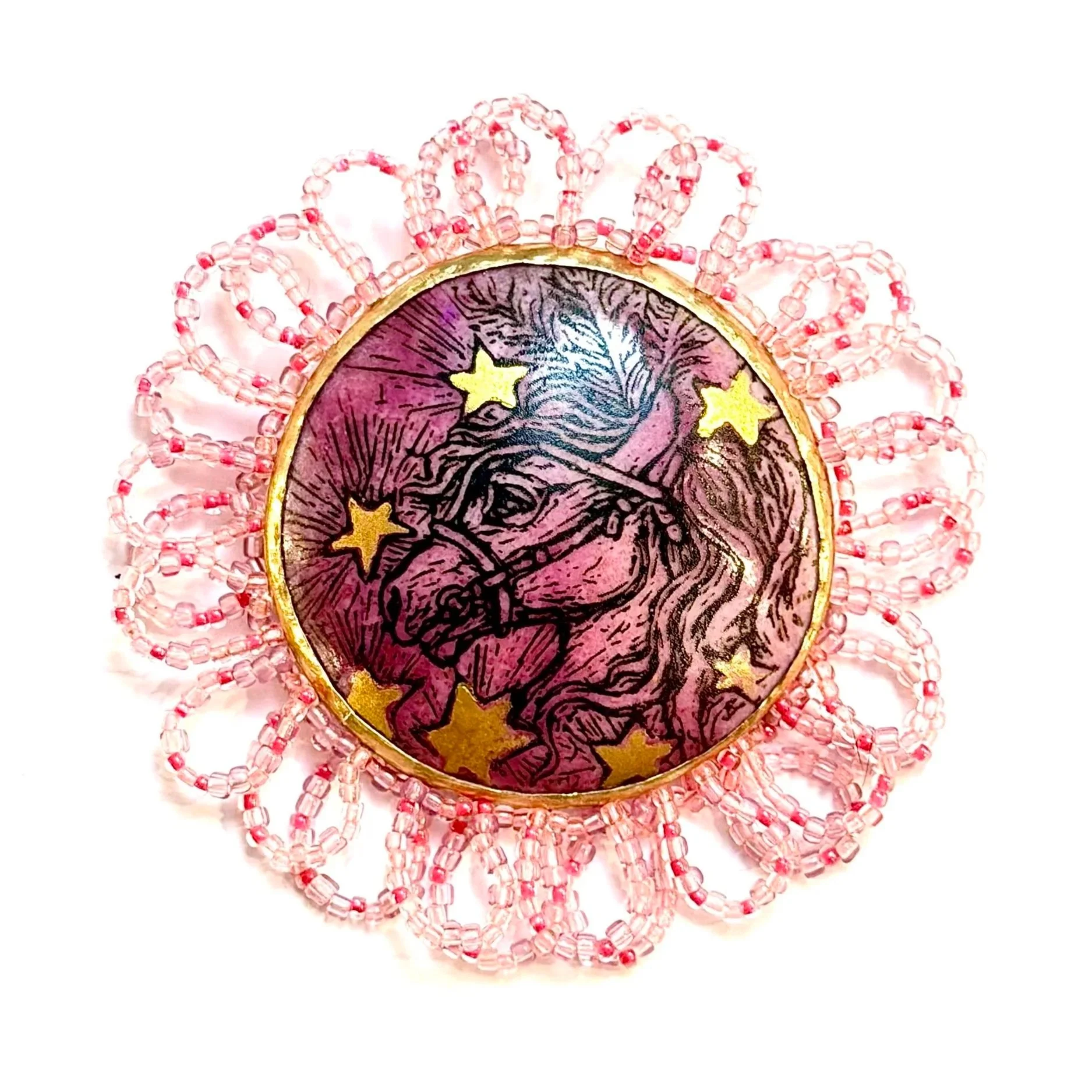
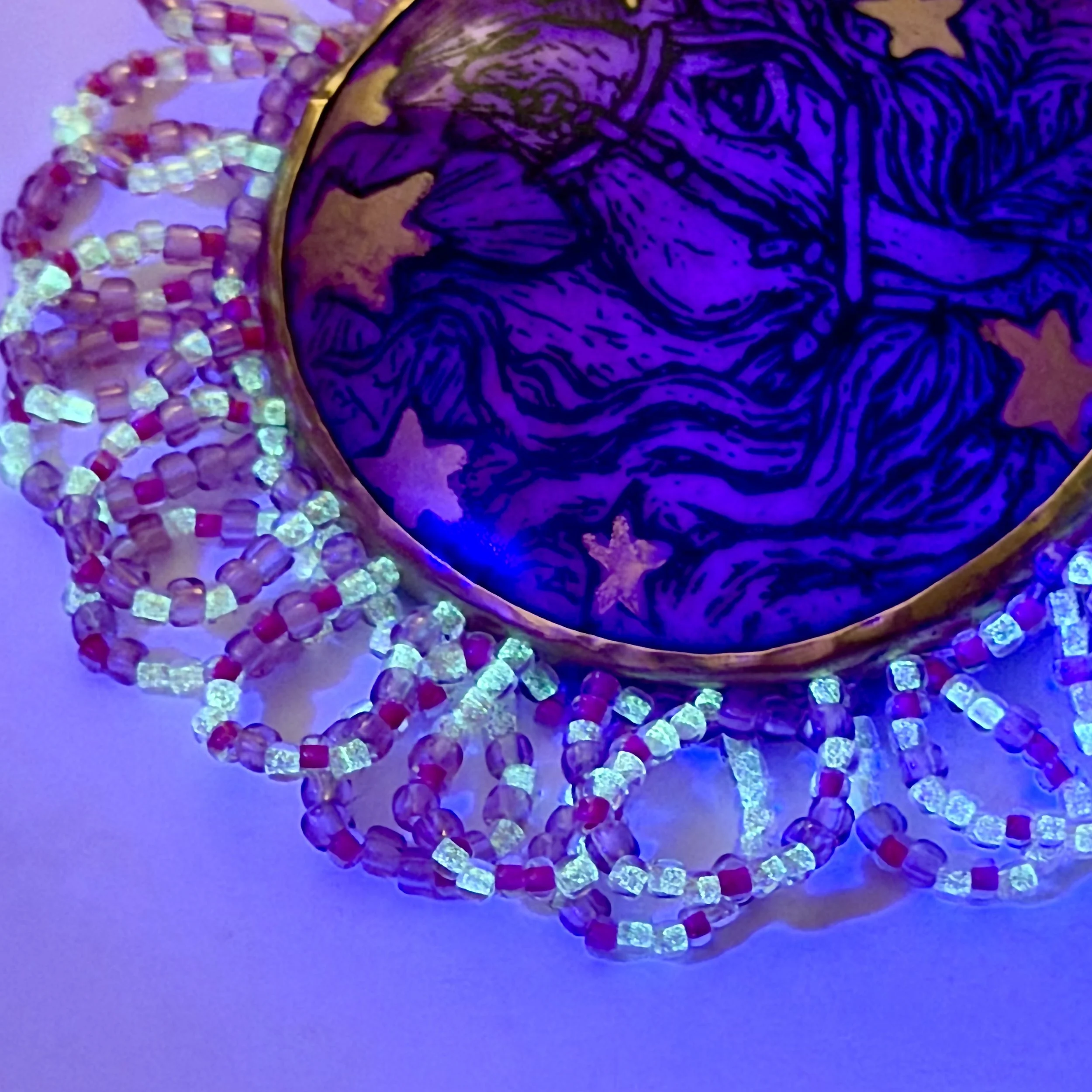
"Pink Pony Club", Laser-etched enamel, bronze, copper, vintage seed beads, 3” x 3” x 0.6”, 2026How does your work honor those who came before you while forging new pathways for the future?
“II will always carry those who came before me with me. I wouldn’t be able to make the work I make without their contributions and helping set the stage for me. Whether it was my grandma who let her youngest grandchild sew and cook when I was expected to hunt and fish or the generations of queer people who fought for my equality. I see it now with queer people who are younger than me who grew up feeling loved and supported for who they were. I would like to think that I was part of that chain and helped make things easier for people after me. While they have their own hardships and struggles, I am glad to see that it was better than it was. I know in my own evolution, I have learned to love myself more wholly and authentically."
Photographs Courtesy of the Artist
Anything else you would like to share about this work? This can be an important part of the process, sourcing materials, research, etc.
“I originally created this piece for Sandra McEwen’s Enamel Art Jam. The theme was color. To supplement the theme, she assigned us words. The words I got were ‘circus horse shimmer’. Enameling has a tradition that goes back hundreds of years. It can be very particular and certain techniques can be challenging. When I first started to work on this project, Chappell Roan’s song kept coming on. The song is a celebration of queerness and leaving where you came from to find self-acceptance and love amongst chosen family. I feel like the idea of the circus is similar, leaving behind ordinary life to find your own way forward. Naturally, I decided to pick pink as my color. It is notoriously fickle in enamel. If it’s in contact with silver or gets fired too hot or too long and it can turn a shade of baby poop brown. Even though the material has a history that goes back centuries, I was able to use technology to add my own illustration to the surface. I incorporated beads to help soften the piece and make it look like a prize ribbon. There’s a secret! Just like life sometimes you need the dark to show the light."