
Curtis Arima
He/him
Emeryville, CA, US
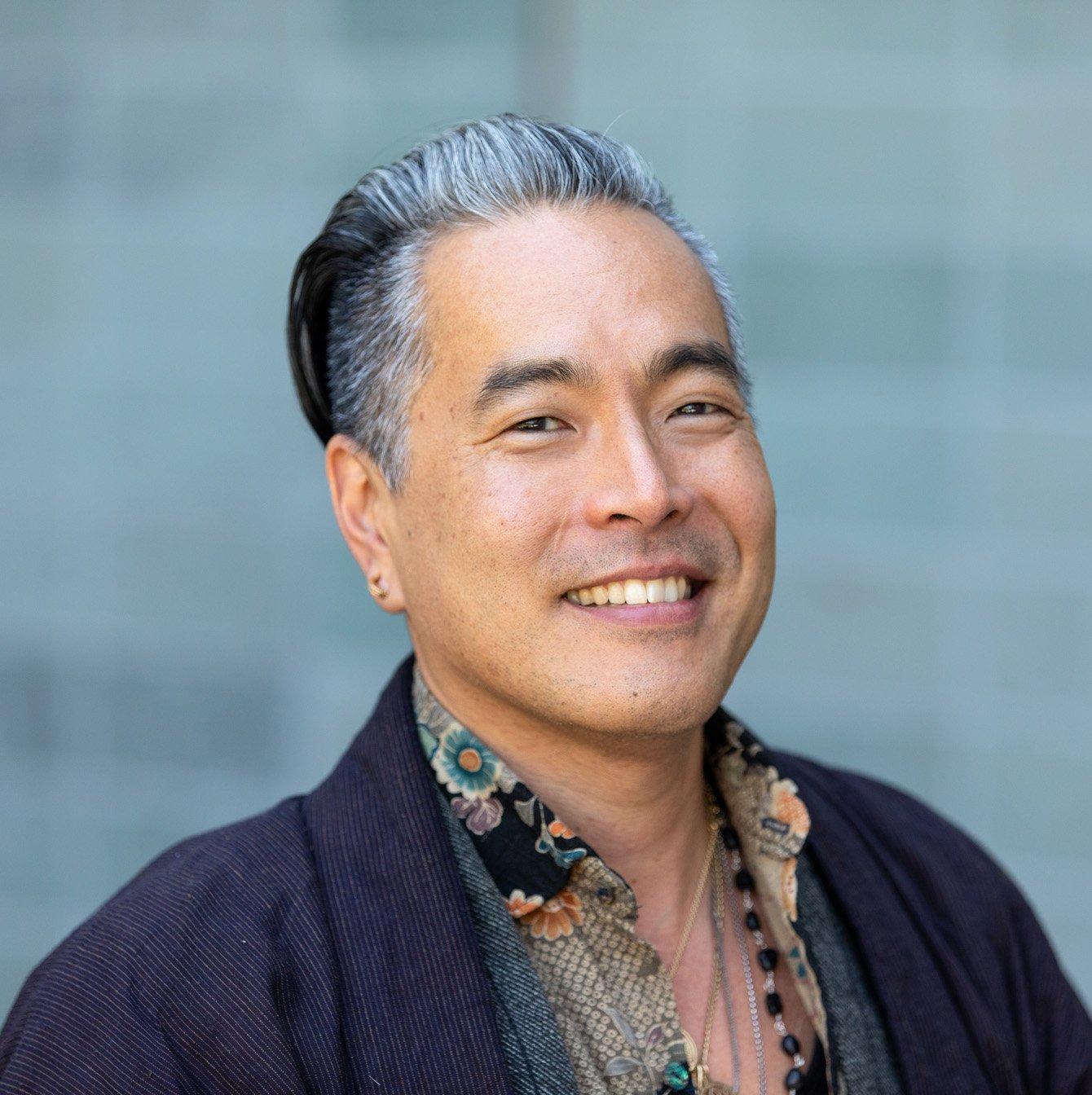
Curtis H. Arima is a craft artist and educator transforming inherited materials into works on sustainability and cultural heritage. He is Professor and Interim Dean of Fine Arts at CCA, supporting students, faculty, and innovative practice.
“Curtis H. N. Arima is a craft artist whose work transforms inherited and found materials into objects that reflect cycles of nature, care, and renewal. Grounded in sustainability, his practice considers the environmental and cultural life of materials, engaging processes of reuse, repair, and transformation. Drawing from his Japanese American heritage, he explores relationships between people, objects, and ecosystems. His work invites reflection on how making can align with ecological awareness and foster deeper connections to the natural world.”
How does your creative practice reflect your experience of living and making as a BIPOC and/or 2SLGBTQIA+ maker?
“My creative practice is shaped by my experience as a Japanese American (Yonsei) and a member of the LGBTQ+ community, where identity is not fixed but layered, evolving, and often negotiated across histories and spaces. I work with inherited and found materials, often repurposing metals and personal objects, as a way of engaging memory, ancestry, and transformation. These materials carry both personal and collective narratives, allowing me to reflect on cultural continuity, displacement, and resilience.
As a BIPOC and LGBTQ+ maker, I am attentive to the ways bodies, histories, and identities are held, obscured, or reimagined through objects. My work often creates space for repair, both literal and symbolic, transforming materials marked by loss or transition into forms that suggest care, healing, and possibility. This process mirrors my own navigation of multiple identities, where adaptation and reinvention are essential.”
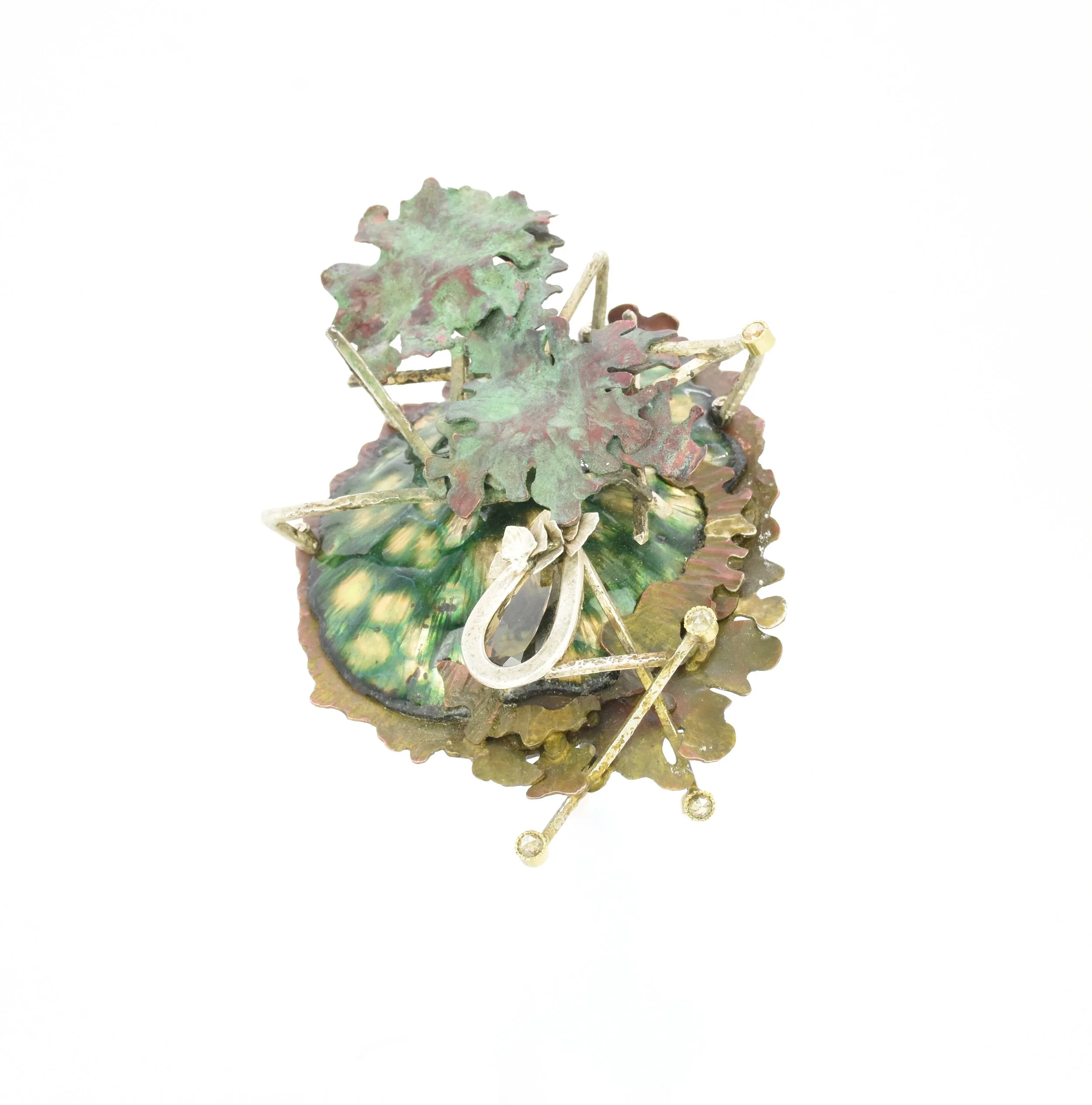
“Ecosystems: Waters Edge”, Copper, recycled silver, enamel, patina, recycled rose cut diamonds, smokey quart 4" x 3" x 1", 2024What techniques, stories, or materials have been passed down to you, and how are you reimagining them in the present?
“My practice is grounded in both tangible and intangible inheritances, some passed down through family and culture, others gathered through community, mentorship, and lived experience. As a Japanese American, I carry an awareness of craft as a form of quiet persistence, where care, precision, and respect for material are central values. While I did not inherit specific objects or techniques in a direct lineage, I did inherit ways of thinking about making, an attention to detail, a sensitivity to impermanence, and a reverence for the histories embedded in objects.”
Photographs Courtesy of the Artist
How does your work honor those who came before you while forging new pathways for the future?
“My work honors those who came before me through an ongoing respect for material, process, and the quiet knowledge embedded in craft traditions. As a Japanese American maker, I carry forward values rooted in care, attention, and humility, where making is both a technical and ethical act. Working in metal, I am in dialogue with a long lineage of metalsmiths, jewelers, and artisans, while also holding space for the cultural histories, both visible and obscured, that shape my own identity. My many teachers, my many ancestress, many community members inform my work and make it possible”.
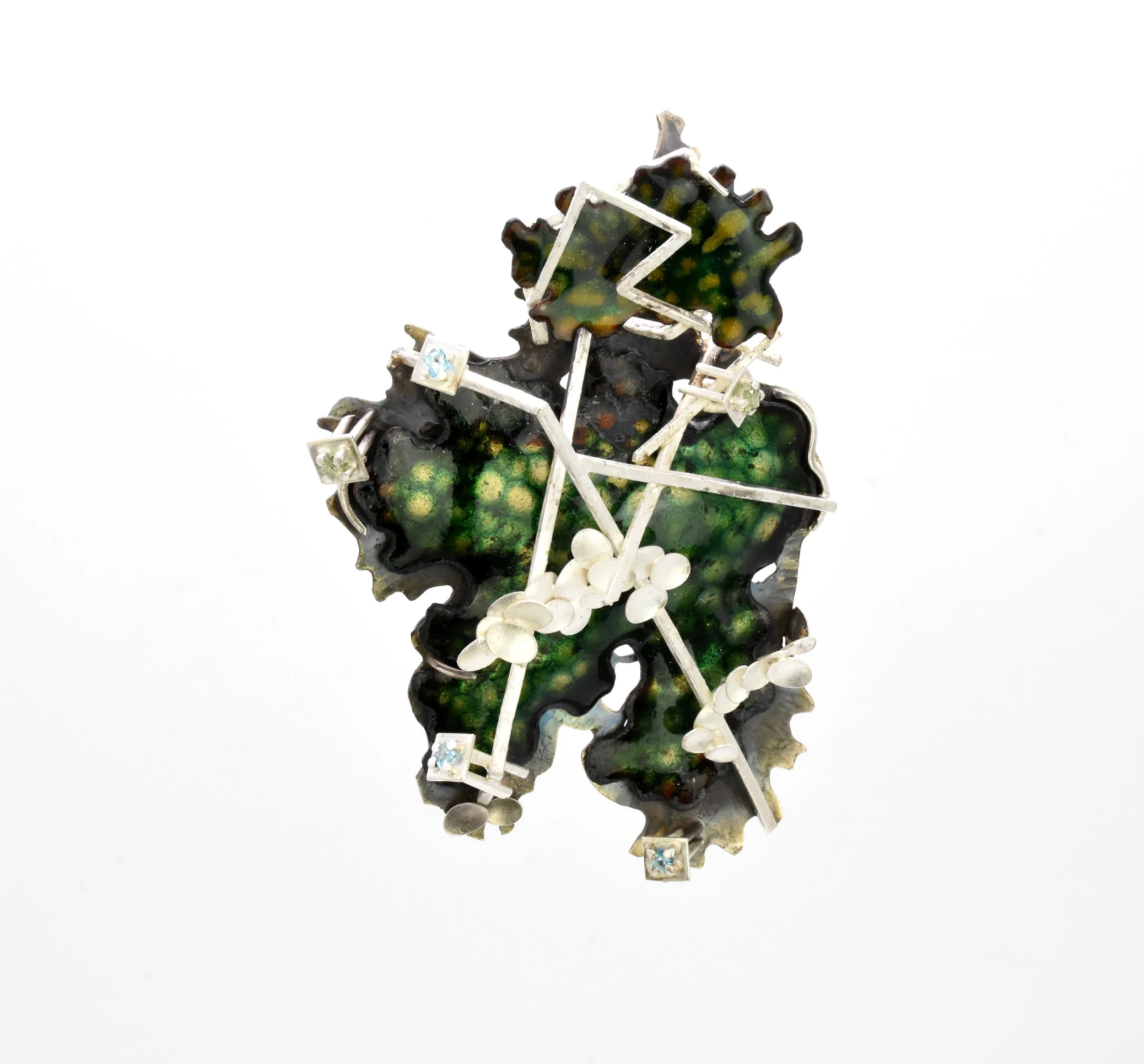
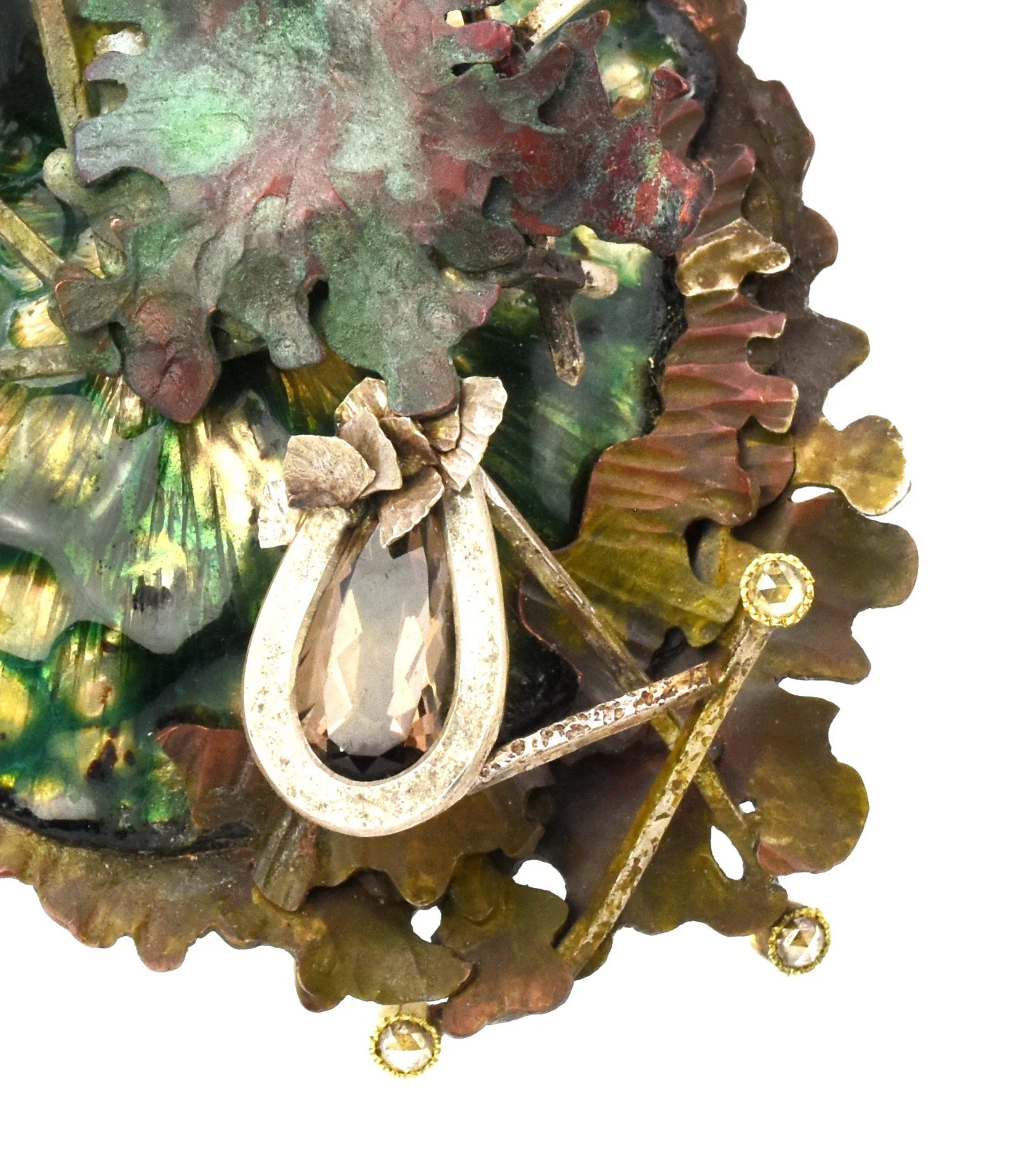
”Ecosystems: Waters Edge 2", Shibuishi from recycled metal, recycled silver, copper, enamel, topaz, 4" x 2.5" x 1", 2025