
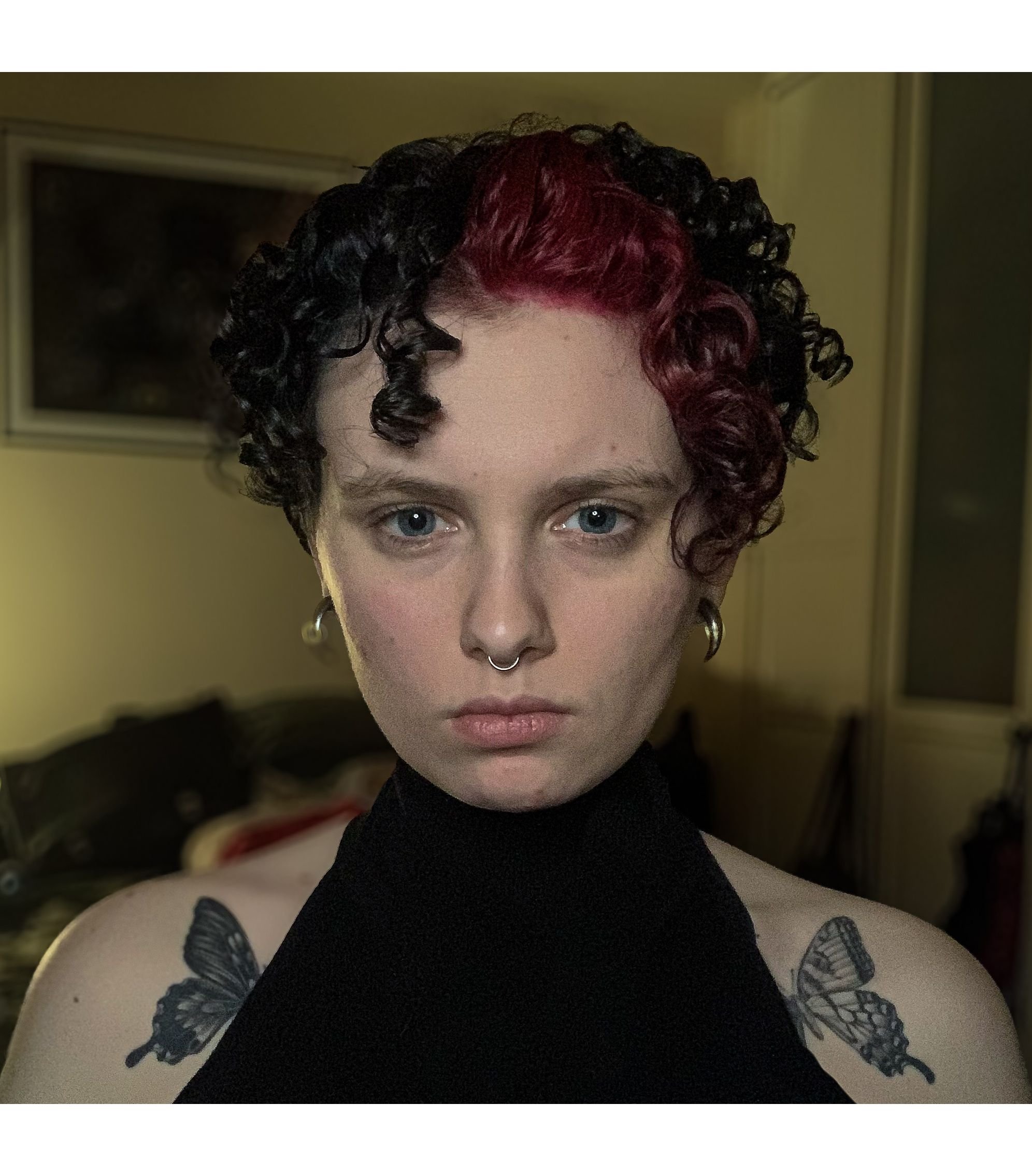
Minerva Mullally
They/Them
Toronto, ON
Minerva is a Toronto based jeweller and artist exploring adornment as a site of identity, transformation, and eroticism. Trained in goldsmithing, their work bridges traditional technique and contemporary form, engaging queer embodiment.
“My practice explores transformation, decay, and renewal through metal’s transmutational qualities. I’m drawn to processes that blur control and chance, like organic and sand casting, where material becomes collaborator. I capture fleeting forms—wilted flowers, eroded textures, moments between collapse and becoming. Using flora and insects as allegory, I reflect cycles of identity, rot, and regrowth. My background in floristry shapes my eye for intricate, natural patterning. Each piece holds tension between fragility and endurance, where decay gives way to something tender and defiant.”
How does your creative practice reflect your experience of living and making as a BIPOC and/or 2SLGBTQIA+ maker?
“My creative practice is rooted in lived experience, shaped by instability, resilience, and self-definition. I’m drawn to jewellery as both an intimate and public form—something that sits on the body, carrying personal narrative while signaling identity. This reflects how I as a masculine queer person move through spaces where visibility can feel both powerful and precarious.
Coming from a background marked by financial hardship and non-linear pathways into art, I approach making with intention and resourcefulness. Labour, care, and material sensitivity guide my process, with an interest in adornment as protection, softness, and assertion at once.
This extends into my role as an organizer and advocate. When my college’s jewellery program faced closure, I mobilized students—organizing a march to the president’s office and coordinating letter-writing efforts. This reinforced my belief that creative practice is inseparable from community action.
My work reflects this intersection: a commitment to care, resistance, and building spaces where we can exist and be seen.”
What techniques, stories, or materials have been passed down to you, and how are you reimagining them in the present?
“My relationship to making is shaped less by formality and more by inherited ways of working—resourcefulness, care, and attention to detail developed through necessity. These values were also shaped by my community of queer makers and peers, where knowledge is shared informally, collectively, and with generosity. I learned to work through adaptation: reusing, repurposing, and finding value in what is overlooked.
Alongside this, my training as a goldsmith has grounded me in traditional techniques—fabrication, stone setting, and finishing—that emphasize precision and patience. These methods carry a long history of labour and craftsmanship, which I engage with critically, interested in how they can be softened, disrupted, or made more personal.
I reimagine these techniques by embracing imperfection, tension, and contrast, pairing refined processes with forms that feel vulnerable or in flux. My work resists jewellery as purely ornamental or static, instead treating it as lived-in and evolving.
What has been passed down to me is not only technique, but a way of thinking: to make with intention, in community, and to transform limitations into possibilities.”
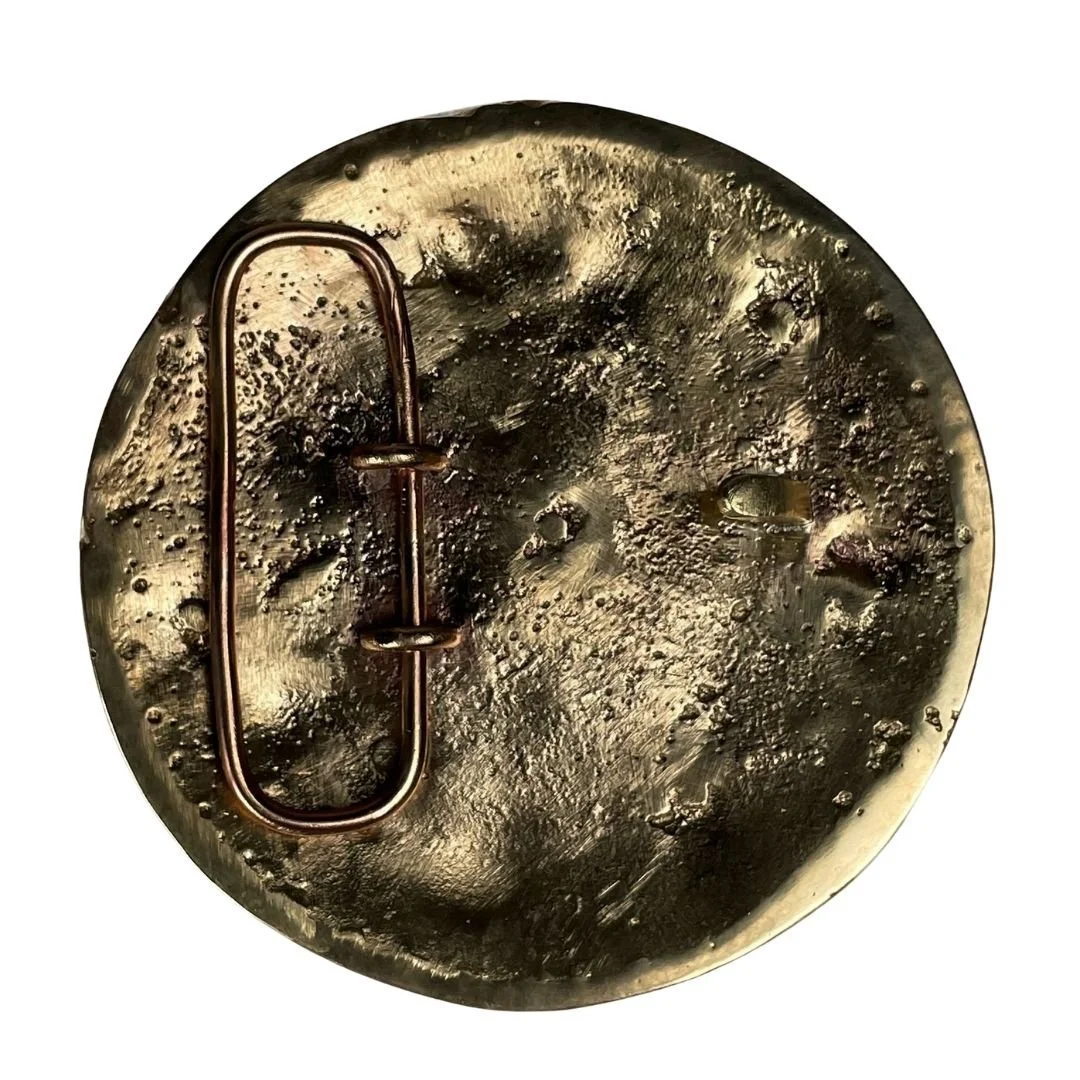
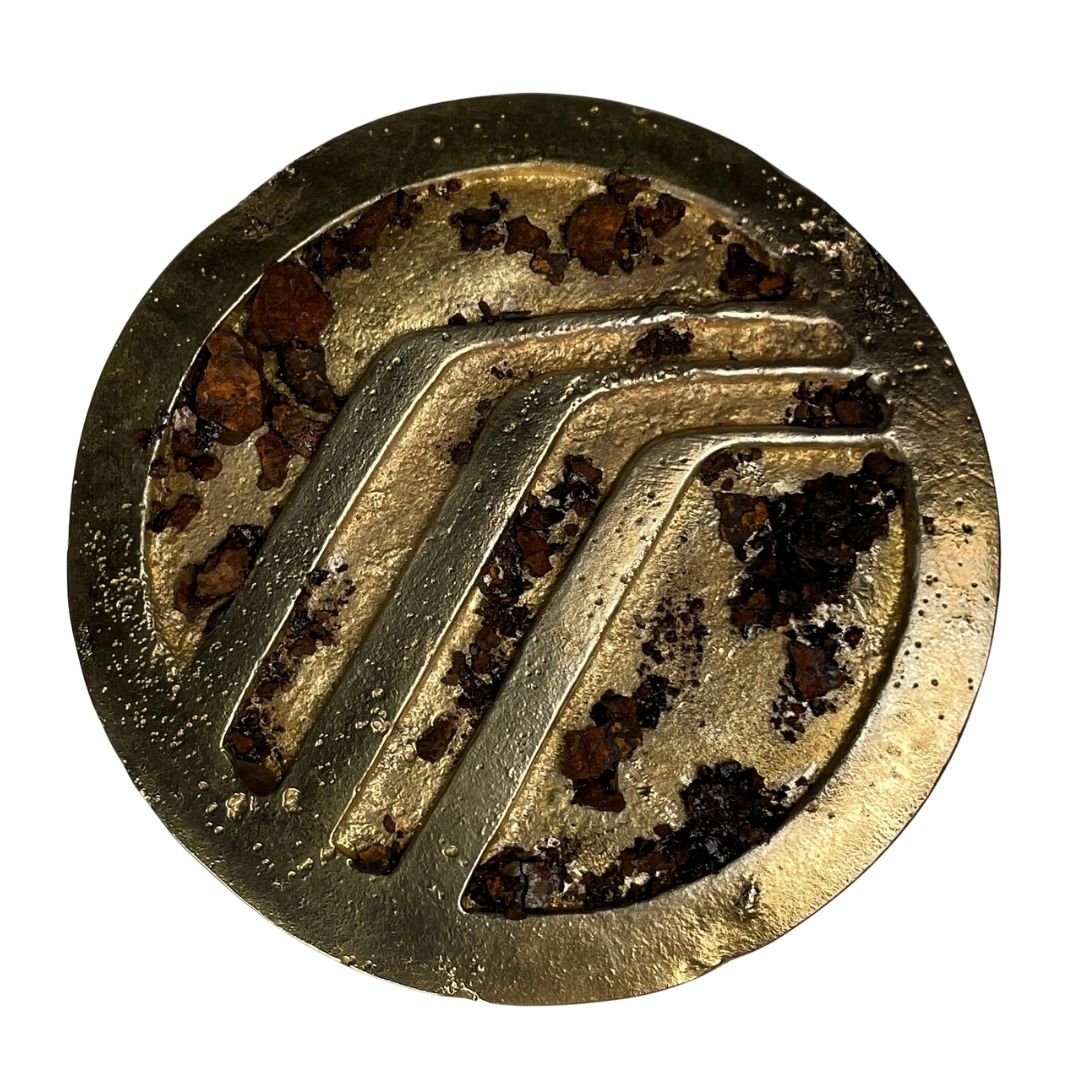
"Mercury Rust", Bronze, Brass, rust collected from the artist's Mercury Grand Marquis, leather, 3.1" x .31" x .4", 2026How does your work honor those who came before you while forging new pathways for the future?
“My work exists in constant dialogue with queerness—past and present. I don’t approach my identity as something to obscure; it is central to what I make, how I make it, and who I make it for. I look to the butches and transmasculine people who came before me, whose self-fashioning carved out space for more expansive ways of being.
Jewellery becomes a site of continuation—an intimate form of adornment that carries lineage, even when informal or undocumented. I’m interested in how gestures of dress, presentation, and embodiment are passed between queer people: how strength, softness, defiance, and care are communicated through material and form.
I aim to push these histories forward by reimagining traditional techniques and forms to reflect the fluidity of queer identity now. I create pieces that resist rigid expectations, holding space for ambiguity, transition, and self-definition.
In honoring those who came before me, my practice becomes part of an ongoing continuum that not only remembers, but builds new possibilities for how we can exist, relate, and be seen.”
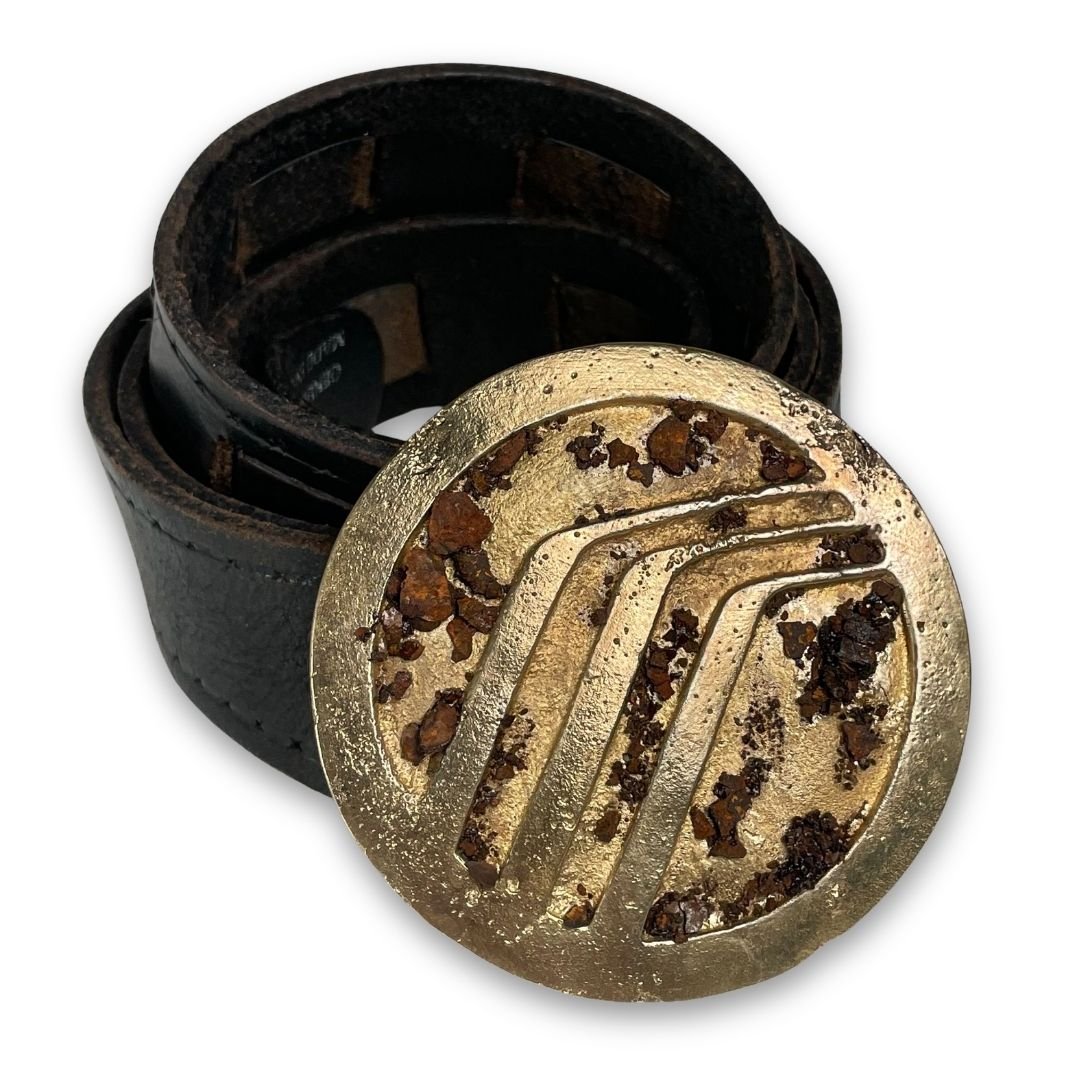
Photographs Courtesy of the Artist
Anything else you would like to share about this work? This can be an important part of the process, sourcing materials, research, etc.
“My piece was created using sandcasting. A technique still oft used in the automotive industry today. The inclusion of repurposed leather/leathercraft was important as well as a nod to the leather dykes. My connection to my car is incredibly personal, not only as a sentimental object but also as a connection to masculinity and my butchness.”