
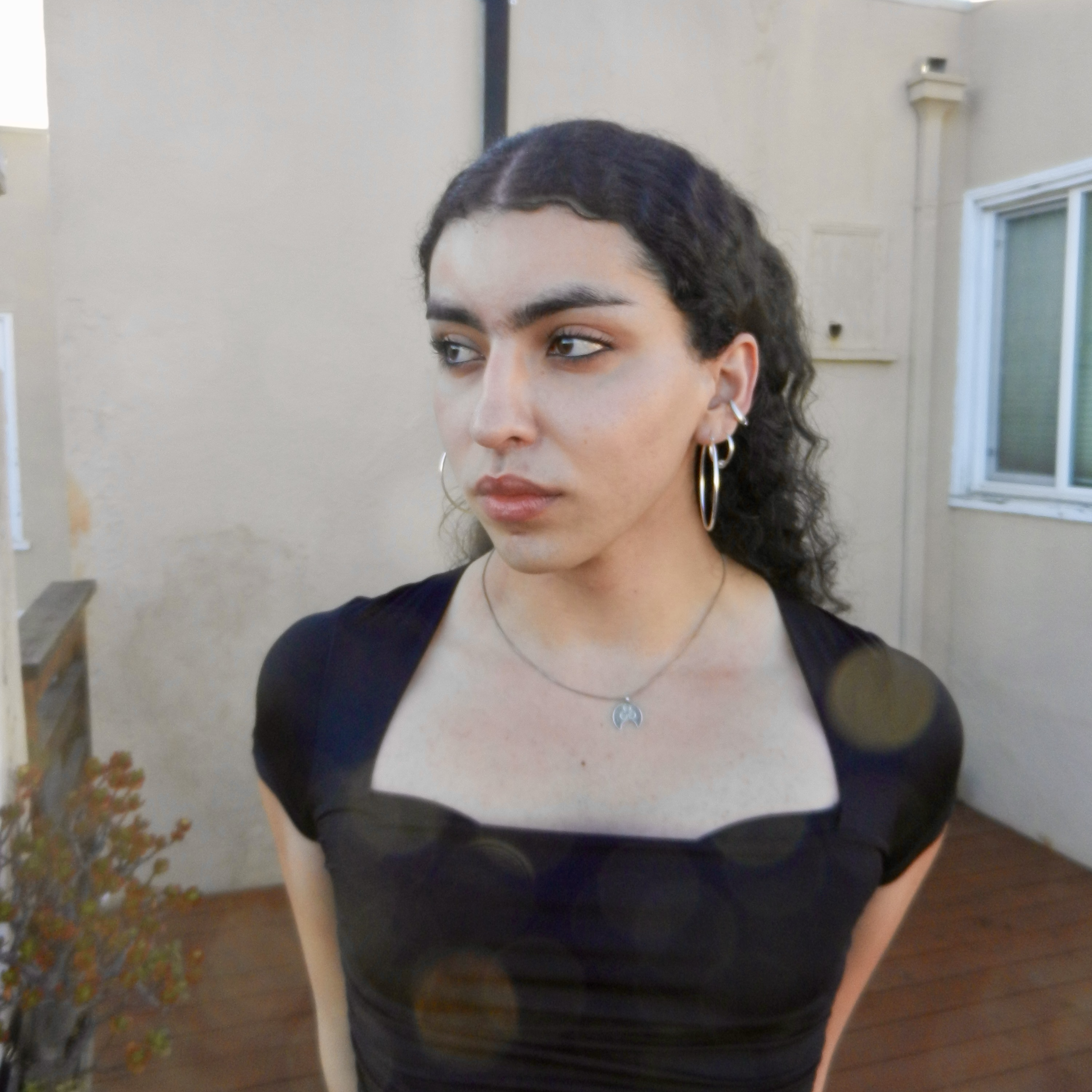
Oración Younis
She/Her
Oakland, CA, US
My work inhabits a genre that I call "folk futurism". Responding to the mass historic destruction and looting of jewelry from displaced Palestinians, it is an exercise in defying erasure through the generation of new contemporary cultural objects.
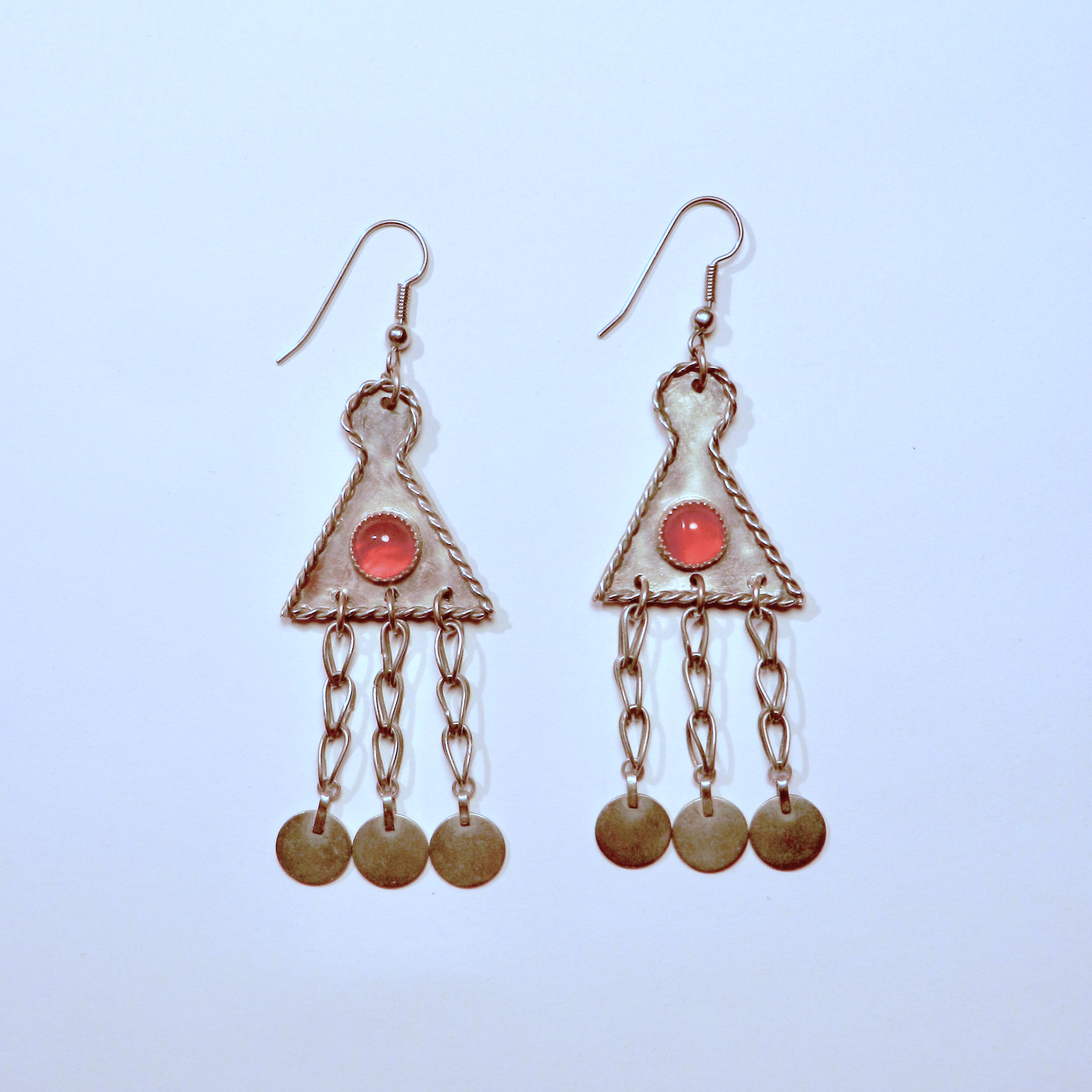
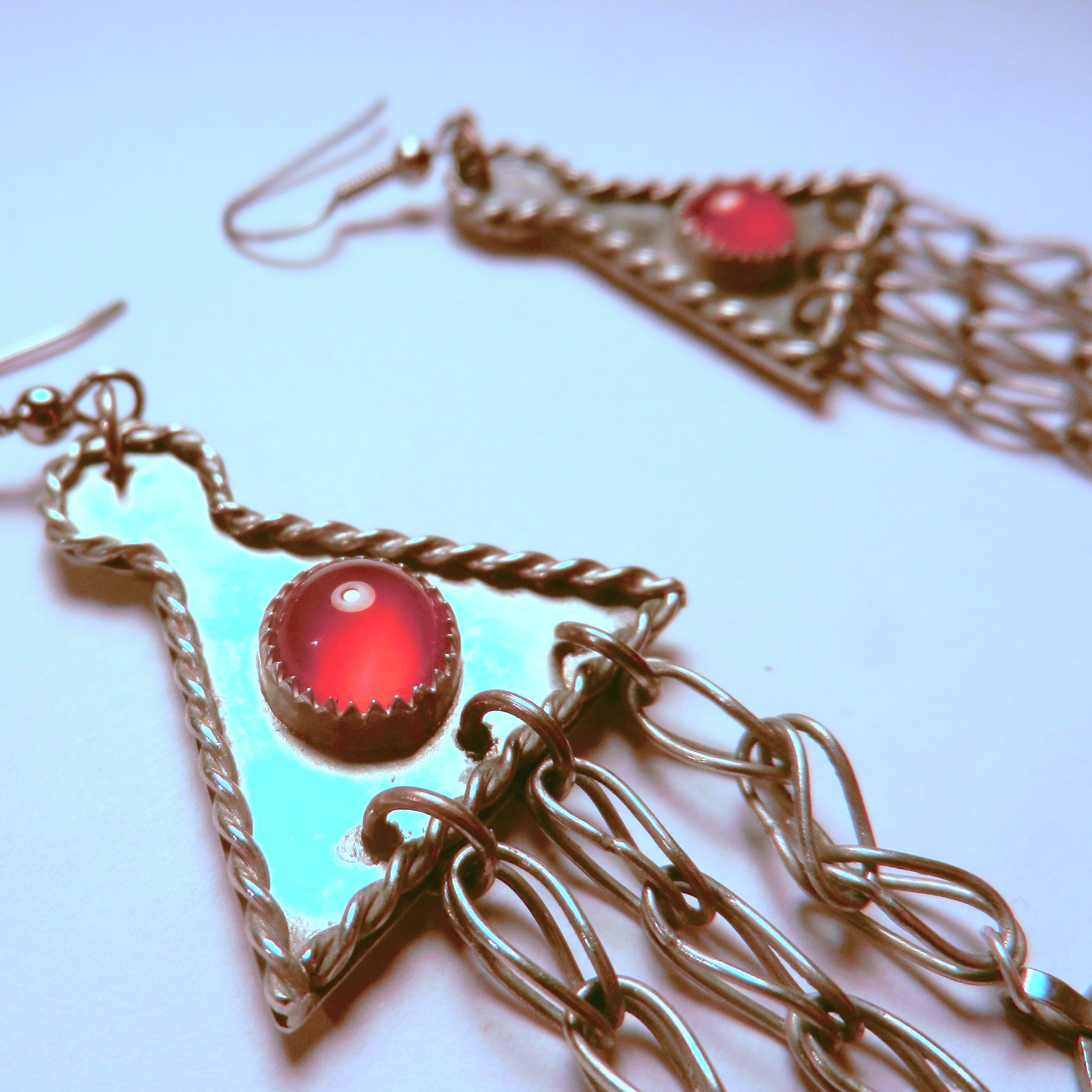
“In this piece, Ora miniaturizes the large adornments seen on traditional Palestinian women’s headwear (hirz) into a pair of earrings. The colors, materials, shapes, and numerologies used in the design reference traditional beliefs about jewelry's protective function. When worn, the earrings convert body movement into jingling sounds, making the ambient surroundings noxious to jinn (spiritual foes). In Hirz - Amulets, Ora asks the viewer to consider how the warding technologies of the past may offer protection today from the metaphysical and cultural threats facing Palestinians in exile.”
How does your creative practice reflect your experience of living and making as a BIPOC and/or 2SLGBTQIA+ maker?
“Some of my earliest memories of my own femininity were from times when I would play in my mother's extensive jewelry collection. Seeing her ornament herself with a different pair of earrings each day was critical to my early understanding of her own womanhood. In my childlike desire to be like her, adornment became entangled in the creation of my self concept as a trans woman. Self-beautification has become a critical step in my transition as a means to achieving acceptance, safety, and internal congruence. Adornment and the creation of jewelry has become a natural extension of this pursuit. In creating objects to adorn the body, I build the tools required for my body to be granted access to the concept of womanhood that was passed down to me. My practice is an assertion of my selfhood in this way, both as a trans woman and as a diasporic person of color. It harnesses the stories and stylings of my cultural forebears in its subject matter and design. It exists as a defiant expression of selfhood in the face of the historic erasure of Palestinian culture. Through adornment, I create objects that harness tradition to assert my identity and humanity.”
What techniques, stories, or materials have been passed down to you, and how are you reimagining them in the present?
“Growing up, I began to notice a conspicuous lack of traditional cultural jewelry from Palestine in the possession of my family members and friends. It wasn't until later that I learned about how jewelry was systematically bought from desperate, displaced Palestinian women or looted from their homes and bodies in 1948. After hearing my family's own story of exile from our ancestral homeland, I set upon a research process. I cobbled together the stories from the surviving objects I was able to gain access to in the possession of community members, books, and academic institutions. Learning how motifs, techniques, stones, metals, forms, and numerologies all come together to from a traditional design language, I have sought to repurpose it in my work. I have since dedicated myself to insisting upon the survival of Palestinian womanhood through the creation of new heirlooms to be worn in the present. My work directly combats the historicization of my people into a thing of the past by repopulating our material culture with jewelry made with our traditions at heart while retaining relevance in a modern diasporic context.”
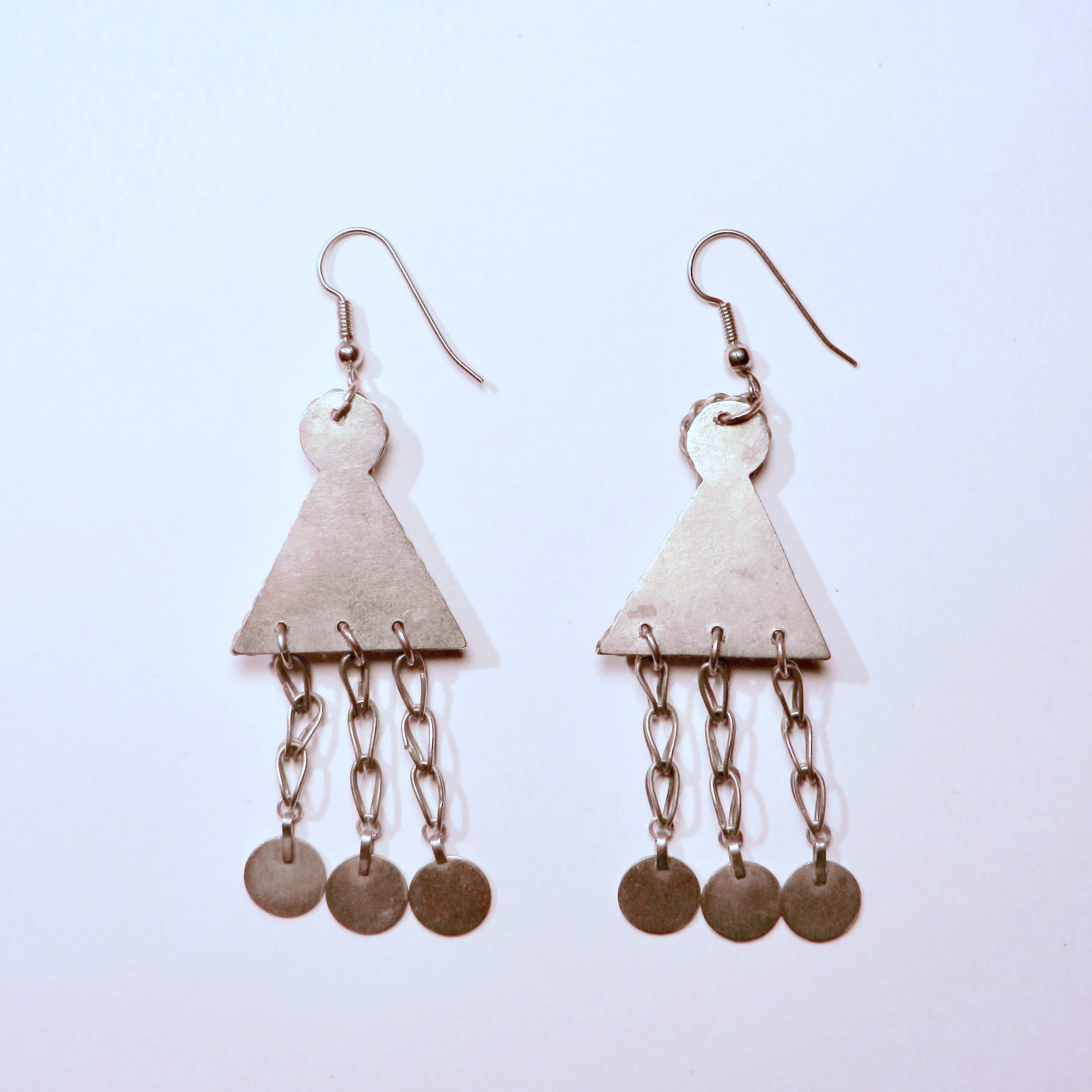
"Hirz - Amulets", Nickel Silver Sheet, Wire, Carnelian, 3.5" x 1", 2025How does your work honor those who came before you while forging new pathways for the future?
“Ornamentation and adornment are some of the most primordial and visceral expressions of humanity we have a record of. In every corner and at every moment in time on this planet, our species has adorned our most sacred places and objects. In my opinion, the two most ubiquitous sites of this phenomenon’s manifestation are temples and our physical bodies. My practice is my attempt at participation in this enduring tradition, honoring the design language of my ancestors to create objects that sanctify the body.
My work is often a response to my frustration with my perception that Western design sensibilities seem to be the only ones deemed futuristic, contemporary, or modern. There seems to be an unspoken expectation for people of color to abandon our traditional stylings in order to be included in collective imaginations of the future. My work engages in a world building that centers the stories and perspectives of my ancestors and carries our ideas about beauty, adornment, and protection into the future through the creation of new heirlooms. It offers an alternative to assimilated hegemony for my people, and makes space for the ways we might retain our selfhood into the future.”
Photographs Courtesy of the Artist