
Pavonis Giron
They/Them
Detroit, MI, US
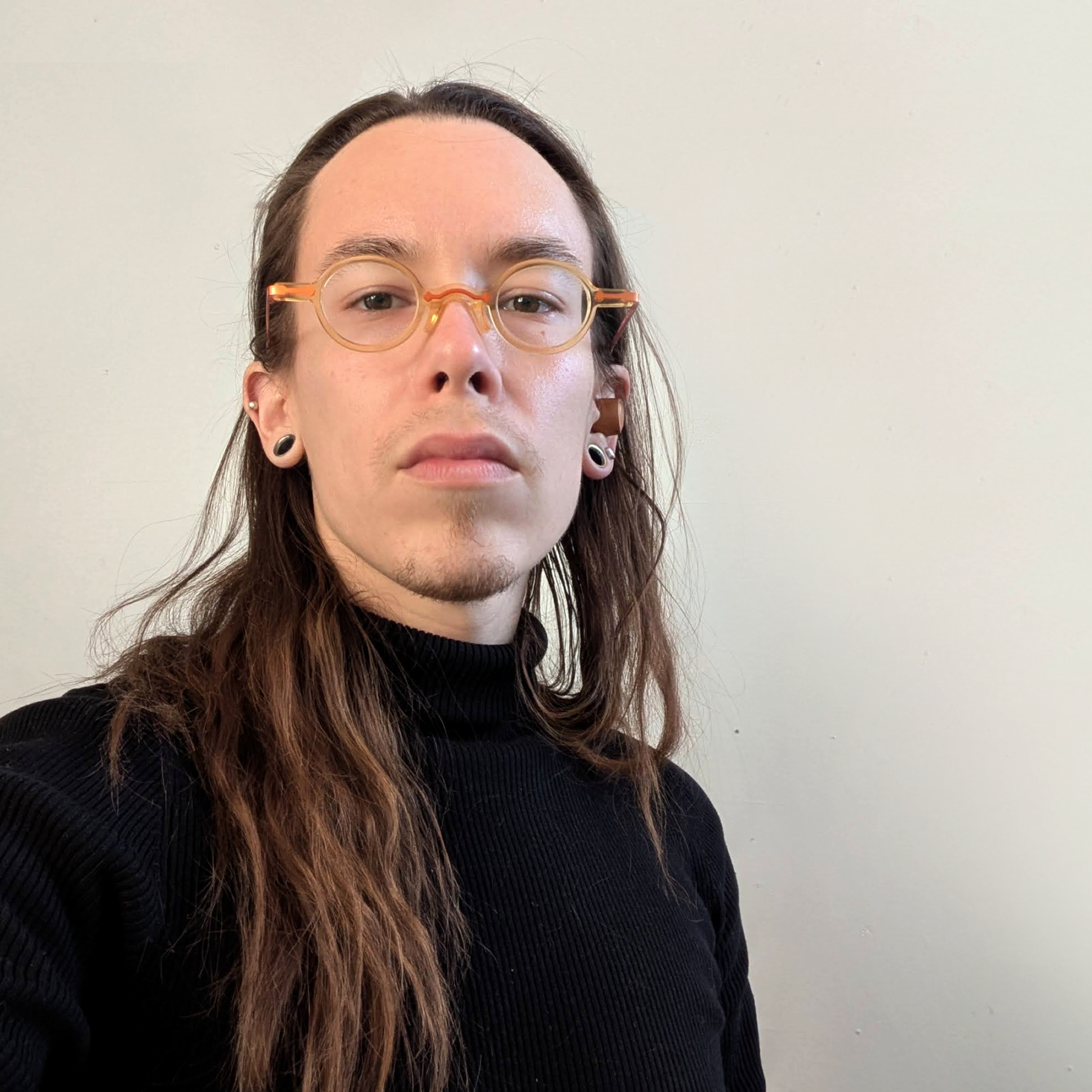
Pavonis Giron is a multidisciplinary artist and author living and working across the Great Lakes region. They received their BFA in Jewelry & Sculpture from UW-Milwaukee and are an MFA candidate in Metalsmithing at Cranbrook Academy of Art.
“The forms I find myself drawn to reference tools, furniture, artifacts – items of utility that address the social structures and mores informing their design and manufacture. The familiarity of domestic objects prompts consideration of their practical use, how they might challenge the comfortable navigation of a lived space, or, when worn, how they might make demands of one’s body. Material selection is key, as it allows for a wider vocabulary with which to discuss these objects and their uses, and like any good tête-à-tête affair allows me to meditate on a new perspective of a subject.”
www.pavonisgiron.com
How does your creative practice reflect your experience of living and making as a BIPOC and/or 2SLGBTQIA+ maker?
“My mind entangles itself in the question of what is it, really, that I am made of? It fusses over how conscious choice and unconscious impulse shapes itself, over its copies constructed in the minds of those whose lives brush against it, over the realization that my external expression does not align with internal experiences. The fascination extends outward. When evaluating my surroundings, I regard them as though they were the mold and I, the cast – the inverse is as true. Through this symbiosis, I find myself cultivating a sympathy with domestic objects, which extends to those behind museum glass and invites contemplation on the lives that once shaped and were shaped by them. The items that surround me may allow me to catch a glimpse of my own reflection, differing spaces allow the imprint of others to also be captured. I feel that my queerness and my cultural heritage deeply informs my influences, my materials, and the eventual outcome of an art piece. The finished work cements an impression of myself and my thoughts into an object, and allows me to step outside myself and understand further who I am and how I relate to the world around me.”
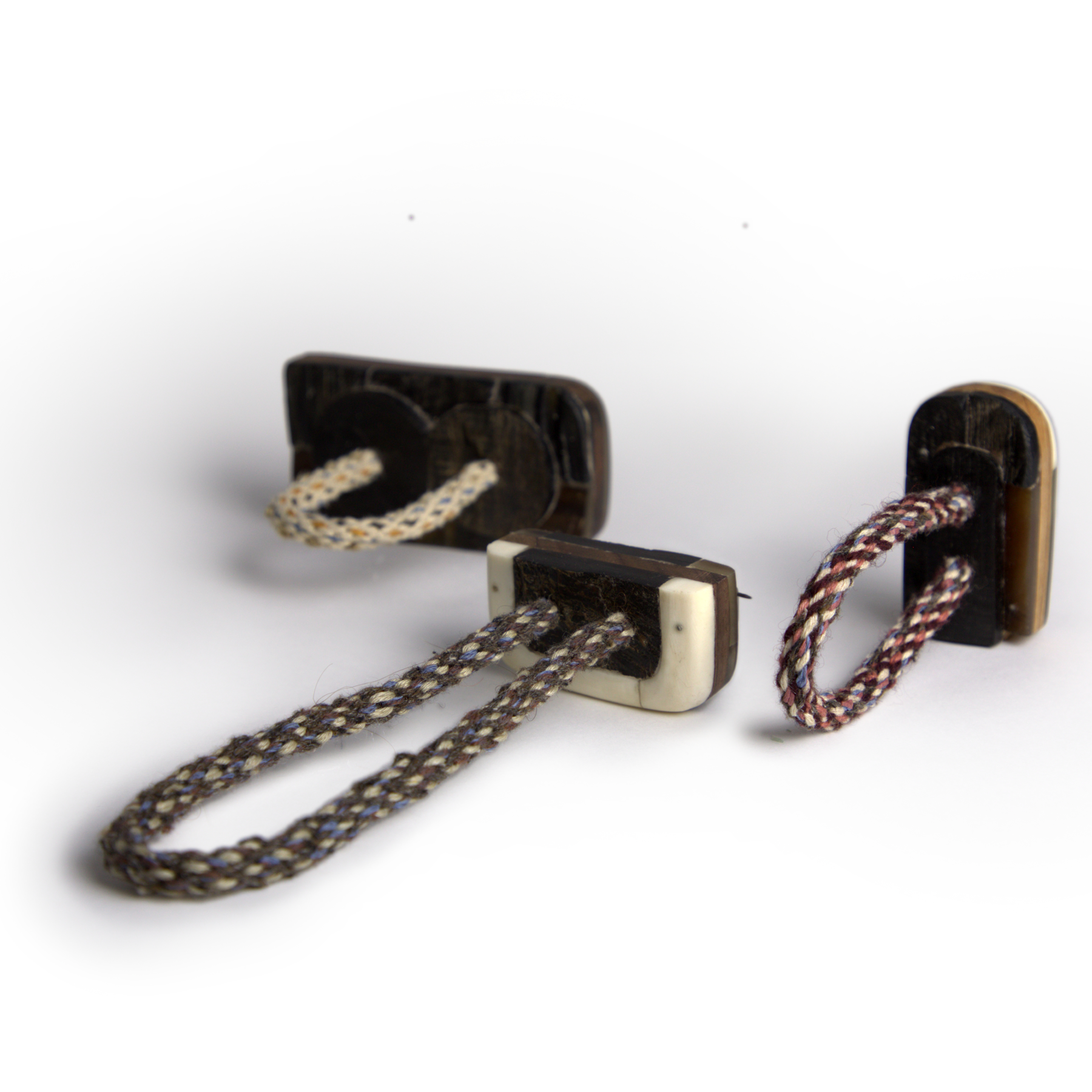
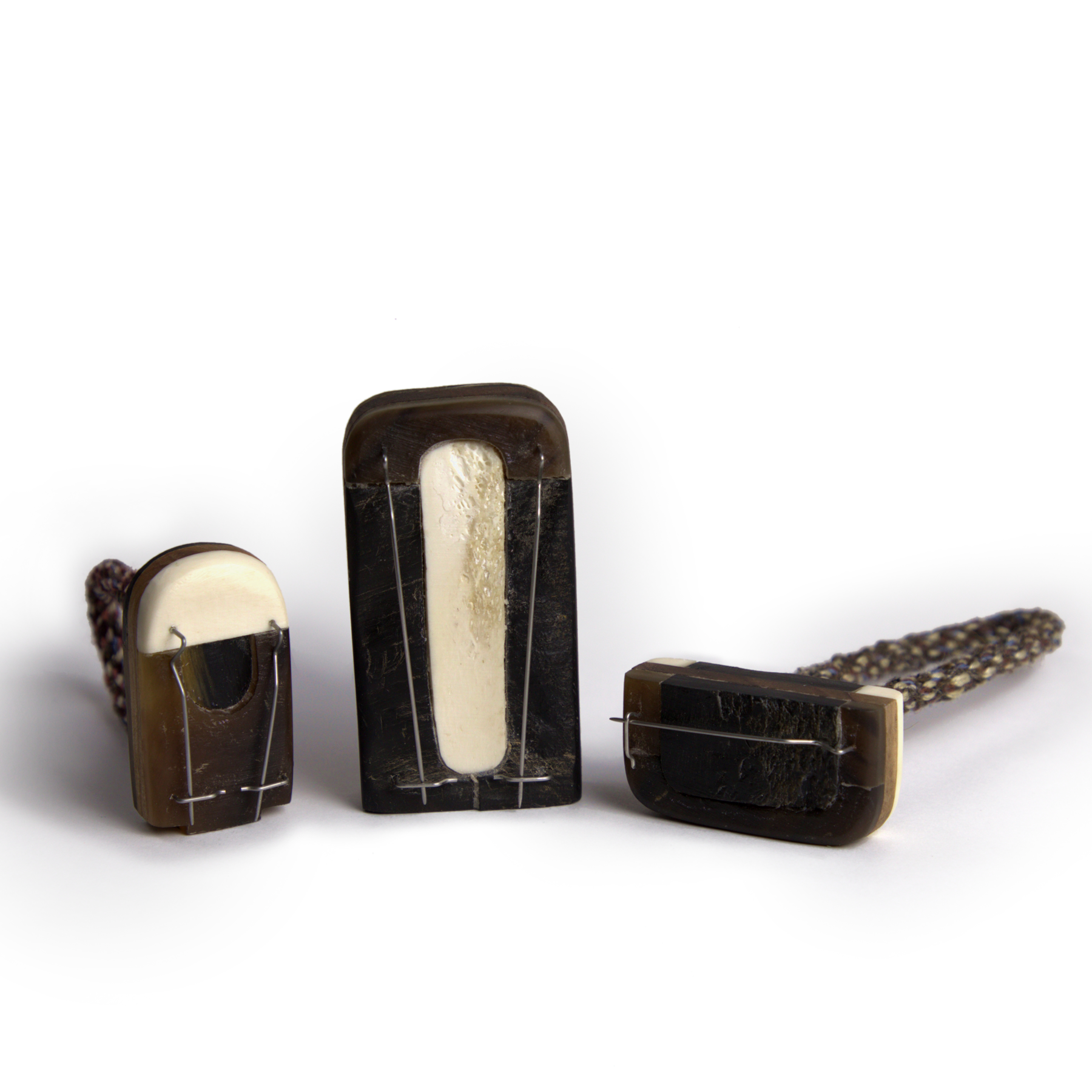
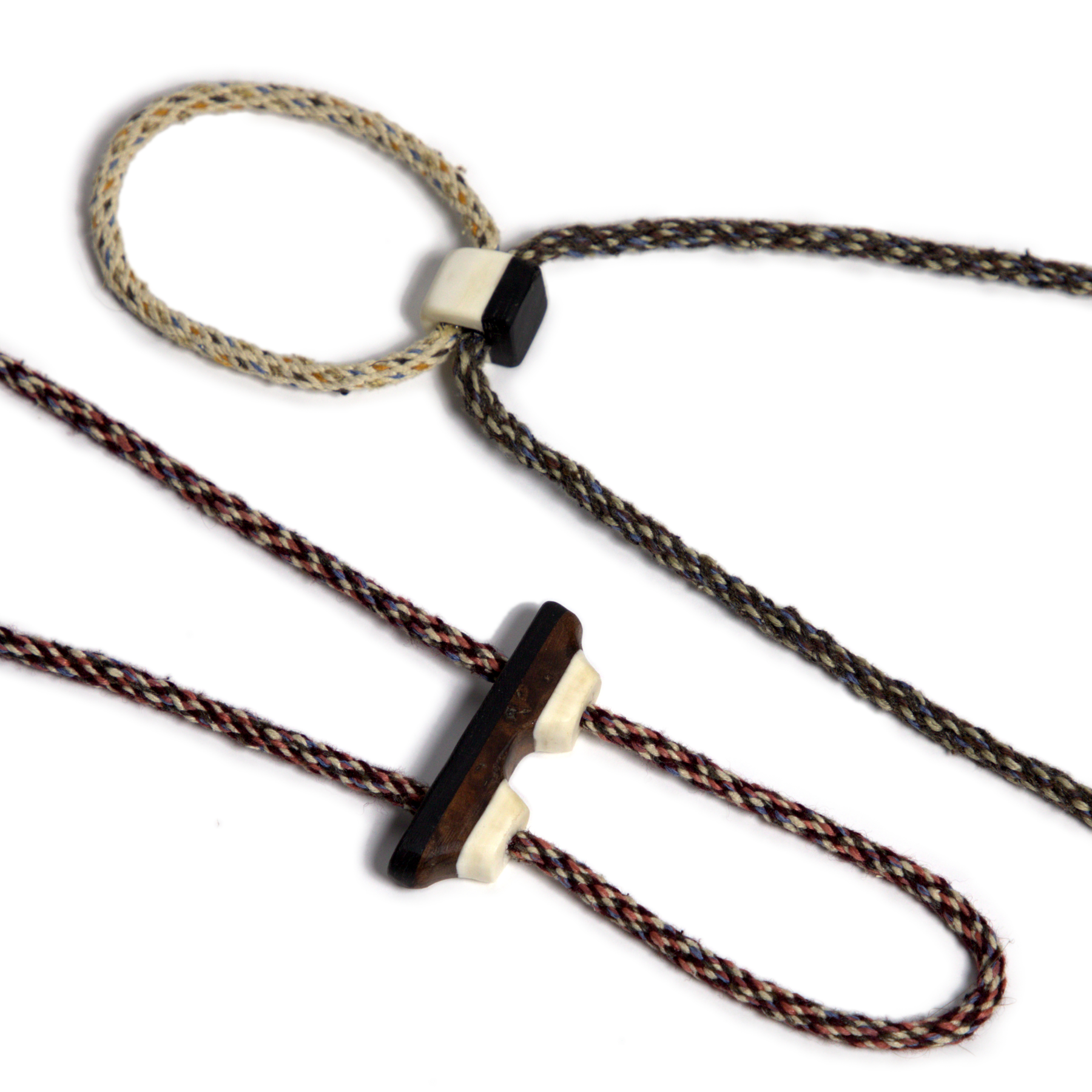
"Making Instruments (Brooch & Pendants)", Livestock Hoof, Horn, Bone, Natural Fibers, Dimensions Variable, 2025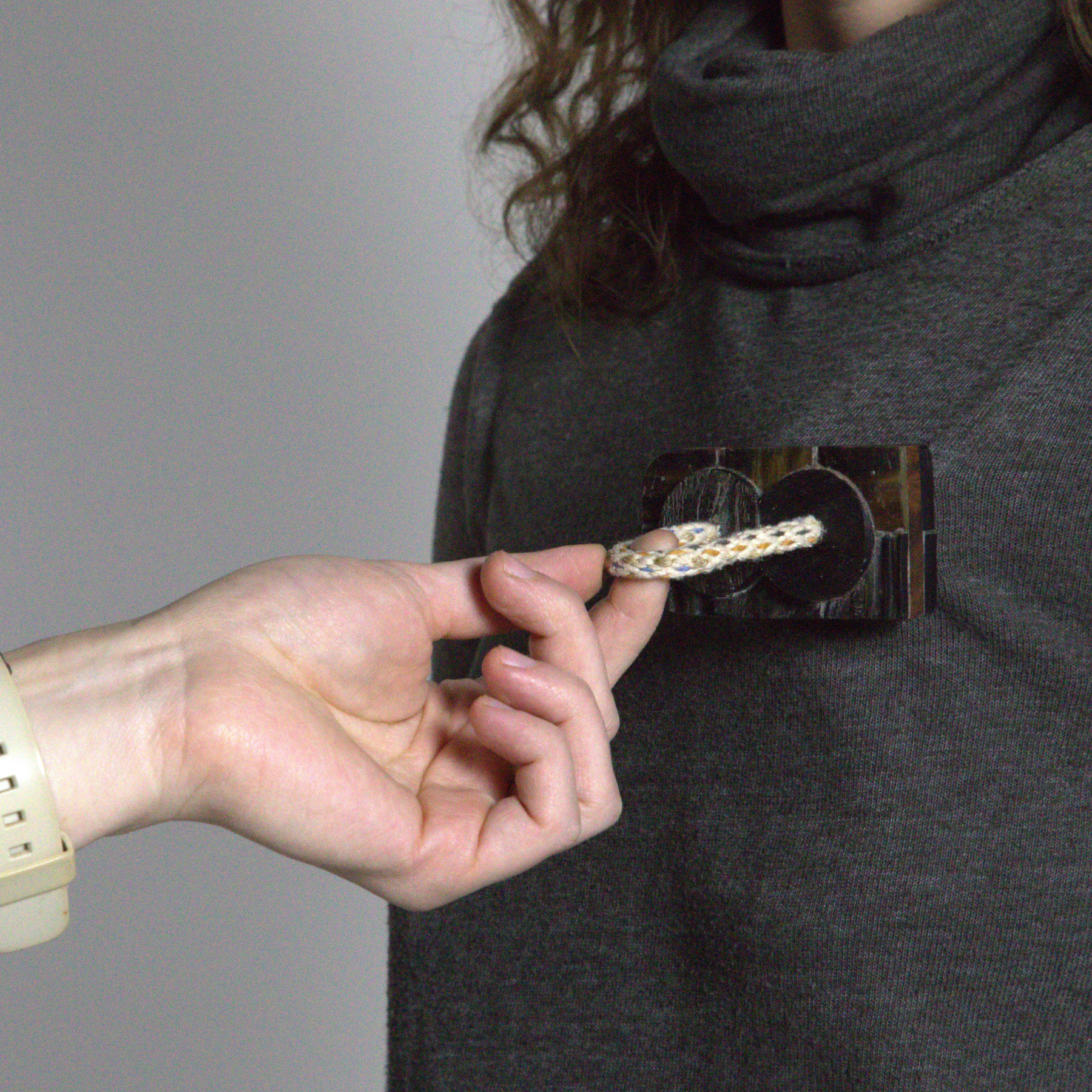
What techniques, stories, or materials have been passed down to you, and how are you reimagining them in the present?
“I feel that I am always in the process of excavating, whether that is in the form of craft techniques, material research, or narratives. Established crafts such as woodworking and metalsmithing are almost a given in an academic program, and tapping into their histories provides a path to community connection across disciplines. Digging deeper and pushing the boundaries of that multidisciplinary aspect of my practice has allowed for reconnection with fiber arts, both contemporary, historical, and pre-historic, allowing me to reevaluate and reestablish my relationship with femininity (as fiber arts still carry the yoke of being seen as ‘women's work’) and examine the marginalized place that fibers has in both the historical record and in the myth making that informs the stratification of social roles. Other materials, such as steel, speak to modern industry and, in the viewpoint of the colonization of the Americas, the exploitation of people with whom I share my heritage. Working with native materials, such as adobe and foraged natural materials, continues to establish my connection with my cultural roots and strengthening my connection to place.”
How does your work honor those who came before you while forging new pathways for the future?
“Craft traditions have, to some degree, been maligned as being a somewhat "conservative" practice in the face of conceptual art or the politically-based practice of deskilling. In my viewpoint, it can be seen as the opposite; learning craft traditions allows for social connection across generations and cultures and provides knowledge that can allow us to create works that last, works that can showcase a skill set and learned history that connects us beyond language. This acts as a foundational springboard for technical innovation, new ideas, and new participants to both stand on the shoulders of those that came before us and to critique set traditions that no longer serve a progressive and inclusive movement forward. To hold these two ideas in mind – preservation and innovation – is a challenge that must be broached in my work each time I navigate how to execute a project. It is my goal to hold a balance between the two.”
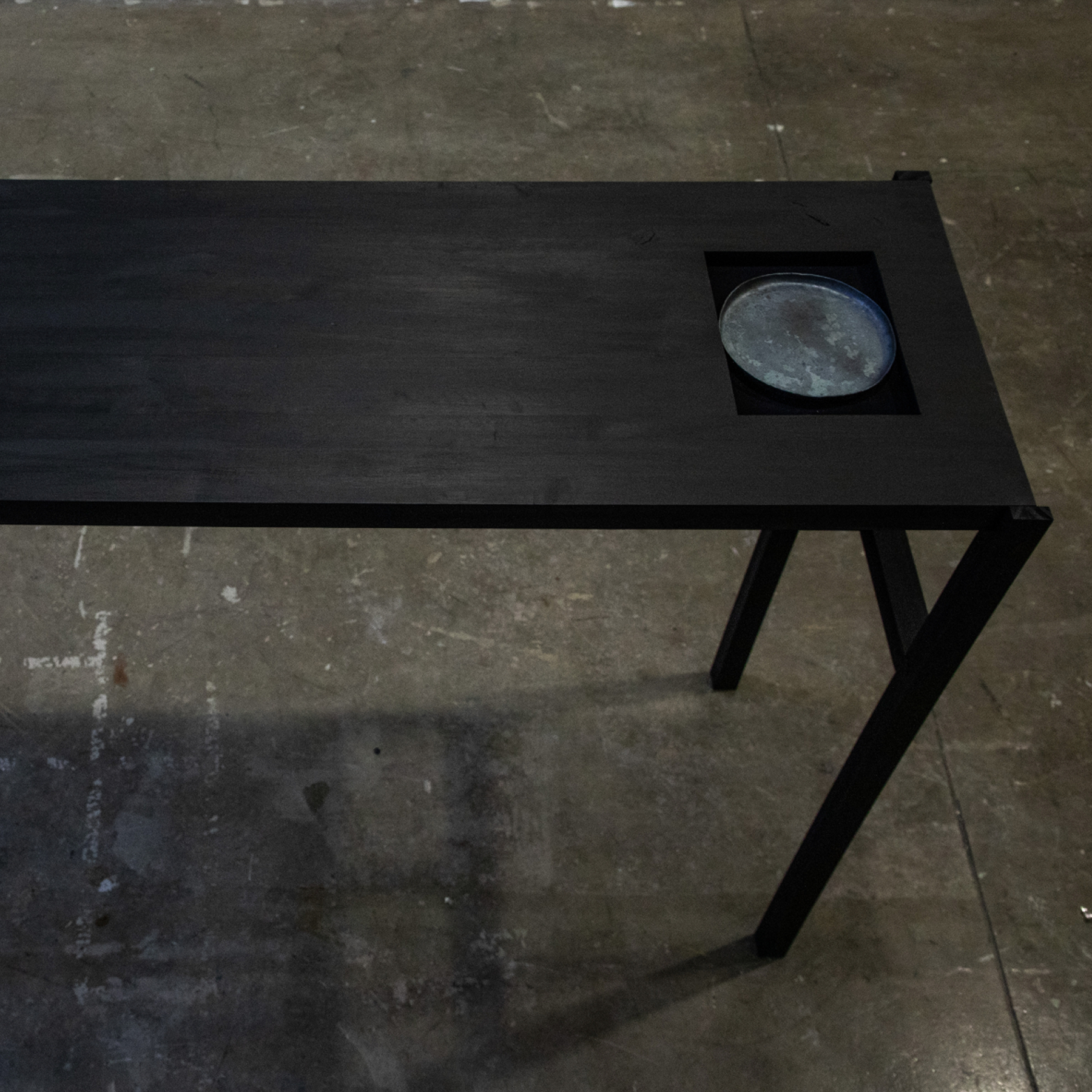
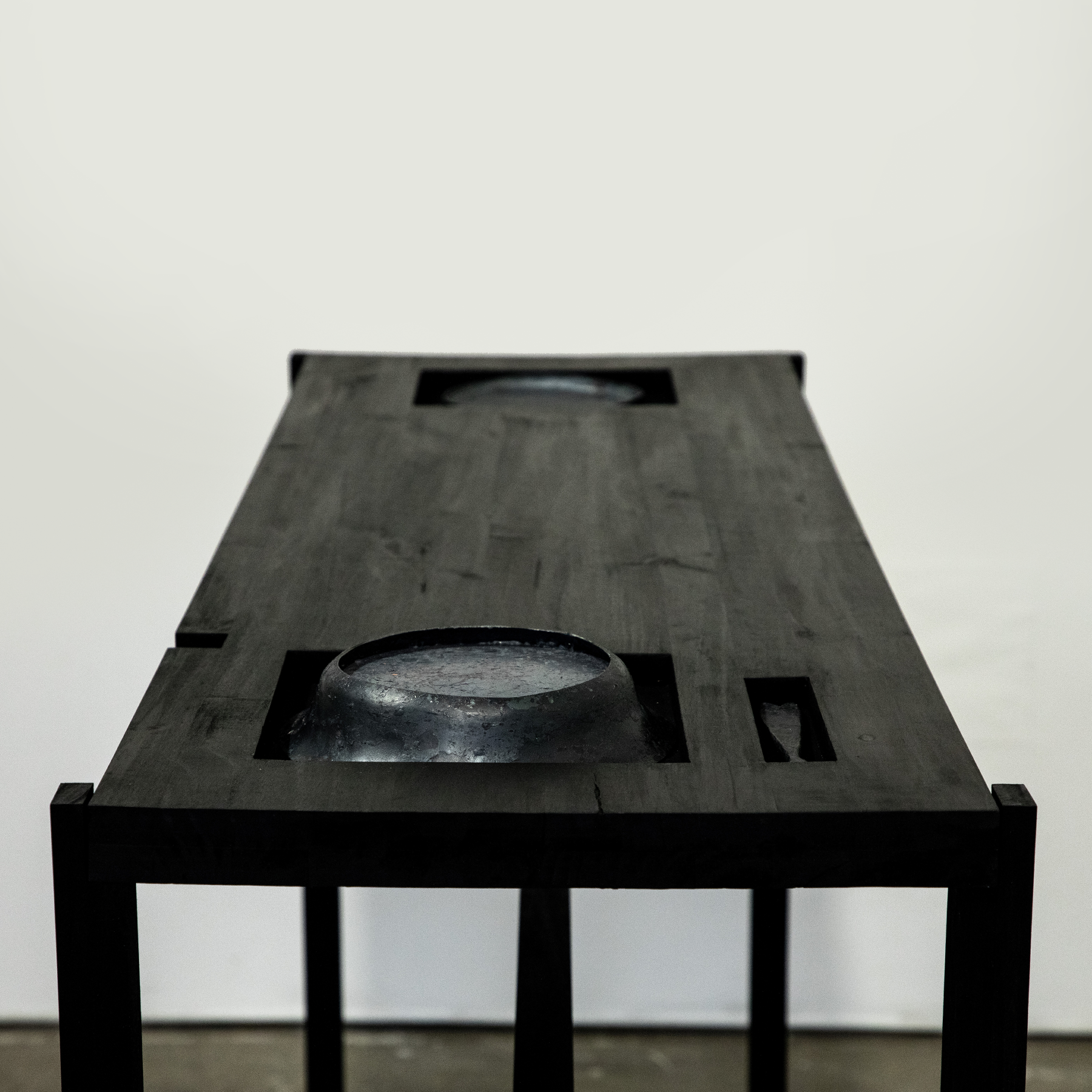
"Opening of the Mouth", Wood, Mild Steel, 48" x 15" x 32", 2026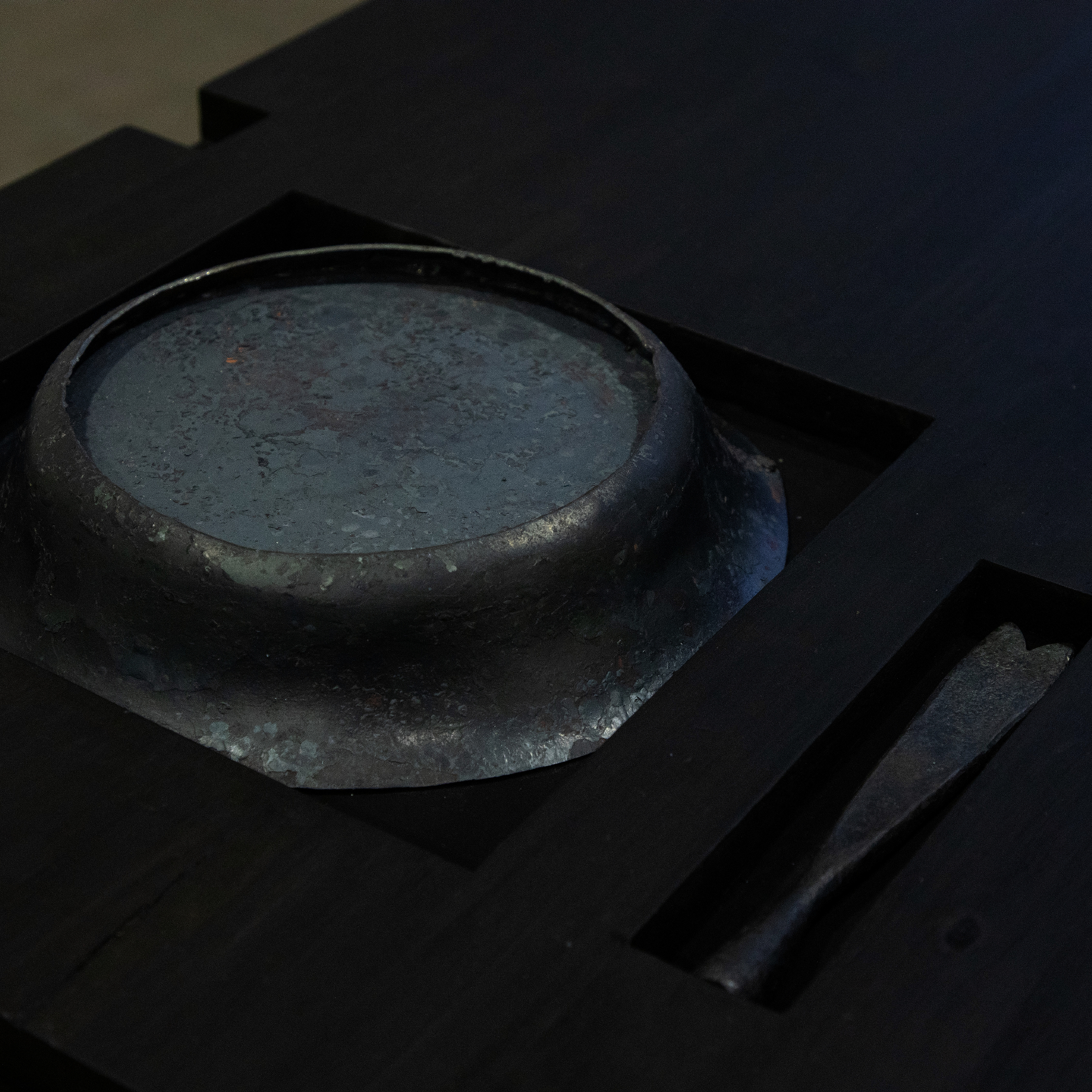
Photographs Courtesy of the Artist
Anything else you would like to share about this work? This can be an important part of the process, sourcing materials, research, etc.
“The set of brooches and pendants in Making Instruments are made from livestock horn, hoof, and bone, alongside natural fibers. Carefully chosen, the colors of the cords in combination with the use of bone and hoof are a nod to my interest in power dynamics as they are expressed in polite company, donning the colors and materials seen on formal wear: neutrals found in office clothing, horn buttons on wool jackets. I wished to make tangible the ability to control and be controlled. In donning a ‘handle’, a point at which the wearer can be physically grasped, they express their acceptance or willingness to be instrumentalized by others, and to engage in that grasping one cannot deny the intent to curb or eradicate the wearer’s autonomy, or to assume familiarity to the degree that one’s will is expected to be the same as the wearer’s. There is a vulnerability in purposely opening oneself to be used, but to be impacted by the will of another is as constant a force upon us as the boundaries of our lived environment.”