
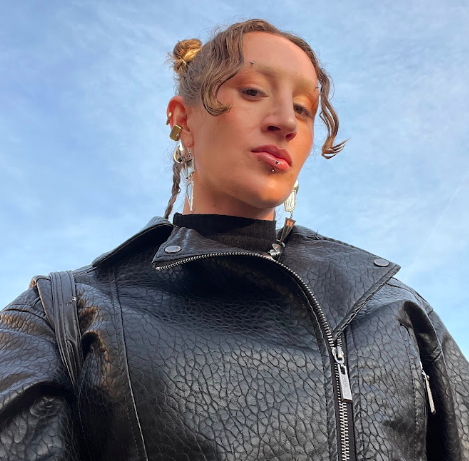
Vega Vosbek
She/Her
Oakland, CA
Vega Vosbek is a multifaceted creator, educator, and community steward based in Oakland, CA. Her material work dances across mediums with a focus on metals, jewelry, and fashion design.
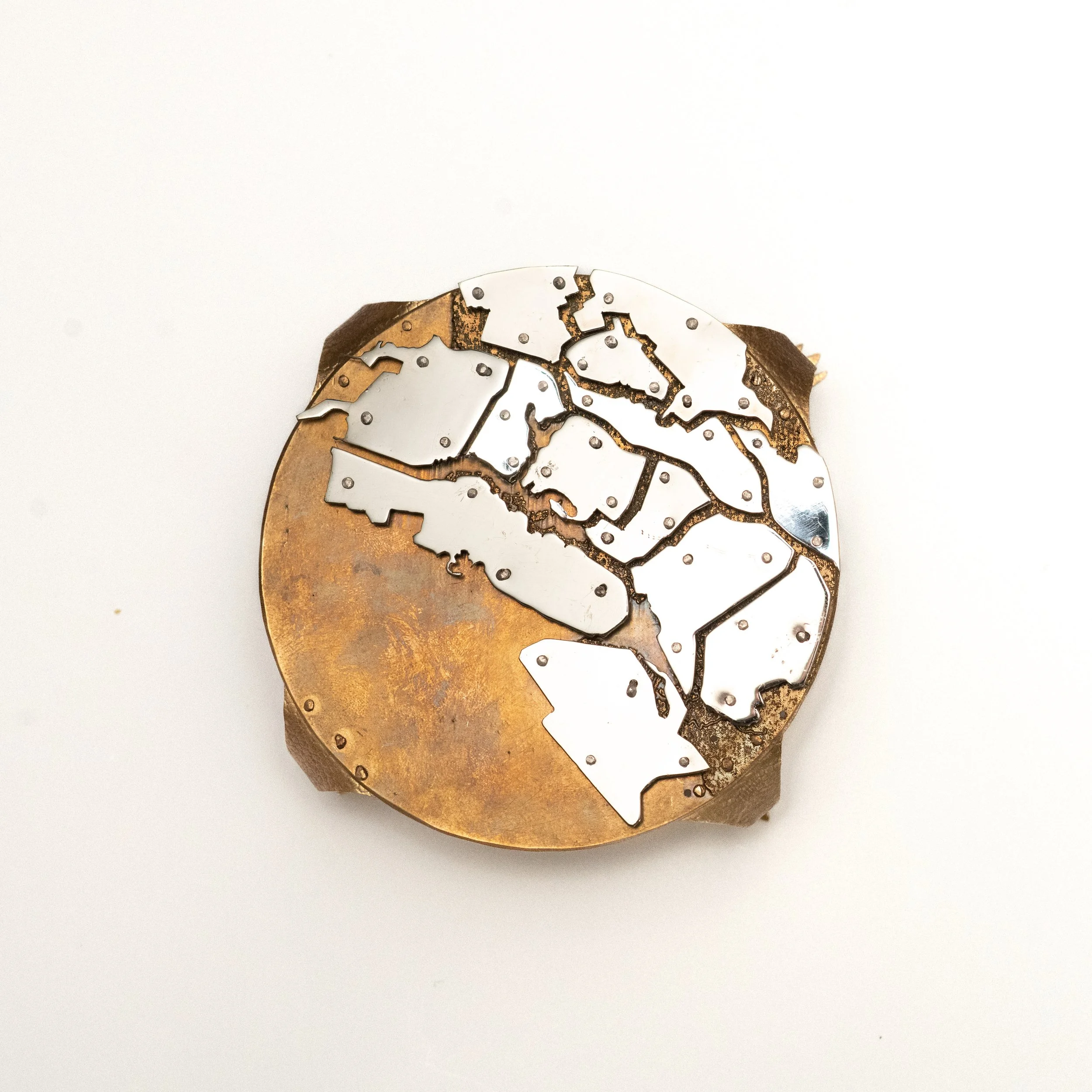
“My work, like myself, emerges from the in-between: hard and soft, grounded and unbounded, spiritual and profane. It tells stories that would otherwise be buried. It is ritualistic, a prayer for return to reciprocal ways of being. ‘Bodies of Water (Two Maps)’ explores the relationship between Man and Water as a mirror for my experience as a trans Woman. The piece overlays a map of East Bay Area neighborhoods in highly polished nickel floating above a covert brass etching of pre-colonial waterways, interrogating assumptions of western patriarchal domination over natural bodies.”
www.vegavosbek.com
How does your creative practice reflect your experience of living and making as a BIPOC and/or 2SLGBTQIA+ maker?
'“My metalworking practice developed as a means of exploring and expressing my queerness through self-adornment. It has evolved with me through numerous transitions since, ranging fluidly in form and material. I disrupt notions of class and respectability by creating jewelry and bodily adornments designed for marginalized bodies and facilitate accessibility by sharing skills and diverting resources to my communities. As a transfemme artist, I follow the tradition of my queer/trans ancestors: dramatic, scrappy, and beautiful; refusing to follow norms and expectations. My work often explores my trans experience directly, and everything I make is refracted through this lens. I create the way that I live: unrelenting, confrontational, and communal. Bodies of Water emerged from reflections on eurocentric assumptions of patriarchal domination of Man over Nature, and seeing my own trans body as part of Nature. Like water, I resist artificial manipulation and covering-up by external mechanisms. Like water, transness is inevitable and impossible to contain. This piece, like me, is a recreation of ancestral bodies existing in resistance to patriarchal domination.”
What techniques, stories, or materials have been passed down to you, and how are you reimagining them in the present?
“My first jewelry mentor, Anthony Stillman, graciously allowed me to apprentice under him for a little over a year. I built my foundation in metalworking through him and took over his studio position when he retired. At first I wondered why he had such an affinity for me – he was an older man and we didn’t have much in common. Everything made sense when he shared his deep regret for never having reconnected with his sister before she passed away. Her family had cut her off after she transitioned. As a trans woman myself, I have shared her rejection, and I feel that her legacy is integrated into my jewelry practice as much as Anthony’s. Much of my work is centered around reinterpreting trans pain, both for personal and political reasons, and I understand the violence enacted against my community as inextricably intertwined with other systems of patriarchal colonial extraction and domination. Thus, my fate is bound up with all marginalized people, including the land, and my practice reflects that. I pay homage to the sources of my creation: the material by honoring the earth and the personal by honoring my forebears.”
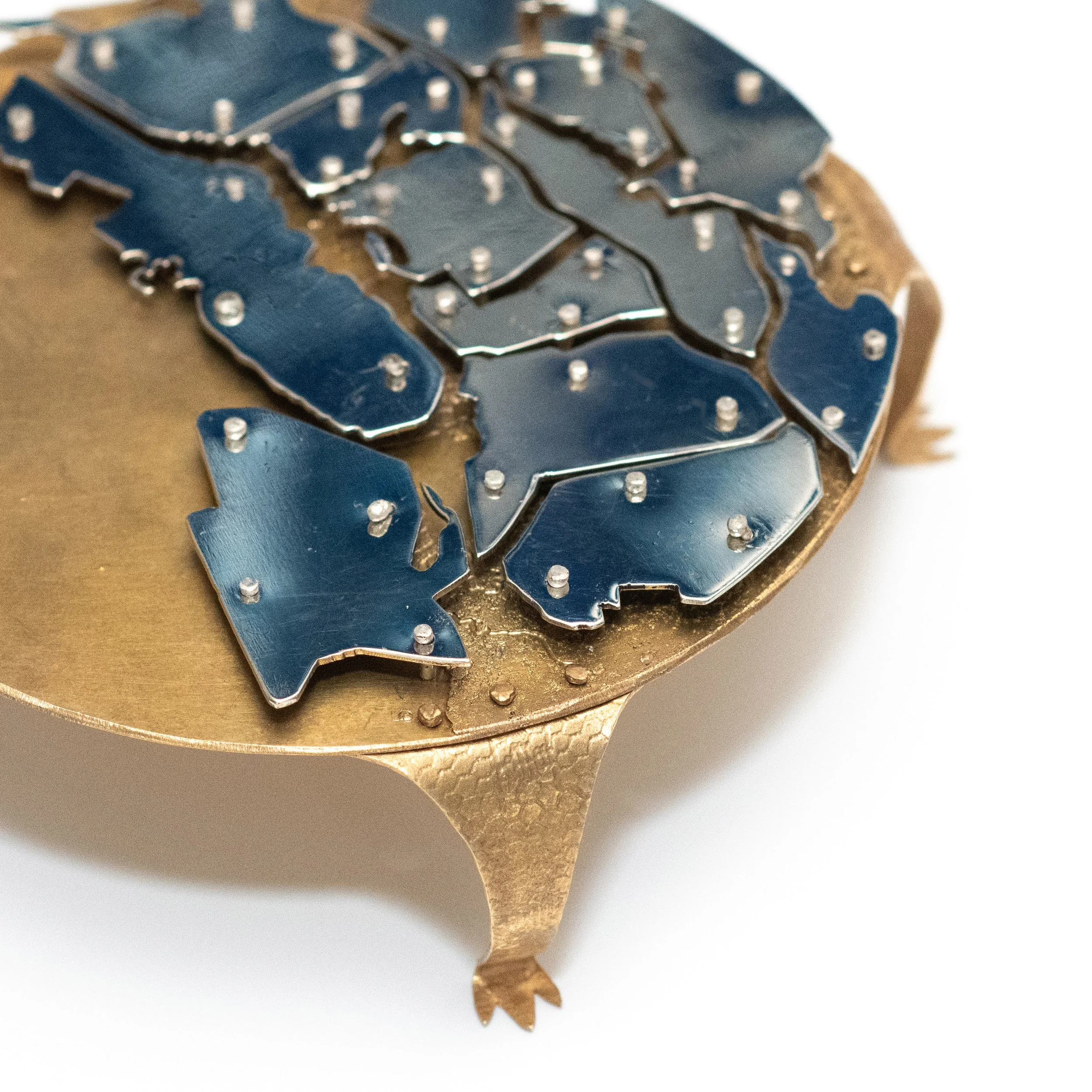
"Bodies of Water (Two Maps)", Nickel sheet, rivets, etched brass, 4" x 4", 2026How does your work honor those who came before you while forging new pathways for the future?
“My work honors all those that have contributed to its existence through me: the land and water, my biological ancestors, my queer and trans forebears, my teachers, mentors, and guides. Everything that I am and know how to do, as well as the material to do it, comes from them. I believe the most direct way to honor them is to demand their continued existence and challenge the systems that violate them. This is what I aim to do through my work. I hope to contribute to currents guiding us to return to Right Relationship with the earth and all its beings by questioning the current world and imagining new ones. Informed by all those who came before, my creation is oriented towards a better life for those to come.”
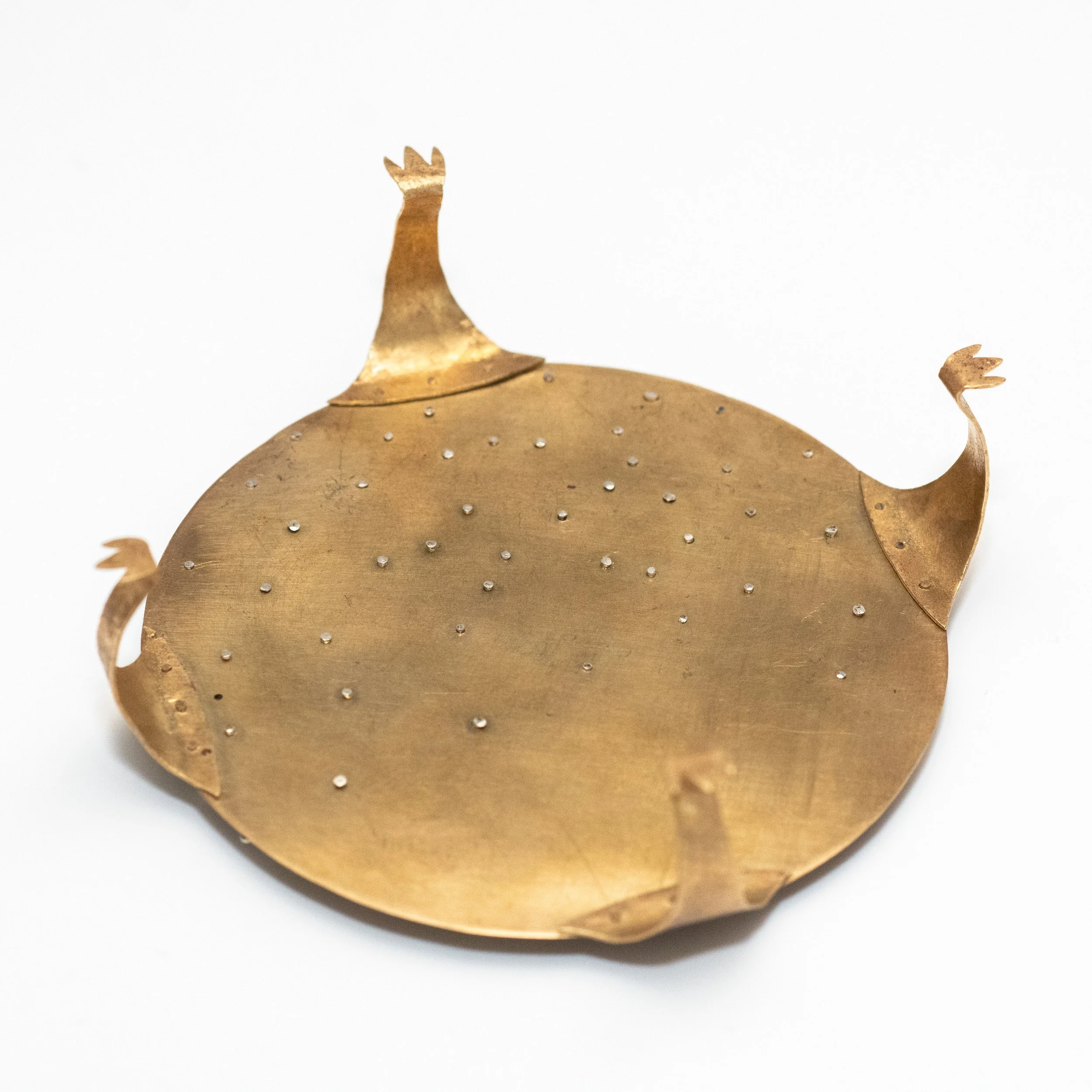
Photographs Courtesy of the Artist
Anything else you would like to share about this work? This can be an important part of the process, sourcing materials, research, etc.
“The map of pre-colonial waterways etched into the brass comes from the Alameda County Native History Project.”